
Description
Cascade Sunburst began as a single branch that mutated on a plant of the native evergreen huckleberry sitting in a container at a nursery in Elma, Washington, in 2017. The branch carried speckled leaves, and every plant grown from it since has carried them too.
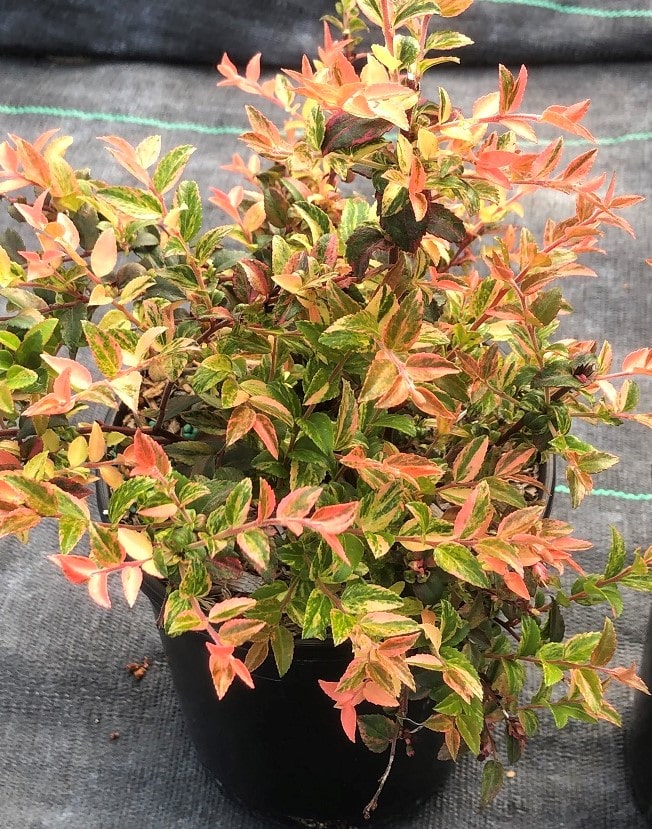
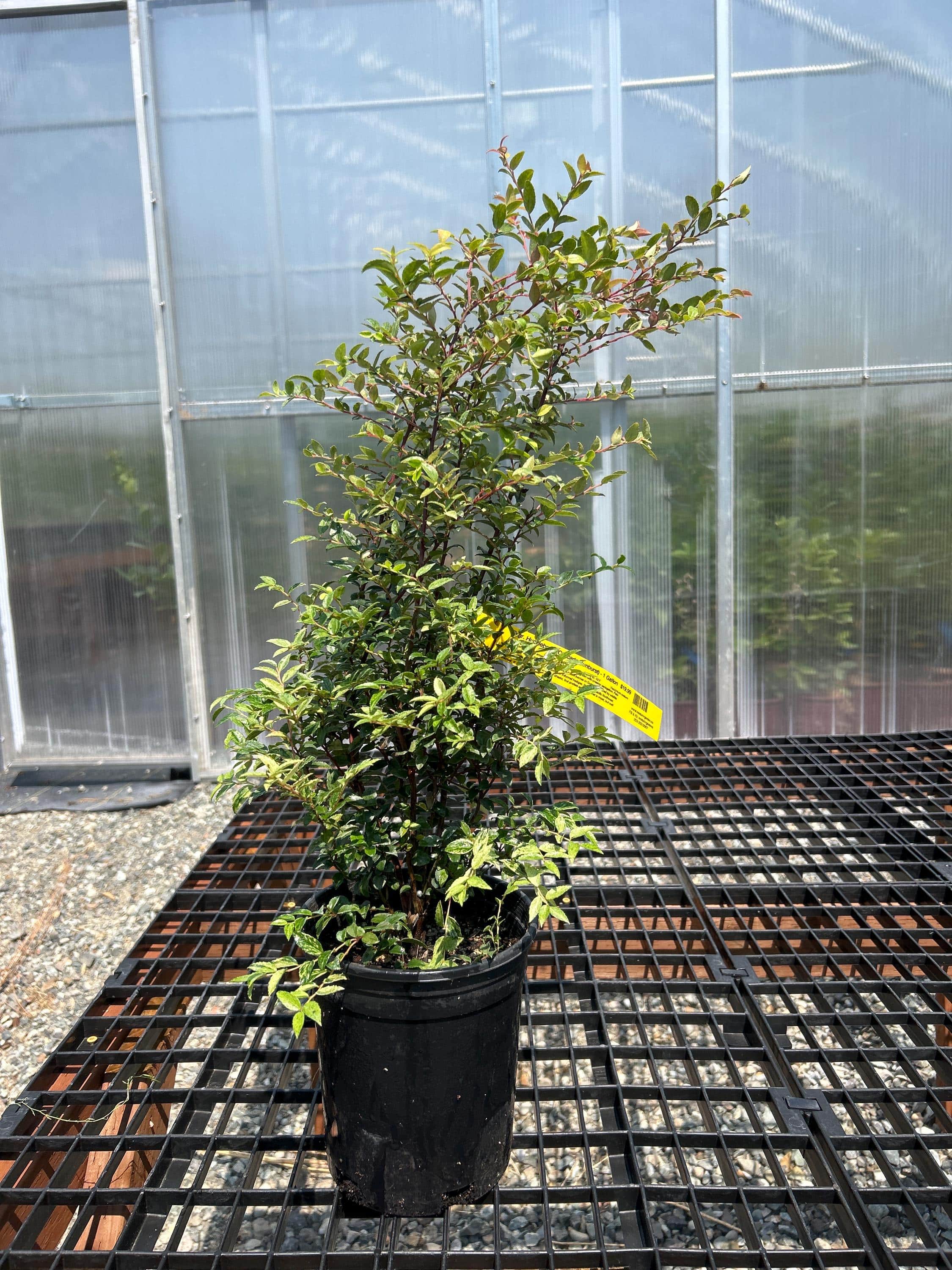
New leaves open coral pink and hold that color while they expand, then mature to green mottled and speckled with creamy white, so an established bush shows both at once through the growing season. It grows semi-erect to about 4 ft each way, which takes a clipped hedge or a loose one equally well, and the pale pink spring flowers are followed by glossy purple-black berries in late summer.
Overview
- The variegated one: coral new growth over creamy-speckled mature leaves.
- Semi-erect to about 4 ft tall and wide; good clipped or loose.
- Pale pink spring flowers followed by glossy purple-black berries.
- Evergreen, so the variegation carries right through winter.
Growing Details
Latin Name: Vaccinium ovatum ‘Cascade Sunburst’
Site and Soil: Sun to full shade; acidic, well drained soil, pH 4.5 to 5.5
Hardiness: Hardy to USDA Zone 7
Rootstock: Grown from cuttings or tissue culture
Bearing Age: Fruits right away; full production in 5 to 6 years
Size at Maturity: Semi-erect, about 4 ft tall and wide
Ripening Time: Late summer into early fall; August into September
Pollination: Self-fertile; one plant crops, and a second, different huckleberry nearby improves size and yield
Pests & Diseases: No particular problems reported; deer and elk browse it in some areas
Additional Notes
- Grower’s Insight: The two leaf colors sit on the plant together: coral at the tips, creamy speckles behind, which is what makes it read from a distance.
- Regional Insight: Huckleberries are Pacific Coast natives, at home from British Columbia down into California and anywhere with cool, moist, acidic ground.
- Explore more berries in our collection: Berries