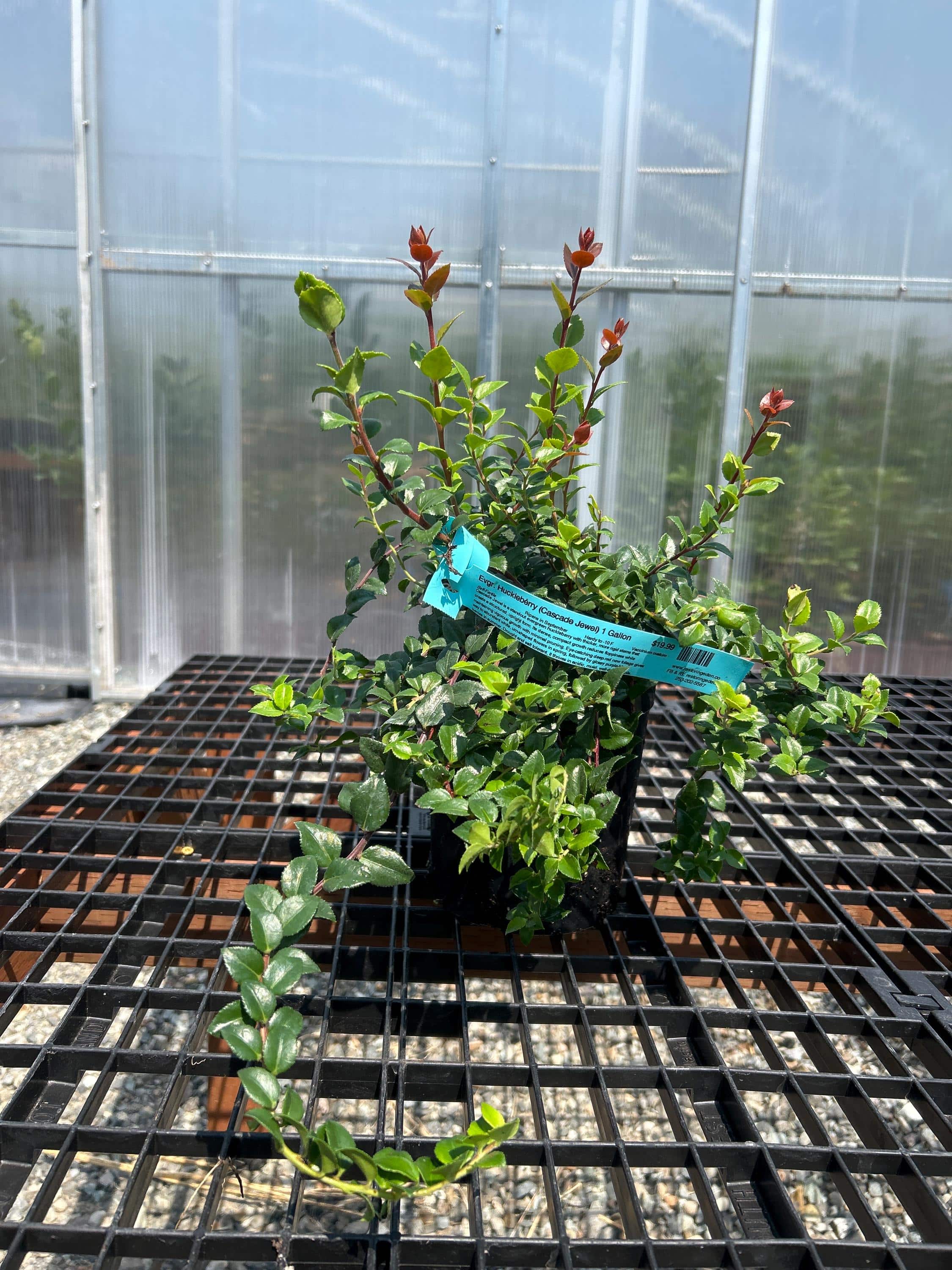
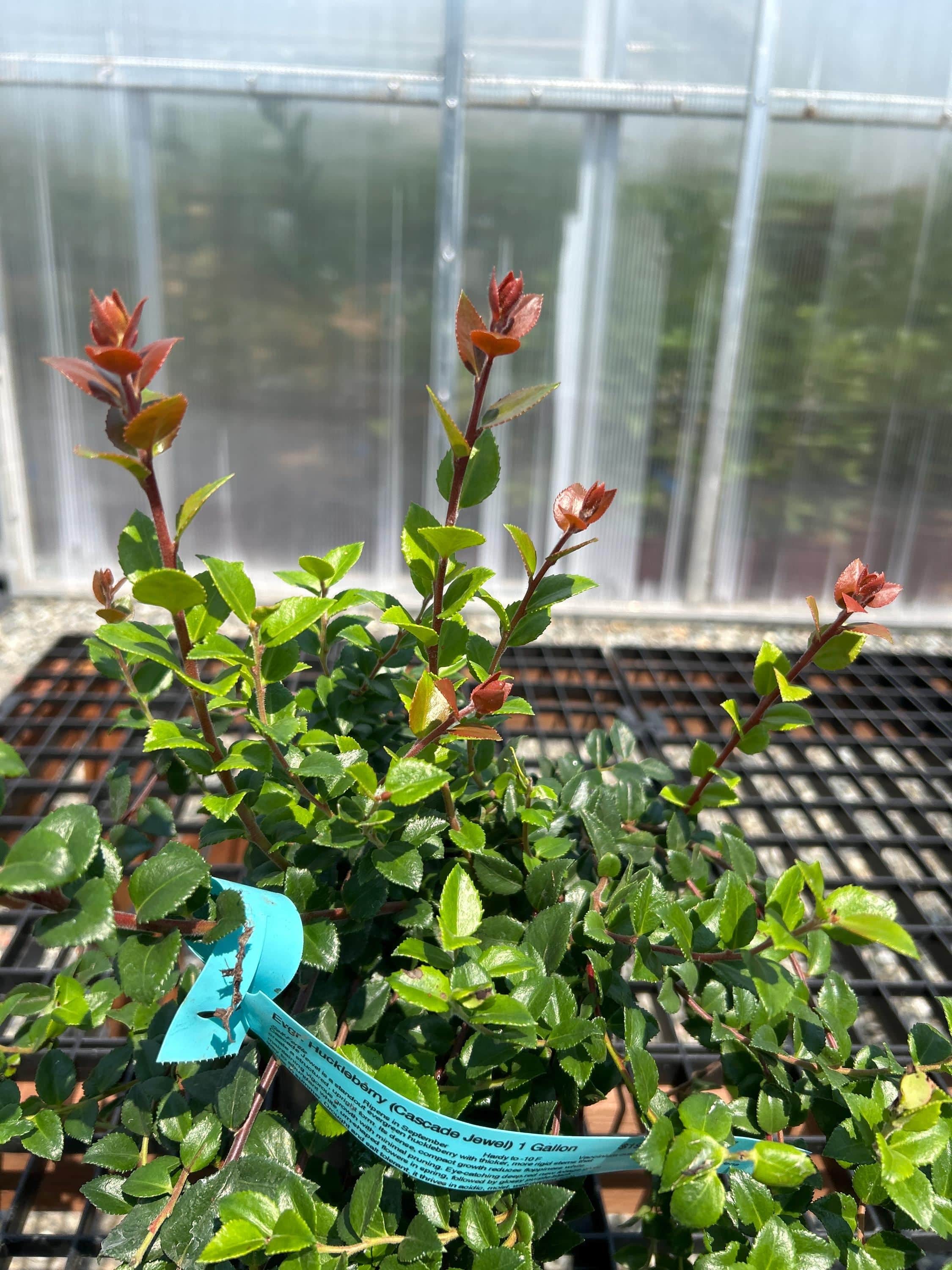
Description
Cascade Jewel came out of a breeding program at Oregon State University, and it is a doubled-chromosome form of the native evergreen huckleberry. Doubling chromosomes is a change that tends to make a plant stouter and its fruit larger, and that is what happened here: thicker, more rigid stems, dense branching, and berries measuring about 8 mm across.
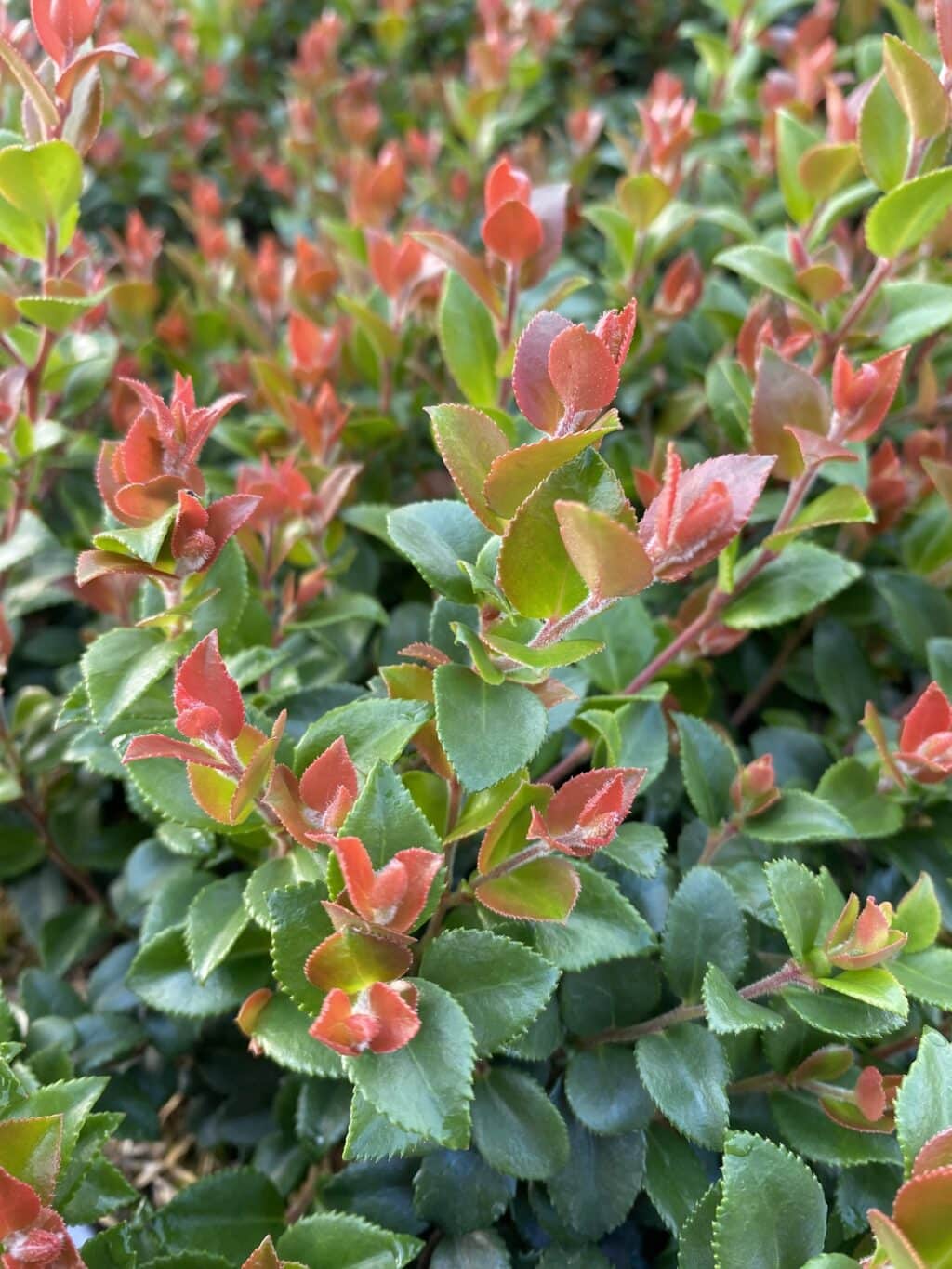
In the ground it reads as the tidy one. It holds itself upright and densely branched at around 3 ft each way without being pruned into shape, the new growth comes deep red in spring, and the flowers hang in long clusters of six to seventeen at the tips of the branches before setting glossy purple-black fruit in late summer.
Overview
- A bred selection with doubled chromosomes, stouter than the wild plant.
- Glossy purple-black berries about 8 mm across on long pendulous clusters.
- Deep red spring growth over dense, glossy evergreen leaves.
- Upright and self-supporting at about 3 ft, with minimal pruning.
Growing Details
Latin Name: Vaccinium ovatum ‘Cascade Jewel’
Site and Soil: Sun to full shade; acidic, well drained soil, pH 4.5 to 5.5
Hardiness: Hardy to USDA Zone 7
Rootstock: Grown from cuttings or tissue culture
Bearing Age: Fruits right away; full production in 5 to 6 years
Size at Maturity: Upright and densely branched, about 3 ft tall and wide
Ripening Time: Late summer into early fall; August into September
Pollination: Self-fertile; one plant crops, and a second, different huckleberry nearby improves size and yield
Pests & Diseases: No particular problems reported; deer and elk browse it in some areas
Additional Notes
- Grower’s Insight: The stiff stems are the difference you notice first. It stands up on its own where a wild-type huckleberry leans and opens out.
- Regional Insight: Huckleberries are Pacific Coast natives, at home from British Columbia down into California and anywhere with cool, moist, acidic ground.
- Explore more berries in our collection: Berries