Description
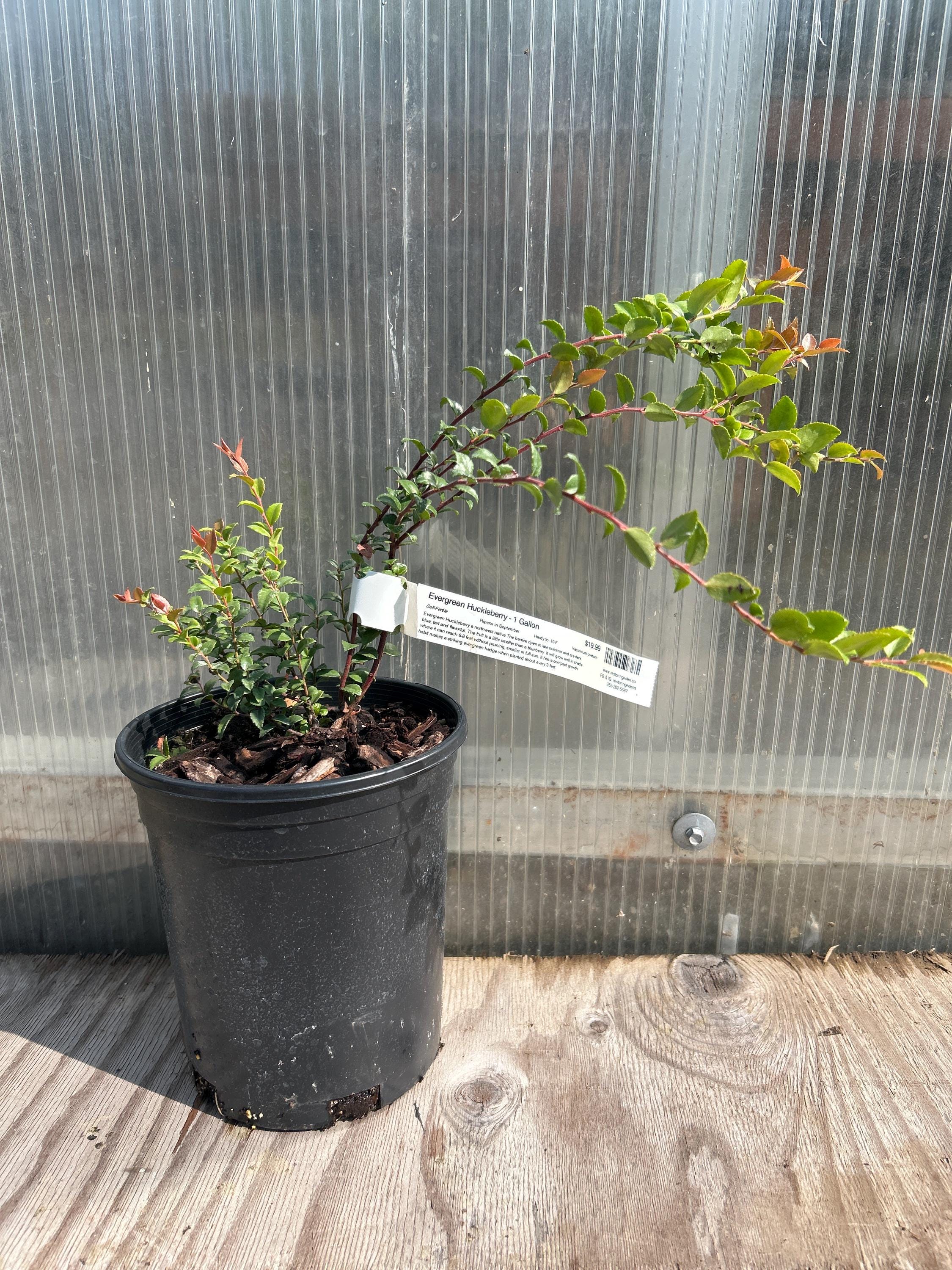
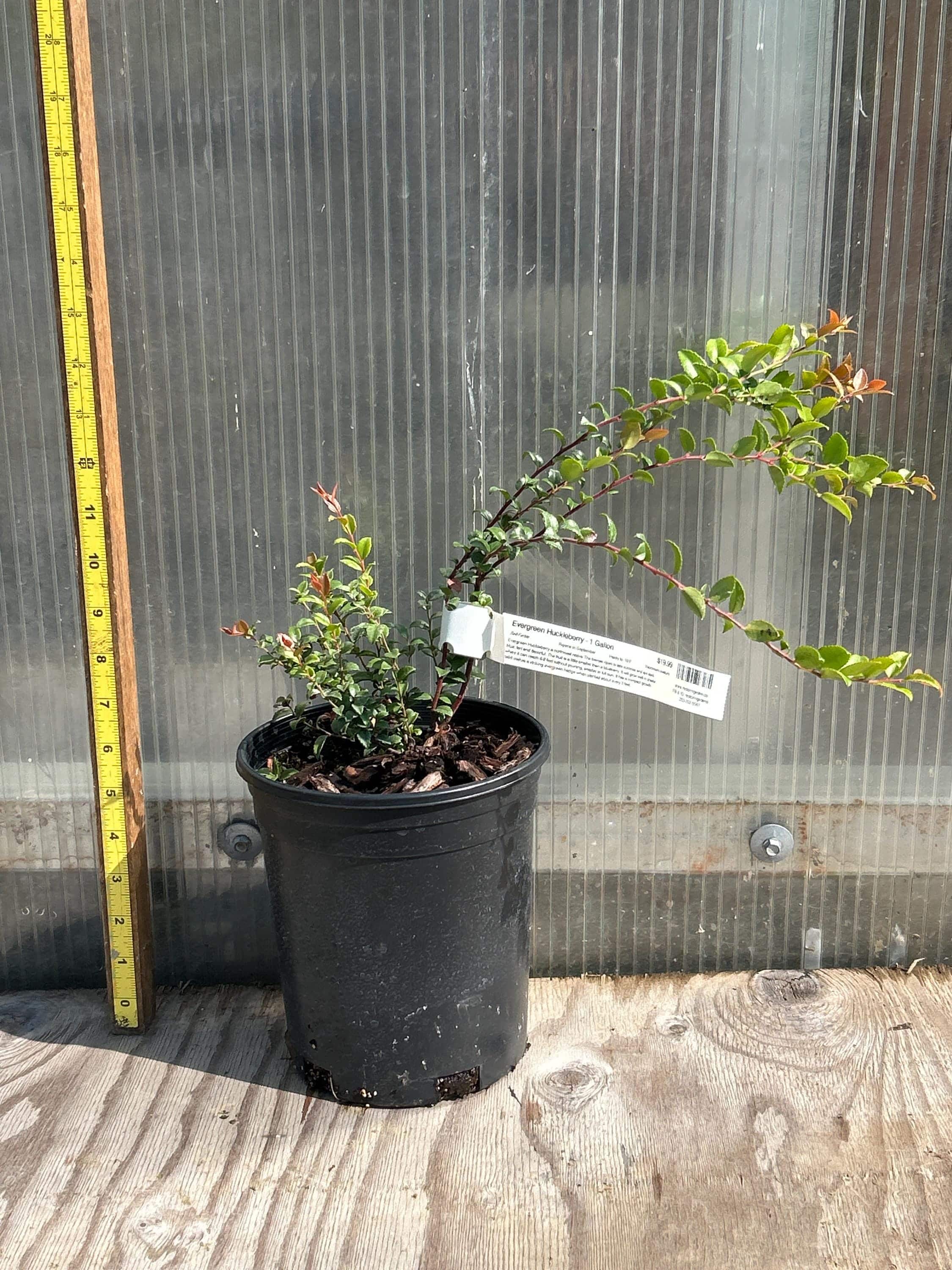
Evergreen Huckleberry is the shrub most Pacific Northwest gardeners meet first in the woods and then want at home. The leaves are small, leathery and glossy, set close along reddish stems, and they stay on all winter. Florists cut the foliage for a living.
The berries are the other half. They come in short clusters rather than singly, which is why a settled plant carries so many of them, and they ripen dark blue-black in late summer, small and tart and full flavored. Sun is the dial: more sun gives more fruit and a tighter, smaller plant, more shade gives a taller, looser one at 6 to 8 ft with lighter crops.
Overview
- Pacific Northwest native, evergreen and handsome in all four seasons.
- Small tart blue-black berries carried in clusters, ripening late summer.
- 6 to 8 ft in shade; smaller, denser and more fruitful in sun.
- Takes shearing well, so it holds a hedge at about 3 ft spacing.
Growing Details
Latin Name: Vaccinium ovatum
Site and Soil: Sun to full shade; acidic, well drained soil, pH 4.5 to 5.5
Hardiness: Hardy to USDA Zone 7
Rootstock: Grown from cuttings or tissue culture
Bearing Age: Fruits right away; full production in 5 to 6 years
Size at Maturity: 6 to 8 ft tall in shade, staying smaller and denser in full sun
Ripening Time: Late summer into early fall; August into September
Pollination: Self-fertile; one plant crops, and a second, different huckleberry nearby improves size and yield
Pests & Diseases: No particular problems reported; deer and elk browse it in some areas
Additional Notes
- Grower’s Insight: Sun is the dial on this plant. Plant it in sun for berries and a tight shape, in shade for height and a looser, woodland look.
- Regional Insight: Huckleberries are Pacific Coast natives, at home from British Columbia down into California and anywhere with cool, moist, acidic ground.
- Explore more berries in our collection: Berries