Description
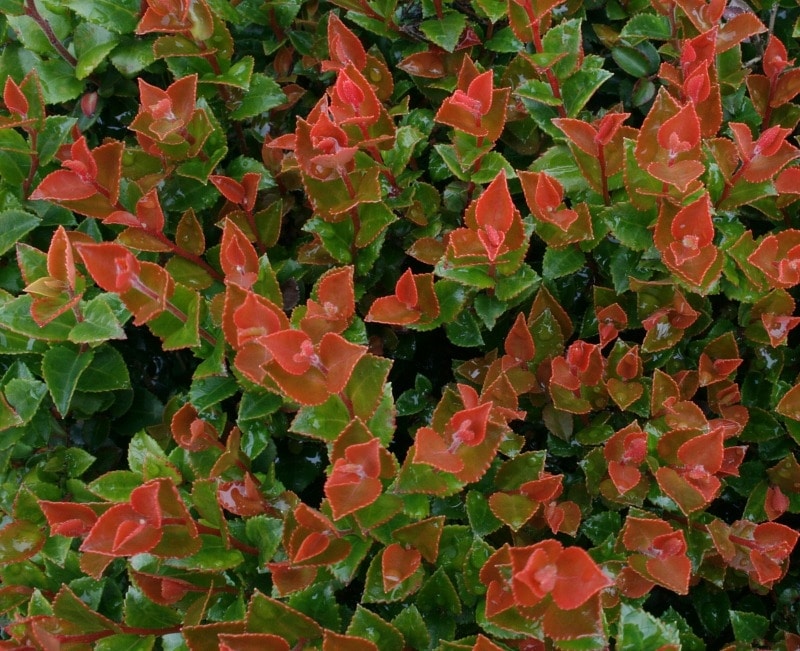
Scarlet Ovation was found in 2006 as a branch that had mutated on a plant of the native evergreen huckleberry growing in a container at a nursery in British Columbia. What that branch did, and what every plant grown from it still does, is flush bright red with each push of new growth before hardening to glossy dark green.
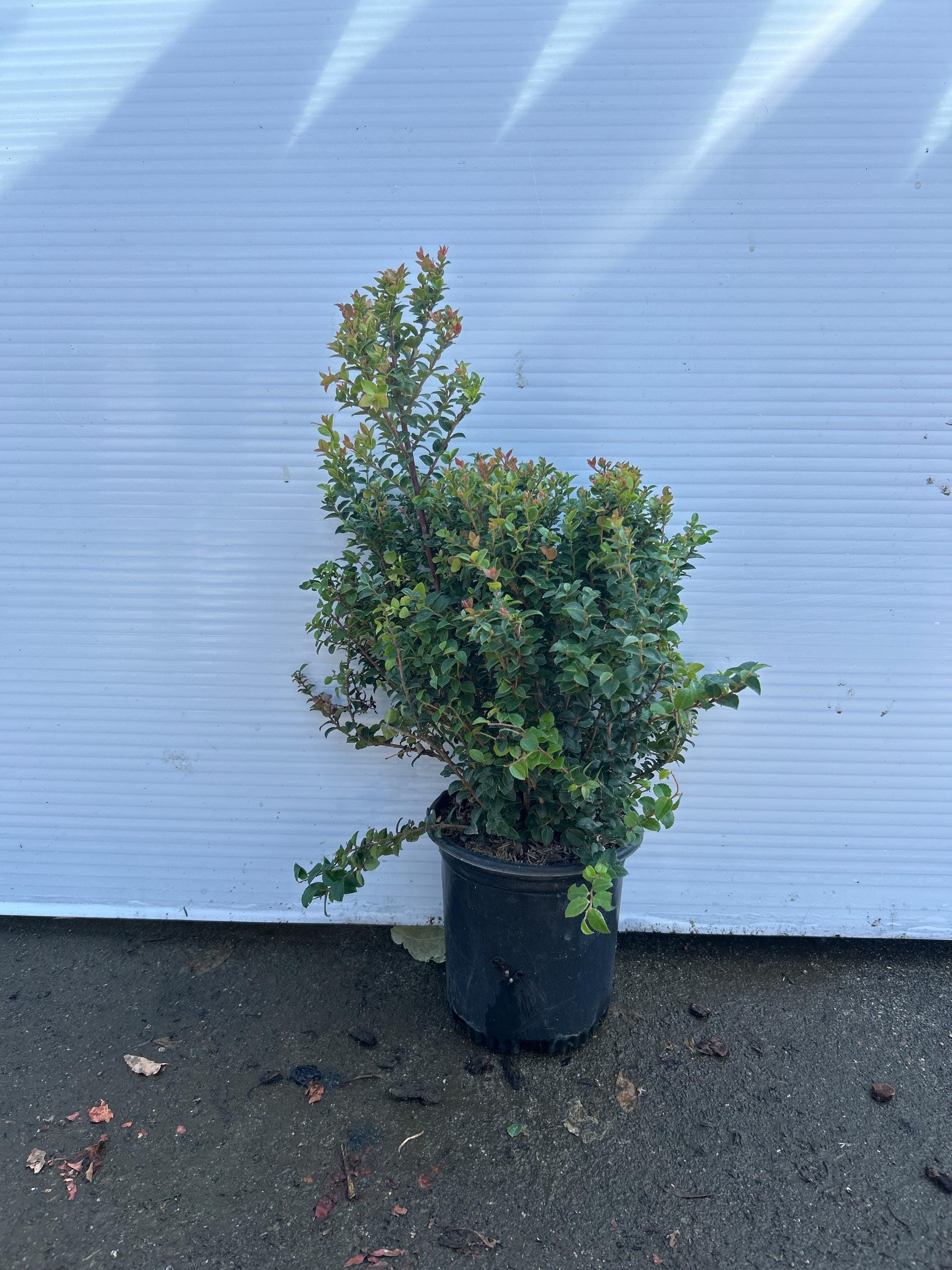
The plant is compact and dense with sturdy stems, finishing around 2.5 ft tall and a little wider, which suits the front of a bed, a low informal hedge, or a large container by a door. Give it full sun and the red comes in strongest and the berries come in heaviest; give it shade and you get a greener, looser plant that is still good looking. The berries are small and black and ripen in late summer.
Overview
- Bright red new growth over glossy evergreen leaves, repeating all season.
- Compact and dense, about 2.5 ft tall and 3.5 ft wide.
- Small black berries in late summer, edible fresh or cooked.
- Sun for the strongest color and the heaviest crop; shade for a looser plant.
Growing Details
Latin Name: Vaccinium ovatum ‘Scarlet Ovation’
Site and Soil: Sun to full shade; acidic, well drained soil, pH 4.5 to 5.5
Hardiness: Hardy to USDA Zone 7
Rootstock: Grown from cuttings or tissue culture
Bearing Age: Fruits right away; full production in 5 to 6 years
Size at Maturity: Compact and dense, about 2.5 ft tall and 3.5 ft wide
Ripening Time: Late summer into early fall; August into September
Pollination: Self-fertile; one plant crops, and a second, different huckleberry nearby improves size and yield
Pests & Diseases: No particular problems reported; deer and elk browse it in some areas
Additional Notes
- Grower’s Insight: Every flush of new growth comes in red, so a light summer trim buys you another round of color rather than costing you one.
- Regional Insight: Huckleberries are Pacific Coast natives, at home from British Columbia down into California and anywhere with cool, moist, acidic ground.
- Explore more berries in our collection: Berries