Description
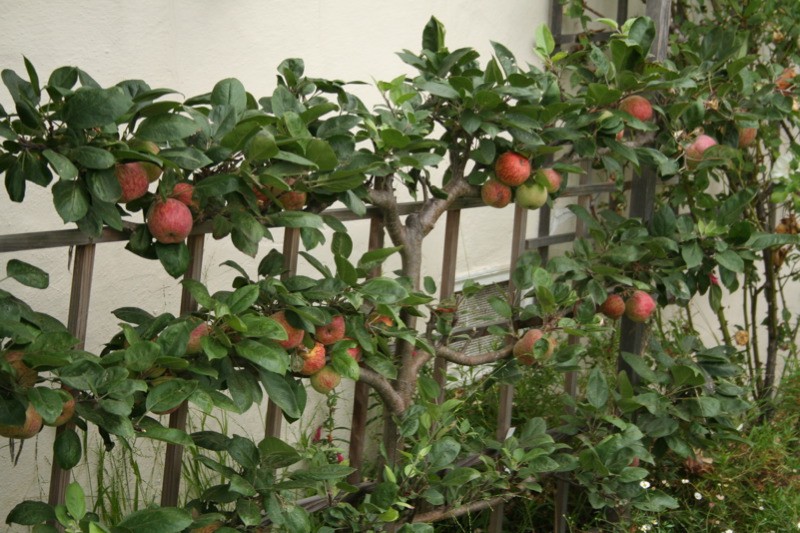
This 3-tier espaliered apple tree unites three of the most beloved dessert apples—Gala, Honeycrisp, and Fuji—on one beautifully trained tree. The horizontal tiers create a living fruit wall that’s perfect for fences, narrow beds, and small urban or suburban gardens. Gala brings early, sweet, aromatic fruit; Honeycrisp delivers famous crunch and juiciness; and Fuji finishes the season with richly flavored, excellent-keeping apples. Together they provide a long harvest window and a range of flavors for fresh eating, baking, drying, and lunchbox snacks—all from a compact, easy-to-manage tree. Grafted onto M-26 dwarfing rootstock, this espalier stays comfortably sized, bears early, and is much easier to prune, train, and harvest than a full-size tree. The three varieties bloom in overlapping mid-season windows, providing excellent cross-pollination directly on the tree.
Overview
- Three classic apples on one espaliered tree: Gala, Honeycrisp & Fuji.
- 3-tier structure ideal for fences, narrow spaces, and decorative garden walls.
- Dwarfing rootstock keeps the tree compact, productive, and easier to manage.
- Extended harvest—from early fall (Gala) into mid/late fall (Fuji).
- Excellent mix for fresh eating, baking, cider, and storage.
Varieties Included
This espalier includes the following three varieties:
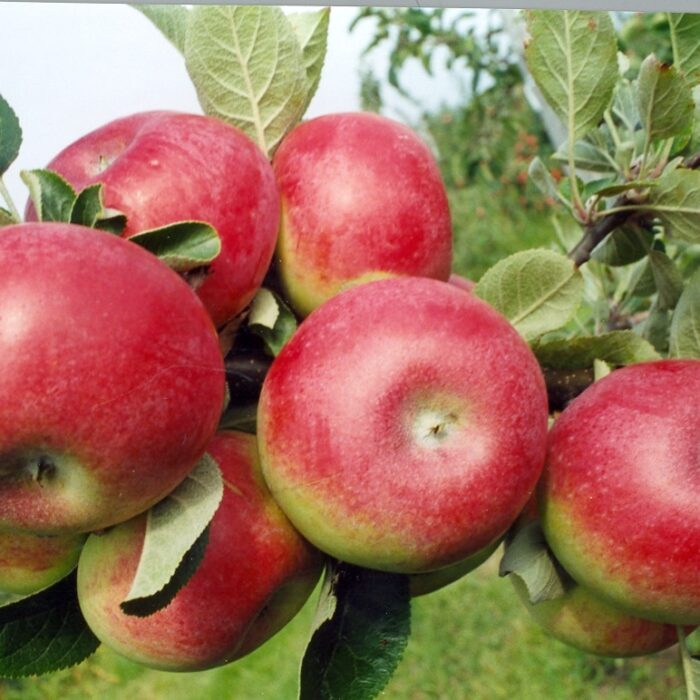
- Gala — early- to mid-season dessert apple with bright scarlet stripes over yellow; semi-sweet, aromatic flesh and very good keeping quality.
- Honeycrisp — large fruit with explosive crunch, intense juiciness, and a sweet flavor balanced by a touch of acidity; performs especially well in the Pacific Northwest.
- Fuji — very productive, late-season apple with straw-yellow skin and red blush; sweet, dense flesh that stores exceptionally well into winter.
Growing Details
Latin Name: Malus domestica
Site and Soil: 1/2 day to full day of sun; well-drained soil
Rootstock: M-26 (dwarfing)
Hardiness: USDA Zone 4–8
Bearing Age: 1–3 years
Size at Maturity: Typically maintained at 6–8 ft tall and 6–10 ft wide when espaliered
Bloom Time: Mid-season (Flowering Groups 3–4 across varieties; good overlap for cross-pollination)
Ripening Time: Early fall (Gala) through mid/late fall (Fuji), depending on climate
Pollination: Self-contained among grafted varieties; for maximum yields, plant another mid-season apple within 20–30 ft
Yield: High yield with regular pruning and thinning
Pests & Diseases: Standard apple care; Gala and Honeycrisp may need a bit more attention in wetter climates
Additional Notes
- Nerdy fact: Gala, Honeycrisp, and Fuji are three of the most popular fresh-eating apples in modern markets—this tree essentially brings the grocery store “top shelf” into your backyard.
- Espalier training improves sunlight exposure and airflow, which can enhance color and reduce disease pressure.
- Dwarfing rootstock helps keep trees manageable for homeowners and makes pruning and harvest easier on the back.
- Explore more apple varieties in our collection: Apple Trees
Planting & Care
<div class=”re-care-summary”>
<h3>At a Glance – 3-Tier Espaliered Apple (Gala, Honeycrisp & Fuji)</h3>
<ul>
<li><strong>Sun:</strong> 1/2 day to full day of sun</li>
<li><strong>Soil:</strong> Well-drained, moderately fertile soil</li>
<li><strong>Water:</strong> Keep evenly moist during establishment</li>
<li><strong>Rootstock:</strong> Dwarfing (M-26)</li>
<li><strong>Size:</strong> Typically 6–8 ft with regular training</li>
<li><strong>Pollination:</strong> Self-contained; best yields with another mid-season apple nearby</li>
<li><strong>Harvest:</strong> Early to late fall, depending on variety</li>
<li><strong>Hardiness:</strong> USDA Zone 4–8</li>
</ul>
</div>
<h2>Planting & Care – 3-Tier Espaliered Apple</h2>
<h3>Site Selection</h3>
<ul>
<li>Ideal for fences, trellises, and along sunny walls or property lines.</li>
<li>Choose a spot with good morning sun to help dry foliage and reduce disease pressure.</li>
<li>Airflow is important—avoid fully enclosed, stagnant corners if possible.</li>
</ul>
<h3>Soil Preparation</h3>
<ul>
<li>Preferred soil is well-drained loam or sandy loam.</li>
<li>Avoid heavy, waterlogged soils; raised beds or mounds can help if drainage is marginal.</li>
<li>Incorporate compost before planting to improve soil structure and moisture-holding capacity.</li>
</ul>
<h3>Planting Instructions</h3>
<ol>
<li>Install sturdy horizontal wires or a trellis at 2–3 tiers before or at planting time.</li>
<li>Plant the tree at the same depth it was growing in the nursery.</li>
<li>Gently fan and tie the existing branches along the wires, forming your first tiers.</li>
<li>Water deeply after planting and apply 2–3″ of mulch, keeping it a few inches away from the trunk.</li>
</ol>
<h3>Watering & Fertilizing</h3>
<ul>
<li>Keep soil evenly moist (not soggy) during the first 1–2 years as roots establish.</li>
<li>Deep water 1–2 times per week in dry periods; increase frequency during heatwaves or in sandy soils.</li>
<li>Apples on dwarfing rootstock are <strong>medium feeders</strong>—apply a light, balanced organic fertilizer in early spring if growth seems weak or pale.</li>
<li>Avoid heavy nitrogen, which can push excessive leafy growth at the expense of fruit quality.</li>
</ul>
<h3>Pruning & Training</h3>
<ul>
<li>In the first years, focus on building strong, horizontal tiers—tie young shoots gently to the wires.</li>
<li>Summer prune vigorous upright shoots to maintain the flat espalier plane and encourage spur formation.</li>
<li>In winter, thin crowded spurs and remove crossing or inward-growing wood to keep things open and balanced.</li>
<li>Monitor that no single variety dominates; if one limb becomes much stronger, prune it a bit harder to keep the trio balanced.</li>
</ul>
<h3>Harvest & Use</h3>
<ul>
<li>Expect Gala to ripen first, followed by Honeycrisp, with Fuji often finishing the season later.</li>
<li>Pick when fruit is fully colored and tastes good—espaliered fruit often colors earlier due to better sun exposure.</li>
<li>Great mix for fresh eating, baking, pressing into juice or cider, and for storing into fall and early winter.</li>
</ul>
<h3>General Tips</h3>
<ul>
<li>Mulch annually to moderate soil temperatures and keep weeds down.</li>
<li>Thin young fruit clusters so apples are spaced 4–6″ apart—this improves size, flavor, and reduces limb strain.</li>
<li>Dwarfing rootstock plus espalier training makes this an excellent choice where space is limited but you still want serious apple production.</li>
</ul>
No reviews of this plant yet.