Bigger plants, shipped year round from our Seattle nursery|Every plant guaranteed|Trusted by 20,000+ growers

Asian Pear Tree (Nijisseiki/20th Century)

Price range: $39.99 through $69.99

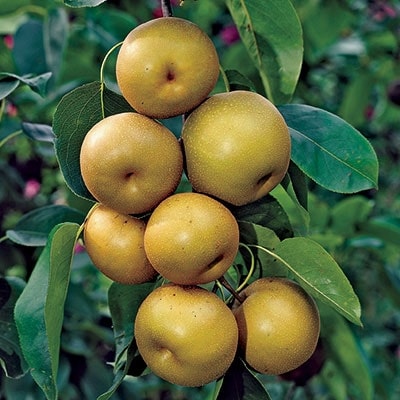
20th Century is the classic yellow Asian pear: crisp, juicy, sweet and mild, with the familiar snap that made it one of the most widely planted Asian pears in the world.

  • 🌿 Great fresh-eating flavor with crisp, juicy white flesh.
  • 🌿 One of the world’s most popular Asian pears.
  • 🌿 Excellent storage, with fruit capable of keeping for months.
  • 🌿 Thin the crop for bigger fruit.
  • 🌿 Plant a compatible Asian pear nearby for the strongest crop.

Shop both locations freely. Picking up? Choose your location at checkout. Shipping? Stock location does not matter, we will handle it. Combined orders may take 3 to 7 days.

Total in stock: -

Add to Wishlist
Add to Wishlist
Arrives healthy, guaranteed. If it does not, we replace it.
Ships in 1 to 4 business days from our nursery near Seattle, in a 36 inch box.
SKU: Asian Pear Tree (Nijisseiki/20th Century) Categories: , Tag:
From our inbox

The trees were delivered promptly and they are the biggest, best looking mail-order trees I have seen in a long time. I will be ordering more in the future.

Website customer

The plants look beautiful and healthy. I was impressed by the size and strength of the 3-Cherry Tree.

Jose

It looks like it is at least 7 feet tall. I certainly was not expecting it to be that big.

Lisa

Description

20th Century is the pear most people picture when they think of an Asian pear. The skin is smooth yellow, the flesh is crisp and juicy, and the flavor is sweet, mild and easy to like.

It became a world standard for a reason. The fruit is excellent straight off the tree and stores remarkably well once picked, so a good crop can keep supplying crisp pears long after harvest.

The biggest improvement you can make is also one of the simplest: thin it. Asian pears naturally set far more fruit than they should carry, and removing the extras a few weeks after bloom gives the remaining pears room to become substantially larger.

Overview

  • 🌿 Also known as Nijisseiki and Twentieth Century.
  • 🌿 Smooth yellow skin with crisp, juicy white flesh.
  • 🌿 Sweet, mild flavor.
  • 🌿 One of the most popular Asian pear varieties worldwide.
  • 🌿 Fruit can store for about five months under good conditions.
  • 🌿 Heavy-bearing tree that responds strongly to fruit thinning.

Growing Details

Latin Name: Pyrus pyrifolia ‘Nijisseiki’
Site and Soil: Full sun; moist, well-drained soil
Chill Requirement: Approximately 300-400 hours
Size at Maturity: Medium, spreading; maintainable around 12-15 ft with pruning
Pollination: Best with another compatible Asian pear such as Chojuro or Shinseiki
Ripening Time: Midseason; late summer into early fall depending on climate
Storage: Up to about five months under good cold storage
Propagation: Grafted onto pear rootstock

Additional Notes

  • 🌿 Grower’s Insight: Thin this pear. Leaving one fruit per cluster gives you bigger, better pears and protects the fruiting spurs that will carry next year’s crop.
  • 🌿 Regional Insight: Asian pears ripen on the tree rather than on the counter. In cooler regions the calendar moves later, so use taste and the lift-and-twist test instead of picking by somebody else’s date.
  • 🌿 Explore more pear trees in our collection: Pear Trees

Planting & Care

At a Glance
🌿 Full sun
🌿 Moist, well-drained soil
🌿 Compatible Asian pear nearby
🌿 Thin to one fruit per cluster
🌿 Pick ripe and crisp from the tree

Planting & Care – 20th Century Asian Pear

Site & Soil

Plant in full sun with good drainage and enough room for a 12- to 15-foot tree unless your rootstock is known to make it smaller. Asian pears appreciate steady moisture but do not like waterlogged ground.

Planting & Watering

Keep the graft union above soil level and water deeply after planting. Maintain even moisture during establishment and while fruit is sizing.

Pollination

Plant another compatible Asian pear nearby. Chojuro and Shinseiki are good choices with useful bloom overlap.

Pruning & Thinning

Spread young branches before narrow crotches become permanent, and prune a little more firmly than you might a European pear. About two to three weeks after bloom, thin to roughly one pear per cluster and space clusters along the branch.

Harvest & Storage

Asian pears are eaten crisp and ripen on the tree. Lift and twist gently; when a mature pear releases easily and tastes right, pick it. Cool sound fruit promptly for the longest storage.