Description
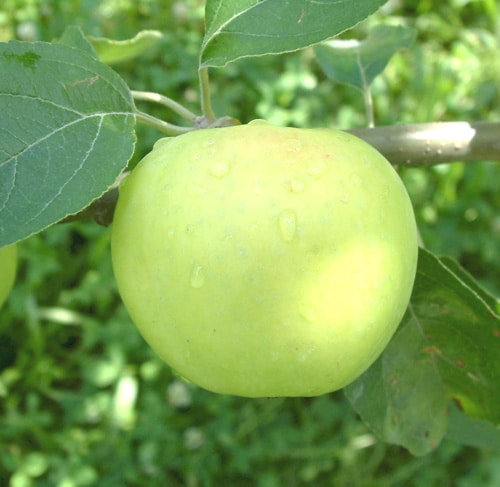
Chehalis carries a mild, honeyed sweetness with balanced acidity, described as resembling Golden Delicious but larger and crisper. It was discovered as a chance seedling near Chehalis, Washington in the 1930s by grower Lloyd Lonborg, believed to be a Golden Delicious seedling, and was introduced commercially in 1965.
One tree crops on its own, and a compatible pollinator planted nearby brings a heavier, more consistent harvest. The tree is a reliable producer and resistant to apple scab.
Overview
- Mild, honeyed sweetness, balanced acidity
- Larger and crisper than Golden Delicious
- Self-fertile, heavier crops with a pollinator
- Washington-origin chance seedling, introduced 1965
- Resistant to apple scab
Growing Details
Latin Name: Malus domestica ‘Chehalis’
Site and Soil: Full sun; well-drained soil
Chill Requirement: Approximately 800 hours
Hardiness:Hardy to USDA Zone 4
Rootstock: M-106 (semi-dwarf)
Bearing Age: 1 to 3 years
Size at Maturity: 12-15′ tall and wide – easily maintained smaller with pruning.
Flowering Group: Group 3 (mid-season)
Ripening Time: Mid season; September into early October
Pollination: Self-fertile; heavier crops with a compatible apple variety nearby
Pests & Diseases: Resistant to apple scab; partially resistant to mildew
Yield: Reliable producer once established
Additional Notes
- Grower’s Insight: Chehalis keeps for about two months in cold storage; the skin turns waxy toward the end of that window, so it is best enjoyed within it rather than held long-term.
- Regional Insight: Chehalis was found and bred in a mild, wet-winter growing region, and it has a strong reputation for reliable cropping in similar maritime climates nationwide.
- Explore more apple trees in our collection: Apple Trees