Description
In the town of Bar-le-Duc in north-eastern France, currants were traditionally de-seeded one berry at a time with a sharpened goose quill, leaving the fruit whole and the jar clear. The resulting preserve is one of the rarest in the world and the currant behind it carries the town’s name.
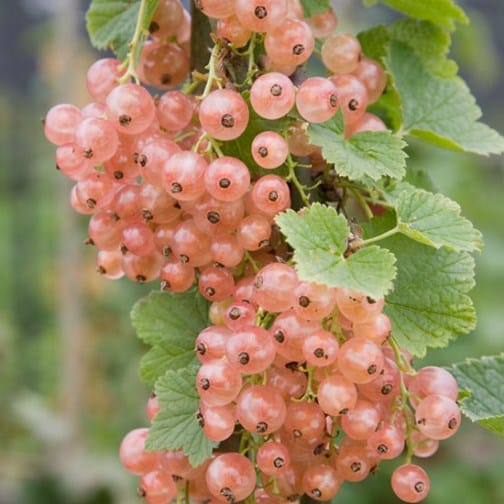
The plant itself is straightforward: abundant clusters of translucent, sweet berries on an ordinary, hardy, self-fertile currant bush. You do not need a goose quill to enjoy it, but it is a good story to have standing in your garden.
Overview
- The currant behind the famous Bar-le-Duc preserve.
- Abundant clusters of translucent, sweet berries.
- A documented French heirloom.
- Hardy, self-fertile and straightforward to grow.
Growing Details
Latin Name: Ribes rubrum ‘Bar-Le-Duc’
Site and Soil: 1/2 day to full day of sun; rich, moist, well-drained soil
Hardiness: Hardy to USDA Zone 3
Rootstock: Grown from cuttings
Bearing Age: Light crop the year after planting; full crops by the third or fourth year
Size at Maturity: Upright and compact, about 3 to 5 ft tall and wide
Ripening Time: Mid season; July into August
Pollination: Self-fertile; one bush sets a full crop, and a second currant nearby increases berry size
Additional Notes
- Grower’s Insight: The goose quill is optional. A whole-fruit jelly made the ordinary way is still something most people have never tasted.
- Regional Insight: Currants are cool-climate fruit, at their best where summers stay moderate and winters are properly cold.
- Explore more berries in our collection: Berries