Description
White Cherry is at the top of the sweetness range for this crop. It is sweeter than the pink currants, which are themselves the mild end of the family, and that puts it squarely in fresh-eating territory rather than the preserving pan.
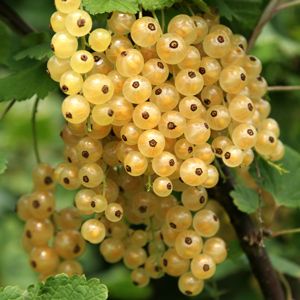
The bush produces abundant clusters of medium to large berries, pale and translucent, in the usual hanging strings. It is the currant to plant for someone who has decided they do not like currants, because what they usually mean is that they do not like the acidity.
Overview
- One of the sweetest currants of any colour.
- Abundant clusters of medium to large pale berries.
- Mild acidity; a good introduction to the crop.
- Easy and reliably productive.
Growing Details
Latin Name: Ribes rubrum ‘White Cherry’
Site and Soil: 1/2 day to full day of sun; rich, moist, well-drained soil
Hardiness: Hardy to USDA Zone 3
Rootstock: Grown from cuttings
Bearing Age: Light crop the year after planting; full crops by the third or fourth year
Size at Maturity: Upright and compact, about 3 to 5 ft tall and wide
Ripening Time: Mid season; July into August
Pollination: Self-fertile; one bush sets a full crop, and a second currant nearby increases berry size
Additional Notes
- Grower’s Insight: If someone in the house says they do not like currants, this is the one to hand them. The objection is almost always to the acid.
- Regional Insight: Currants are cool-climate fruit, at their best where summers stay moderate and winters are properly cold.
- Explore more berries in our collection: Berries