Description
Kuganskaya Quince is one of the quinces people eat fresh. When fully ripe, the fruit develops a sweet, mild flavor and fragrant character that sets it apart from strictly cooking-only quince varieties. At the same time, Kuganskaya retains the structure and performance that make quince valuable in the kitchen.
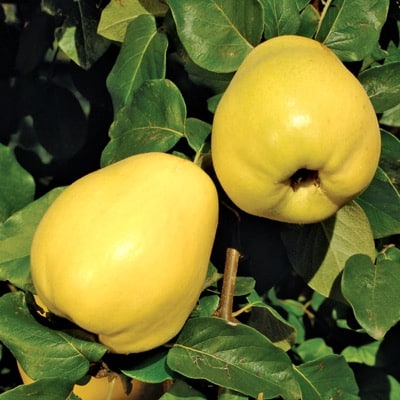
The tree produces bountiful crops of large, round, bright yellow fruit that ripens late in the season. While fresh eating is a defining trait, Kuganskaya also performs exceptionally well when cooked, softening evenly and developing classic quince flavor suited to baking, poaching, preserves, and quince paste. This dual-purpose nature makes it one of the more broadly useful quinces available.
Productive and manageable, Kuganskaya fits well into home orchards and mixed fruit plantings. It is grown for versatility and reliability—expanding how quince can be used without sacrificing traditional performance.
Overview
- Quince cultivar that can be eaten fresh when fully ripe
- Large, sweet, mild fruit with late-season ripening
- Strong performance in cooking and preserving
- Bountiful crops on a compact, productive tree
- Self-fertile and dependable once established
Growing Details
Latin Name: Cydonia oblonga ’Kuganskaya’
Site and Soil: 1/2 day to full day of sun; well-drained soil
Chill Requirement: Approx. 300–400 hours
Hardiness: USDA Zone 4–9
Rootstock: Quince
Bearing Age: 1–3 years
Size at Maturity: Typically maintained at 10–15 ft tall and wide with pruning
Bloom Time: Mid-spring
Ripening Time: Late fall; typically October to early November (varies by region)
Pollination: Self-fertile; additional quince may improve yield
Pests & Diseases: Standard quince considerations; monitor for fire blight and rust where present
Yield: Consistent and productive once established
Additional Notes
- Grower’s Insight: Kuganskaya comes from the southern Caucasus, north of Turkey and Armenia, where quince has long been grown as a practical food fruit rather than a specialty crop. In that region, quinces are commonly eaten fresh when ripe and preserved when abundant. Kuganskaya reflects that use pattern—mild enough for fresh eating, yet structured enough for traditional baking and preserves.
- Regional Insight: Performs well across a wide range of climates, including cooler regions where late-season ripening allows fruit to fully develop sweetness and aroma.
- Harvest when fruit is fully yellow and fragrant for best eating quality.
- Late ripening makes it a good complement to earlier quince varieties.