Bigger plants, shipped year round from our Seattle nursery|Every plant guaranteed|Trusted by 20,000+ growers

Pawpaw (Tallahatchie)

$39.99

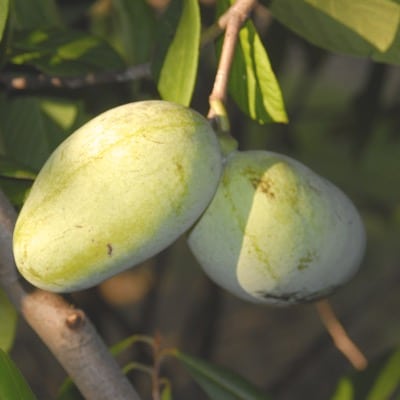
Tallahatchie™ is a Peterson pawpaw selected for smooth texture, low seed content, and a sweet, refined flavor profile—valued by growers who care about usable flesh and eating quality.

  • Large fruit, commonly reported around 9 oz
  • Very low seed content, reported ~5–6% by weight
  • Silky, custard-style texture at full ripeness
  • Mid to late within pawpaw varieties
  • Pollination required; plant a partner within 20–30 feet

Shop both locations freely. Picking up? Choose your location at checkout. Shipping? Stock location does not matter, we will handle it. Combined orders may take 3 to 7 days.

Total in stock: -

Add to Wishlist
Add to Wishlist
Arrives healthy, guaranteed. If it does not, we replace it.
Ships in 1 to 4 business days from our nursery near Seattle, in a 36 inch box.
Grows in zones 5 to 8.
SKU: Pawpaw (Tallahatchie) Categories: , Tag:
From our inbox

Boxed perfect. Shipped on time. Excellent quality stock. About the only thing you could do to improve my experience would be to fly out to Maine and plant them for me.

Don, Maine

The bare roots are by far the most established roots that I have ever seen on a bareroot tree.

Website customer

It looks like it is at least 7 feet tall. I certainly was not expecting it to be that big.

Lisa

Description

Tallahatchie™ is Neal Peterson’s seventh released pawpaw cultivar, selected with a clear focus on eating quality and flesh yield. Among named pawpaws, it’s known for combining large fruit with notably low seed content and a smooth, refined texture.

When fully ripe, the fruit develops a silky, spoonable consistency and a sweet flavor profile often described as mellow and floral rather than loud or overpowering. This makes Tallahatchie™ especially well suited to fresh eating and dessert-style uses, including custards and pawpaw ice cream.

Fruit size is commonly reported around a 9 oz average, and seed content is reported in the ~5–6% range by weight—placing it firmly in the high usable-flesh category among named cultivars. Ripening is generally described as mid to late season within pawpaw varieties, and like most pawpaws, Tallahatchie™ performs best when cross-pollinated.

Overview

  • Peterson-bred pawpaw selected for eating quality and flesh yield
  • Large fruit, commonly reported around 9 oz
  • Low seed content, reported ~5–6% by weight
  • Silky, custard-style texture at full ripeness
  • Mid to late within pawpaw varieties
  • Pollination required; plant a compatible variety within 20–30 feet

Growing Details

Latin Name: Asimina triloba ‘Tallahatchie™’
Site and Soil: 1/2 day to full day of sun; well-drained soil with consistent moisture
Chill Requirement: Not expressed in chill hours for pawpaws; requires a temperate climate with warm summers
Hardiness: USDA Zone 5–8
Rootstock: Grafted onto pawpaw rootstock
Bearing Age: 3–5 years after planting
Size at Maturity: Typically 15–25 ft tall and wide; manageable with light pruning
Bloom Time: Mid-season (varies by region)
Ripening Time: Mid to late within pawpaw varieties; typically Sept 10–Sept 25 in Frankfort, KY (varies by region)
Fruit Weight: Commonly reported around 9 oz per fruit
Seed Content: Reported ~5–6% seed by weight
Texture Class: Smooth custard; silky, spoonable at full ripeness
Pollination: Pollination required; plant a genetically distinct pawpaw variety within 20–30 feet
Pests & Diseases: Generally low disease pressure with good airflow and moisture management
Yield: Reliable producer once established

Additional Notes

  • Grower’s Insight: Tallahatchie™ stands out when judged at true ripeness—soft, fragrant fruit reveals its smooth texture and clean, refined sweetness.
  • Regional Insight: In cooler-summer regions like the Puget Sound, plant pawpaws in as much sun as possible to support strong growth and consistent fruit finishing.
  • Breeding Background: Developed by Neal Peterson and named after the Tallahatchie River, continuing his focus on improved flesh yield and eating quality.
  • Thin heavy clusters if needed to improve fruit size and even ripening.
  • Explore more pawpaw varieties in our collection:
Planting & Care

At a Glance – Tallahatchie™ Pawpaw

  • Sun: 1/2 day to full day of sun (Puget Sound: as much sun as possible)
  • Soil: Well-drained, fertile soil with steady moisture
  • Water: Consistent during establishment; deep watering once established
  • Size: Typically 15–25 ft at maturity
  • Pollination: Required; plant a partner within 20–30 feet
  • Harvest: Mid to late within pawpaw varieties
  • Hardiness: USDA Zone 5–8

Planting & Care

What Makes Pawpaws Different

  • Pawpaws develop a deep, sensitive taproot early and respond poorly to root disturbance.
  • Container-grown trees with intact root systems establish far more reliably than bare-root pawpaws.

Site Selection

  • Cool-summer regions (including Puget Sound): Plant in as much sun as possible. Shade cloth is unnecessary and can slow establishment.
  • Hot-summer regions: Young trees may benefit from light protection from extreme afternoon heat during their first season.
  • Choose a sheltered site with good air drainage and avoid waterlogged soils.

Soil Preparation

  • Plant in deep, well-drained soil with good organic matter.
  • Raised planting is helpful where drainage is marginal.
  • Mulch to stabilize moisture and protect shallow feeder roots.

Planting Instructions

  • Dig a hole 2–3x the width of the container, no deeper than the root ball.
  • Slide the tree out carefully and keep the root ball intact.
  • Set the tree with the root flare at or slightly above soil level.
  • Backfill with native soil, water deeply, and mulch 2–3 inches (keep mulch off the trunk).

Watering & Fertilizing

  • Maintain consistent moisture during the first 1–2 years.
  • Once established, water deeply during prolonged dry periods.
  • Fertilize lightly in spring only if growth appears weak.

Pollination & Fruit Set

  • Tallahatchie™ requires cross-pollination.
  • Plant another genetically distinct pawpaw variety within 20–30 feet.
  • Hand pollination can improve set where natural pollinators are limited.

Harvest & Handling

  • Harvest when fruit softens slightly and releases easily.
  • Finish ripening indoors for best texture and flavor.
  • Handle gently—pawpaws bruise easily when ripe.

General Tips

  • Mulch and moisture consistency are the two biggest success factors.
  • Judge pawpaws only at full ripeness—underripe fruit never shows true quality.