Bigger plants, shipped year round from our Seattle nursery|Every plant guaranteed|Trusted by 20,000+ growers

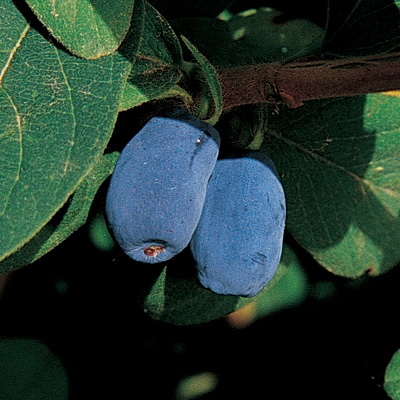
Honeyberry (Blue Pagoda)

$24.99

Widely grown in northern Japan, this valuable variety is prized for its abundant crops of large, flavorful, sweet, crisp and juicy fruit. An attractive, upright shrub, Blue Pagoda™ grows 4-5 ft. in height. Plant another late-blooming variety for cross pollination.

Shop both locations freely. Picking up? Choose your location at checkout. Shipping? Stock location does not matter, we will handle it. Combined orders may take 3 to 7 days.

Total in stock: -

Add to Wishlist
Add to Wishlist
Arrives healthy, guaranteed. If it does not, we replace it.
Ships in 1 to 4 business days from our nursery near Seattle, in a 36 inch box.
SKU: Honeyberry (Blue Pagoda) Categories: , Tag:
From our inbox

The trees were delivered promptly and they are the biggest, best looking mail-order trees I have seen in a long time. I will be ordering more in the future.

Website customer

The plants look beautiful and healthy. I was impressed by the size and strength of the 3-Cherry Tree.

Jose

It looks like it is at least 7 feet tall. I certainly was not expecting it to be that big.

Lisa

Description

Honeyberries are a unique species of Honeysuckle, Honeyberry is a very hardy, small shrub native to eastern Siberia, the Russian Far East, and northern Japan. Very early ripening, Honeyberry is valued for its sweet and tasty Blueberry-like fruit and for its exceptional hardiness, to minus 40° F. or below. Great for fresh eating, Honeyberry also makes delicious and nutritious juice and preserves. We have both early and late blooming varieties. The late blooming types are more productive in the maritime Northwest climate, where pollinators are often not available for the earlier blooming varieties. Both early and late blooming forms produce abundant crops in most other regions of the US.

The late blooming Honeyberry varieties bloom up to 2 months later in the Pacific Northwest than the early blooming varieties. Later blooming means that more bees and other insects are available for pollination and fruit set is significantly better. These varieties are also good for east of the Cascade Mts. and other colder regions of the US.