Description
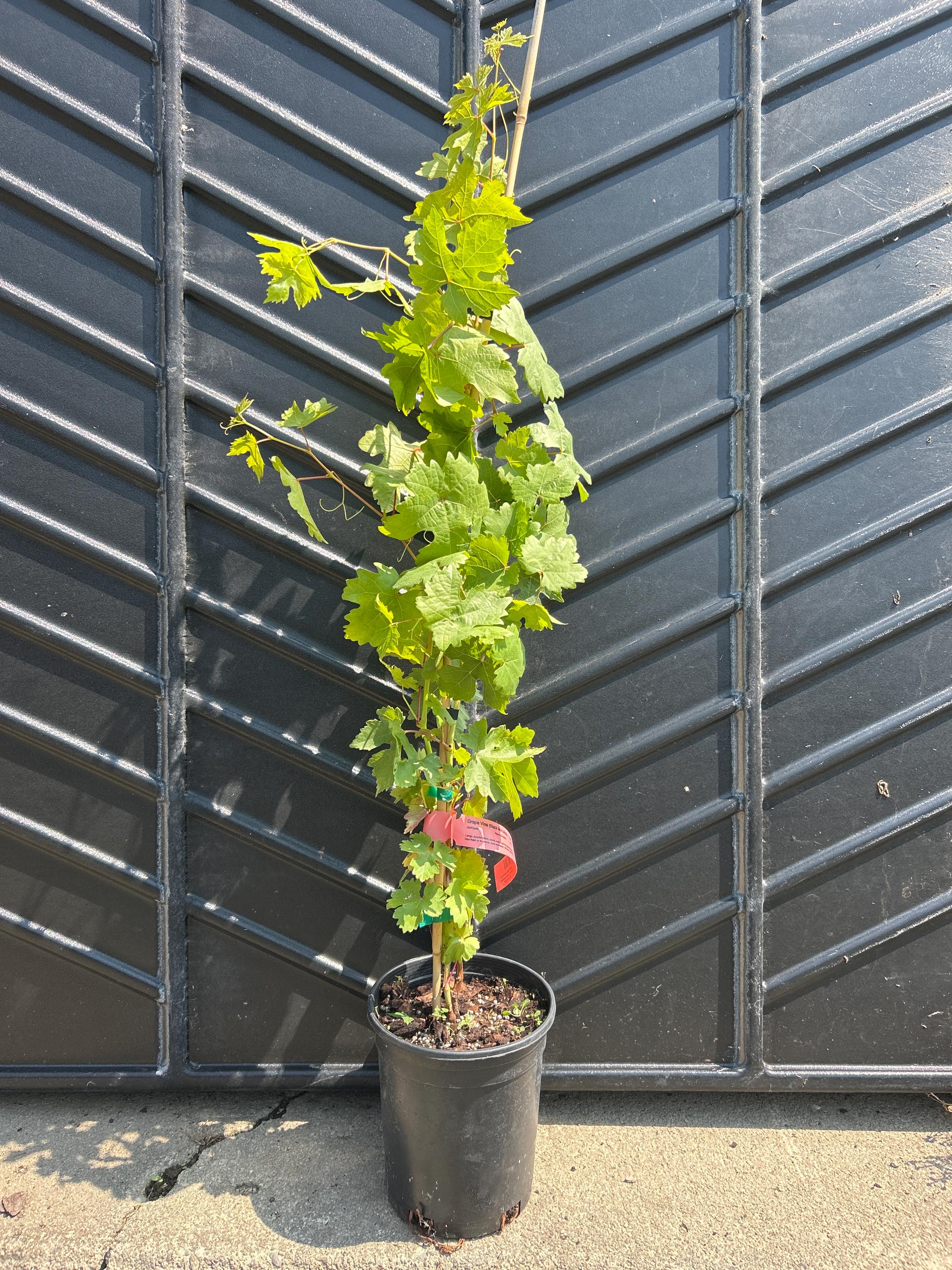
Black Monukka is a classic black seedless grape: crisp, sweet, and richly flavored, equally good eaten fresh off the vine or dried into homemade raisins. Every vine crops on its own, with no second variety needed for pollination.
Black Monukka’s place in grape history runs deep. Alongside Thompson Seedless, it is one of the two founding cultivars behind most of the seedless grapes grown across North America today, and it has gone on to parent several newer seedless varieties in its own right.
An early-season European grape, it wants a warm, sunny site with a full day of summer heat, the same conditions that favor Thompson Seedless. Give it a permanent trellis or arbor, since the vigorous canes need cane pruning to crop well.
Overview
- Classic black seedless grape: crisp, sweet, and richly flavored.
- Self-fertile; one vine crops without a second variety nearby.
- One of the two founding cultivars behind most modern seedless grapes.
- Early-season ripening; wants a warm, sunny, full-summer-heat site.
- Excellent fresh off the vine or dried into raisins.
Growing Details
Latin Name: Vitis vinifera ‘Black Monukka’
Site and Soil: Full sun, 7 to 8 hours; any well drained soil, avoid frost pockets and wind
Hardiness: Hardy to USDA Zone 7; less cold hardy than American grape types
Rootstock: Grown from tissue culture
Bearing Age: Full crops begin around year four or five
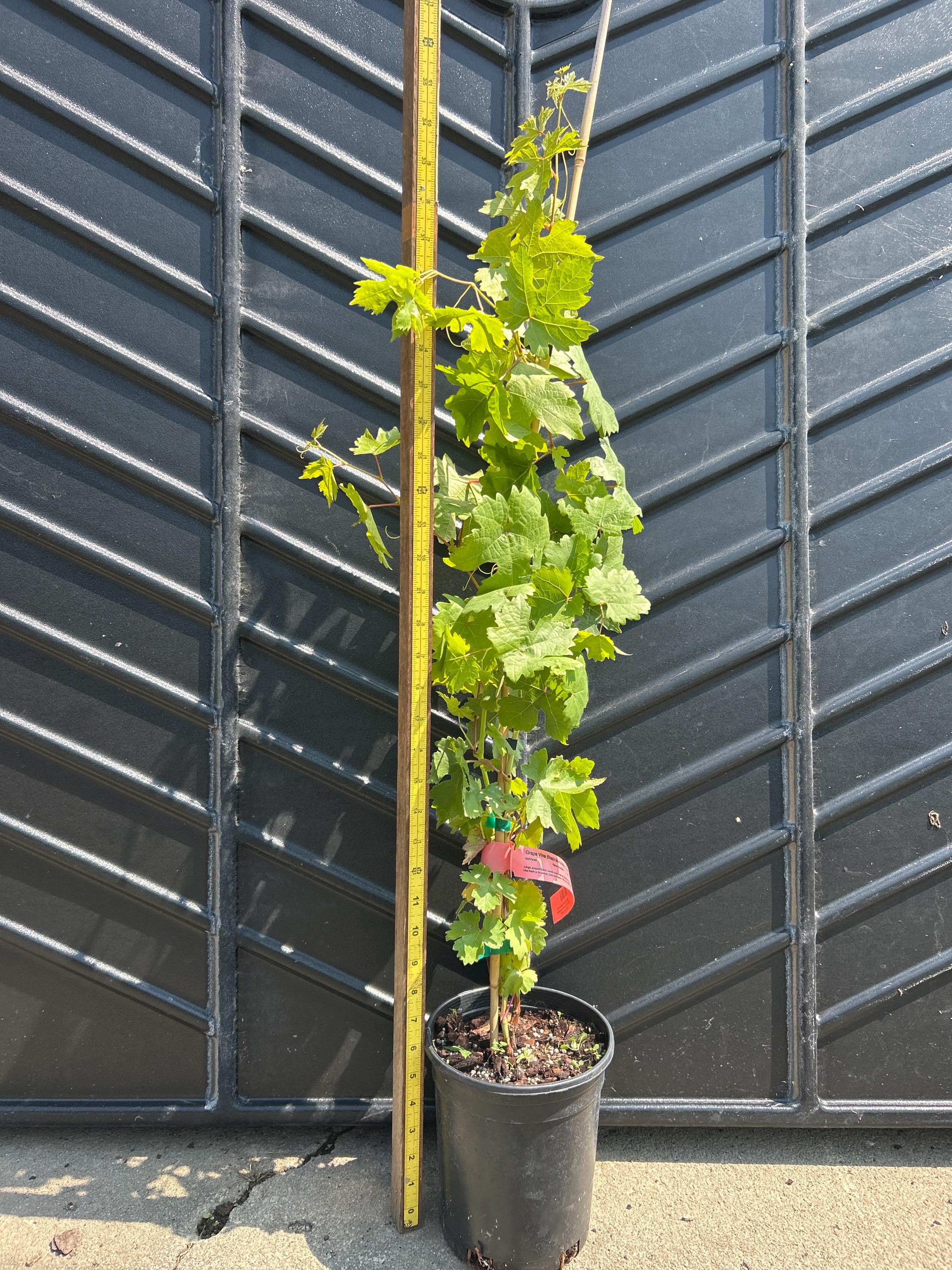
Size at Maturity: Vigorous permanent vine, spaced 6 ft in the row, 9 to 10 ft between rows
Ripening Time: Early season; late August into September
Pollination: Self-fertile; a single vine sets a full crop with no partner
Pests & Diseases: Somewhat more prone to powdery mildew than American types; airy, sunny sites help
Yield: A mature vine yields about 15 to 35 lb per year
Additional Notes
- Grower’s Insight: Give it the sunniest, warmest spot available and cane-prune it each winter, since Black Monukka crops best with a full season of summer heat.
- Regional Insight: It fruits most reliably in warm-summer regions such as California’s Central Valley, the Southwest, and the inland South.
- Explore more grape vines in our collection: Grape Vines