
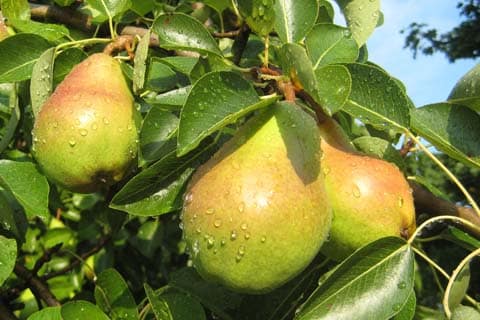
Description
This elegant 2-tier espaliered European pear tree features two classic pear varieties, selected from Bartlett, Red Bartlett, and Bosc, trained into a compact, formal structure perfect for narrow spaces, garden walls, courtyards, and smaller landscapes. Espaliered pears offer exceptional fruit quality due to improved sunlight exposure and airflow, while doubling as a striking architectural feature in the garden. Each horizontal tier carries a different variety, giving you a wider flavor range, better pollination, and staggered ripening all on one beautifully crafted tree. Grafted onto Provence quince, a true dwarfing rootstock, this espalier remains easy to maintain while producing reliable crops of high-quality fruit.
Overview
- Two classic European pear varieties on one espaliered tree.
- Compact 2-tier structure ideal for fences, trellises, patios, and small gardens.
- Dwarfing quince rootstock keeps the tree exceptionally manageable.
- Built-in cross-pollination between grafted varieties.
- Excellent fruit quality thanks to improved light distribution.
Varieties Included
Each tree contains two of the following three varieties. Exact combinations vary by year and availability.
- Bartlett — classic early-season pear; sweet, juicy, and aromatic; excellent for fresh eating and canning.
- Red Bartlett — red-skinned selection with sweet, tender flesh; superb fresh and great for preserves.
- Bosc — firm, honey-sweet late-season pear; exceptional for baking, roasting, and long storage.
Growing Details
Latin Name: Pyrus communis
Site and Soil: 1/2 day to full day of sun; well-drained soil
Rootstock: Provence Quince (dwarfing)
Hardiness: USDA Zone 5–9
Bearing Age: 1–3 years
Size at Maturity: Typically maintained at 5–7 ft tall and 6–8 ft wide when espaliered
Bloom Time: Mid-season bloom across all varieties
Ripening Time: Sequential ripening depending on included varieties
Pollination: Self-contained; both varieties pollinate each other
Pests & Diseases: Quince rootstock enhances precocity and fruit quality
Yield: High productivity with balanced pruning
Additional Notes
- Nerdy fact: Espalier techniques were originally developed to ripen fruit along monastery and castle walls in cool European climates — resulting in higher fruit quality with fewer trees.
- Dwarfing quince rootstock keeps this espalier compact and easy to maintain.
- Different varieties ripen at different times, extending your harvest season.
- Explore more pear varieties in our collection: Pear Trees


