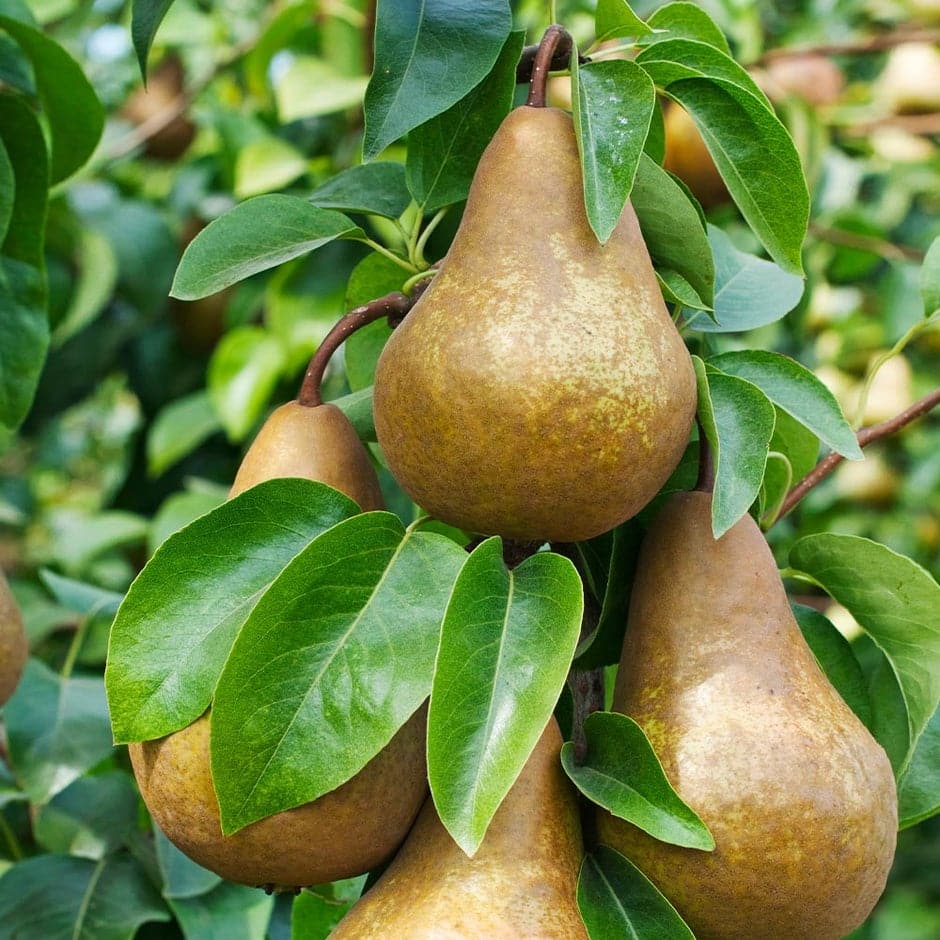
Pear Tree (Bosc)

Price range: $39.99 through $59.99

Bosc is a firm, sweet, honey-flavored pear ideal for baking, poaching, and fresh use. Semi-dwarf tree stays compact and productive. Requires a pollinator.

  • Semi-dwarf size: 12–15 ft
  • Rich, dense, honey-like flesh
  • Outstanding for cooking
  • Consistent producer
  • Needs another European pear for pollination
Add to Wishlist
Add to Wishlist
SKU: Pear Tree (Bosc) Categories: , Tag:

Description

Bosc is a distinguished European pear known for its firm, dense flesh and rich, honeyed flavor. Its iconic russeted skin and elongated shape make it instantly recognizable. Bosc pears hold their texture during cooking, making them exceptional for baking, poaching, grilling, and desserts—while still offering a sweet, slightly spiced flavor when eaten fresh. Grafted onto a semi-dwarfing rootstock, this Bosc pear reaches a manageable 12–15 ft at maturity, ideal for home orchards where ease of pruning, spraying, and harvesting matters. The semi-dwarf habit supports excellent fruit quality, dependable cropping, and long-term health. Bosc is not self-fertile and requires another European pear such as Bartlett, Anjou, Comice, or Seckel for pollination.

Overview

  • Classic russeted pear with dense, sweet, honey-like flavor.
  • Outstanding for baking, poaching, and culinary use.
  • Semi-dwarf size is easy to manage in small orchards.
  • Requires another European pear for pollination.
  • Strong vigor and reliable cropping.

Growing Details

Latin Name: Pyrus communis ‘Bosc’
Site and Soil: 1/2 day to full day of sun; prefers well-drained soil
Rootstock: OHxF 97 (semi-dwarf)
Hardiness: USDA Zone 5–9
Bearing Age: 1–3 years
Size at Maturity: 12–15 ft — compact, easy to manage
Bloom Time: Mid-season
Ripening Time: September to October
Pollination: Requires another European pear
Pests & Diseases: Generally tolerant; improved vigor from semi-dwarfing rootstock
Yield: Heavy, consistent crops with proper thinning

Additional Notes

  • Bosc holds its shape during cooking—ideal for poaching and baking.
  • The firm texture mellows into sweetness when properly ripened.
  • Semi-dwarfing rootstock maintains size and productivity.
  • Explore more pear varieties in our collection: Pear Trees
Planting & Care

At a Glance – Bosc Pear (Semi-Dwarf)

  • Sun: 1/2 day to full day of sun
  • Soil: Prefers well-drained soils
  • Water: Keep evenly moist during establishment
  • Rootstock: Semi-dwarfing
  • Size: 12–15 ft at maturity
  • Pollination: Requires another European pear
  • Harvest: September–October
  • Hardiness: USDA Zone 5–9

Planting & Care – Bosc Pear

Site Selection

  • Prefers 1/2 day to full day of sun—tolerates cooler climates well.
  • Select a site with good airflow to help manage disease pressure.
  • Avoid planting in waterlogged soils or low pockets.

Soil Preparation

  • Bosc thrives in well-drained loam but adapts to many soil types.
  • Lightly amend with compost if soil is poor; avoid heavy nitrogen inputs.
  • Ideal soil pH: 6.0–7.0.

Planting Instructions

  1. Dig a hole twice the width of the root ball.
  2. Plant at the same depth it grew in the nursery row.
  3. Backfill with native soil and water deeply.
  4. Mulch with 2–3″ of organic material, keeping it away from the trunk.

Watering & Fertilizing

  • Keep soil consistently moist during the first 1–2 years—not soggy.
  • In mild climates, water deeply 1–2 times per week during dry weather.
  • In hot or windy climates, increase to 2–3 deep waterings per week.
  • Check soil 4–6″ deep and water when this layer becomes dry.
  • Once established (year 3+), water deeply every 7–14 days in dry periods.
  • Bosc is a medium feeder: apply a light, balanced fertilizer in early spring only if growth is weak.

Pollination

  • Requires another European pear for pollination.
  • Compatible partners include Bartlett, Anjou, Comice, Seckel, and Warren.
  • Plant within 20–30 ft from its pollinating partner for best fruit set.

Pruning & Training

  • Train to a central leader or modified central leader form.
  • Bosc tends to produce upright growth—annual pruning encourages good structure.
  • Thin fruit when clusters are dense to improve size and quality.

Harvest & Use

  • Bosc pears hold their shape when cooked—excellent for poaching and baking.
  • Allow fruit to ripen indoors for best flavor and sweetness.
  • A popular choice for culinary uses thanks to dense, richly flavored flesh.

General Tips

  • Mulch annually to conserve moisture and suppress weeds.
  • Semi-dwarf size makes this tree easy to prune and manage.
  • Monitor for fire blight and prune out affected tissue during dormancy.