
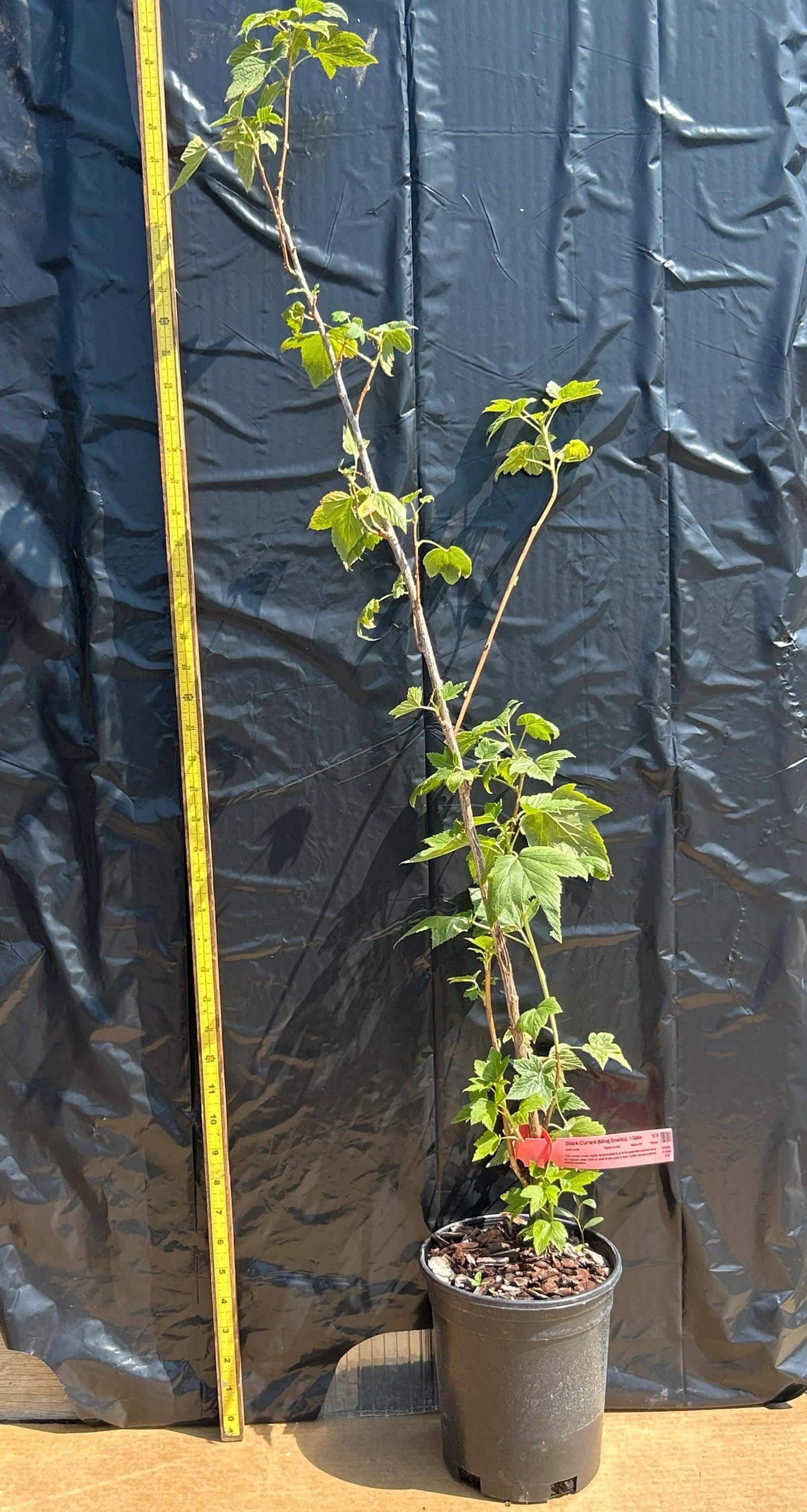
Description
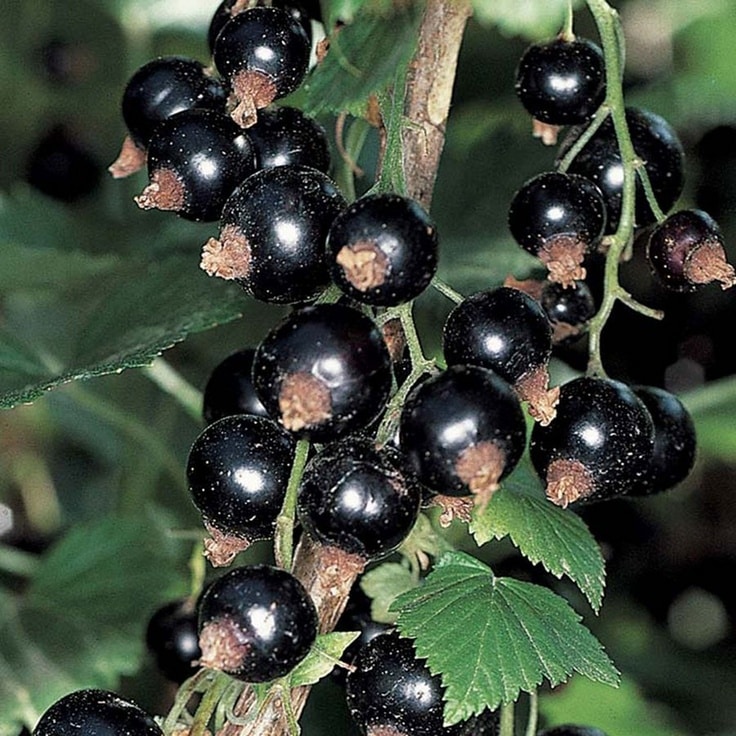
If black currants have never quite landed for you, this is the one to try. Minaj Smeriou is rounder and less bracing than the cultivars bred for cassis and cordial, and growers who have compared several tend to land on it. It is one of our absolute favorites here.
It ripens early, ahead of most of the crop, and carries large berries in heavy clusters on a vigorous bush that reaches about 5 ft and gets there fast. It also holds resistance to powdery mildew and to white pine blister rust, which is worth having in a genus where both are the usual story.
Overview
- The black currant most likely to convert someone who thinks they dislike them.
- Large berries in heavy clusters, rounder and less bracing than the cordial types.
- Ripens early, ahead of most of the crop.
- Resists powdery mildew and white pine blister rust.
Growing Details
Latin Name: Ribes nigrum ‘Minaj Smyriou’
Site and Soil: 1/2 day to full day of sun; rich, moist, well-drained soil
Hardiness: Hardy to USDA Zone 3
Rootstock: Grown from cuttings
Bearing Age: Light crop the year after planting; full crops by the third or fourth year
Size at Maturity: Vigorous and upright, about 5 ft tall and wide
Ripening Time: Early season; June into July
Pollination: Self-fertile; one bush sets a full crop, and a second currant nearby increases berry size
Pests & Diseases: Resistant to powdery mildew and to white pine blister rust
Additional Notes
- Grower’s Insight: If you are only going to plant one black currant, plant this one. It is the variety that changes people’s minds about the fruit.
- Regional Insight: Currants are cool-climate fruit, at their best where summers stay moderate and winters are properly cold.
- Explore more berries in our collection: Berries