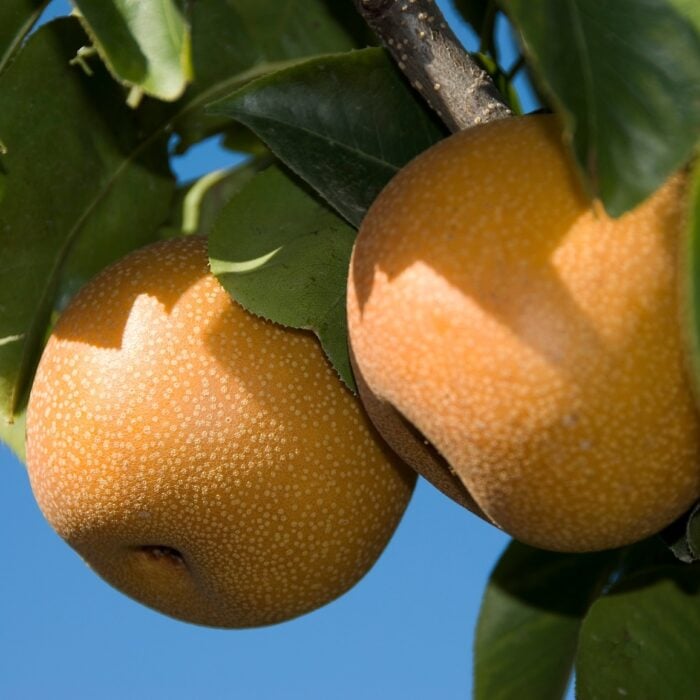
Description
This 3-in-1 Combination Asian Pear brings three crisp, juicy Asian pear varieties together on one semi-dwarf tree. Each graft ripens on its own schedule, so the harvest runs from late summer into fall instead of arriving all at once.
Asian pears need a second variety to set fruit well. With three compatible varieties on one trunk, this tree pollinates itself, which makes it one of the easiest ways to grow Asian pears in a small yard.
Overview
- Three Asian pear varieties grafted onto one tree
- Built-in cross-pollination between grafts
- Staggered ripening from late summer into fall
- Semi-dwarf size, easy to keep in check with pruning
- Crisp, juicy fruit that is best eaten fresh off the tree
Varieties Included
Each tree carries three of the following varieties, depending on availability.
- 20th Century (Nijisseiki): round, greenish-yellow pear; sweet, slightly tart, firm and juicy.
- Chojuro: oblong, greenish-brown russeted pear; sweet and mild.
- Hosui: medium-large, brown-skinned pear with crisp, sweet flesh; vigorous and very productive.
- Seigyoku: a green-skinned Asian pear.
- Shinko: large, round, bronze-russeted pear; resistant to fire blight.
- Shinseiki: round, smooth yellow pear; sweet and tender, and an early ripener.
- Tsu Li: a Chinese pear.
Growing Details
Latin Name: Pyrus pyrifolia and related Asian pears
Site and Soil: Well-drained soil; 1/2 day to full day of sun
Hardiness (Temp): -20°F
Bearing Age: 2–3 years after planting
Rootstock: Semi-dwarf
Bloom Time: Mid-spring
Ripening Time: Late summer through fall, depending on variety
Pollination: The grafted varieties pollinate each other
Pests and Diseases: Generally resilient; monitor for pear psylla and fire blight
USDA Zone: 5–9
Additional Notes
- Thin young fruit to one per cluster for larger pears.
- Annual pruning keeps the three grafts in balance so no one variety takes over.
- Explore more Asian pears in our collection: Asian Pear Trees