
Description
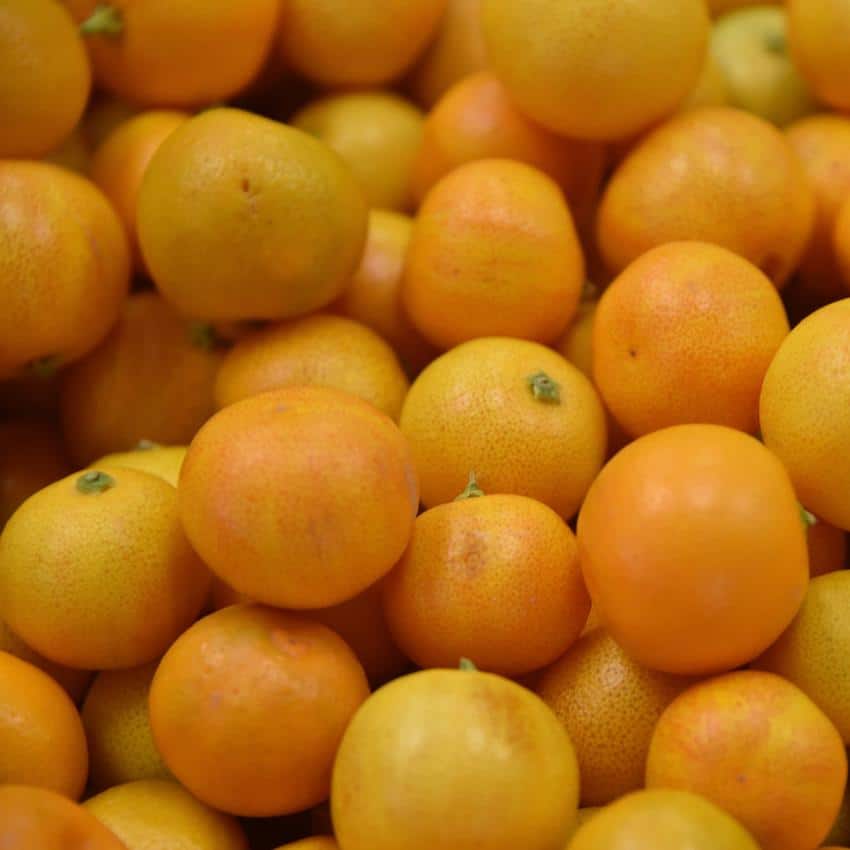
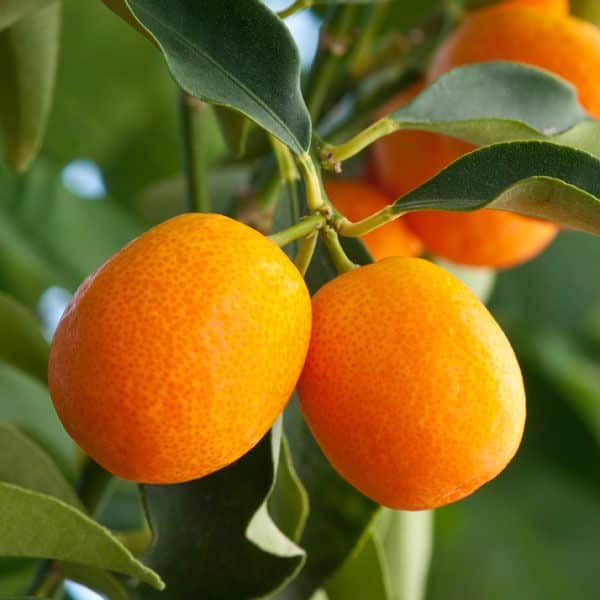
Variegated calamondin brings together bold kitchen utility and serious ornamental appeal. The foliage emerges with creamy white and green variegation, the fruit develops soft striping as it ripens, and the tree often carries flowers and fruit at the same time—making it as beautiful as it is useful.
Known widely as calamansi and commonly called tắc in Vietnamese communities, this is not a sweet citrus meant for fresh eating. The fruit is sour and aromatic, used for squeezing into sauces, marinades, seafood dishes, noodle bowls, and drinks. Its kumquat ancestry explains the small fruit size and ornamental habit, but its role is firmly culinary.
Overview
- Sour, juice-considered citrus used primarily in cooking.
- Variegated foliage with striped fruit.
- Commonly known as calamansi or tắc.
- Compact, productive tree well suited to containers.
- Self-fertile.
Growing Details
Latin Name: Citrus × microcarpa ‘Variegata’
Site and Soil: Full sun; well-drained soil
Rootstock: 1-gallon trees on Flying Dragon; larger sizes on C-35
Hardiness: Best suited to USDA Zones 9–11; hardy to around 20°F for brief periods with protection once established
Bearing Age: Often fruits immediately; grafted trees may produce in their first season
Size at Maturity:
• Flying Dragon: Typically 4–6 ft tall and wide
• C-35: Typically 8–12 ft tall and wide
Note: Trees grown in containers remain smaller and are easily maintained with pruning.
Bloom Time: Spring, with repeat flowering possible in warm conditions
Ripening Time: Fruit may be present much of the year; peak harvest often in cooler months
Pollination Requirements: Self-fertile
Pests & Diseases: Similar to other citrus; good airflow and drainage reduce issues
Additional Notes
- Grower’s Insight: Variegated calamondin is a preserved bud-sport mutation, recorded in citrus collections since the mid-20th century—its stable variegation affects both foliage and fruit striping.
- Regional Insight: Thrives in warm citrus regions and performs exceptionally well as a container citrus where it can be protected during cold weather.
- Kitchen Use: Squeeze for sauces and marinades, add to seafood and noodle dishes, or mix into drinks for bright acidity.
- Explore more kumquat and kumquat-adjacent citrus in our collection: Kumquats


Reviews
There are no reviews yet.