Description
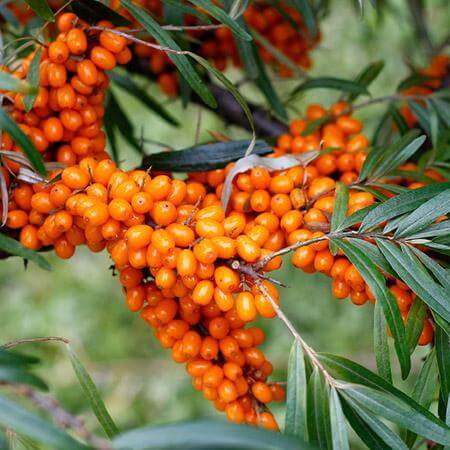
Seaberries are famous for two things: extraordinary fruit and vicious thorns. Star of Altai, a Russian selection out of the Altai mountains and also sold as Chuyskaya, gives you the first without much of the second. The branches are soft and nearly thornless.
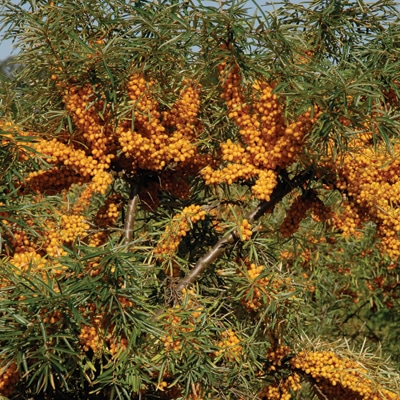
The berries are medium to large and orange, and they are among the sweetest of any seaberry, which matters in a fruit most people meet as a bracing juice. It stays compact at about 5 to 7 ft where other seaberries reach ten or twelve, so the whole plant is within arm’s length, and it ripens early, in July into August.
Overview
- Nearly thornless branches on a compact 5 to 7 ft plant.
- Among the sweetest seaberries, medium to large and orange.
- Early ripening, July into August.
- A Russian Altai selection, also sold as Chuyskaya.
Growing Details
Latin Name: Hippophae rhamnoides ‘Star of Altai’
Site and Soil: 1/2 day to full day of sun; sandy, rocky or lean soil that drains
Hardiness: Hardy to USDA Zone 3
Rootstock: Grown from cuttings
Bearing Age: 2 to 3 years after planting
Size at Maturity: Compact for a seaberry, about 5 to 7 ft tall and wide
Ripening Time: Early season; July into August
Pollination: Female; needs a male seaberry nearby to set fruit
Pests & Diseases: Few problems; a tough shrub that shrugs off most of them
Additional Notes
- Grower’s Insight: Thorns are the reason most people give up on seaberries. This is the one to plant if you actually intend to pick the fruit yourself.
- Regional Insight: Seaberry asks for sun and sharp drainage rather than rich ground, and it feeds itself nitrogen, so it fruits on poor sandy sites where little else will.
- Explore more seaberries in our collection: Seaberry Plants