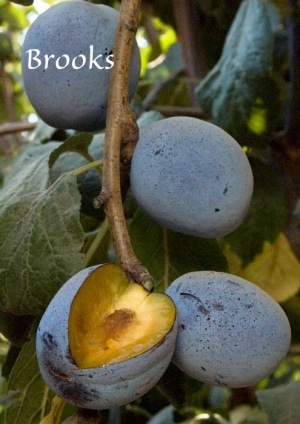
Plum Tree (Brooks)

Price range: $39.99 through $59.99

Brooks Plum arrives just as early summer settles in, offering juicy, richly flavored fruit that bridges the gap between the first plums of the season and peak harvest.

  • Early-mid season Japanese plum for fresh eating
  • Juicy flesh with deeper, rounded sweetness
  • Ripens after Beauty and before Santa Rosa
  • Classic Luther Burbank selection
  • Requires a pollination partner
Add to Wishlist
Add to Wishlist
SKU: Plum Tree (Brooks) Categories: , Tag:

Description

Brooks Plum arrives just as early summer settles in, offering juicy, richly flavored fruit that bridges the gap between the first plums of the season and peak harvest. Grown for fresh eating, it delivers a fuller, more rounded plum flavor than most early varieties. Developed by :contentReference[oaicite:0]{index=0}, Brooks was selected to improve eating quality early in the season. Where very early plums prioritize timing, Brooks adds depth—pairing early ripening with a sweeter, more classic plum profile.

The fruit is thin-skinned, very juicy, and best enjoyed tree-ripe. Because it ripens early-mid season, Brooks fits naturally into a home orchard sequence, extending fresh plum harvests without waiting for later varieties.

Overview

  • Early-mid season Japanese plum for fresh eating
  • Juicy, sweet fruit with fuller flavor than very early plums
  • Ripens after Beauty and before Santa Rosa
  • Thin skin; best handled and eaten fresh
  • Pollination required for consistent yields

Growing Details

Latin Name: Prunus salicina ’Brooks’
Site and Soil: 1/2 day to full day of sun; well-drained soil
Chill Requirement: Approx. 300–400 hours
Hardiness: USDA Zone 5–9
Rootstock: Marianna 2624
Bearing Age: 1–3 years
Size at Maturity: Typically maintained at 12–15 ft tall and wide with pruning
Flowering Time: Mid flowering (within plum / pluot types)
Ripening Time: Early-mid season; typically early to mid July depending on region
Pollination: Pollination required; plant a compatible Japanese plum within 20–30 feet
Pests & Diseases: Standard plum considerations; thin skin benefits from good airflow
Yield: Moderate to good once established

Additional Notes

  • Grower’s Insight: Brooks is often chosen to improve flavor continuity early in the season, offering noticeably richer eating quality right after the first plums finish.
  • Regional Insight: In cool or wet spring regions, mid flowering helps reduce frost risk compared to very early plums, though cross-pollination support remains important.
  • Fruit does not store long; plan to enjoy fresh shortly after harvest.
  • Handle gently at harvest due to thin skin and high juiciness.
Planting & Care

At a Glance – Brooks Plum

  • Sun: 1/2 day to full day of sun
  • Soil: Well-drained soil; tolerant of heavier sites
  • Water: Moderate; consistent during establishment
  • Size: Easily managed with pruning
  • Pollination: Required
  • Harvest: Early-mid season
  • Hardiness: USDA Zone 5–9

Planting & Care – Brooks Plum

Site Selection

  • Choose a sunny site with good airflow.
  • Avoid frost pockets to support early-season fruit set.

Soil Preparation

  • Plant in well-drained soil.
  • Marianna 2624 performs well in sites with heavier soils.

Planting Instructions

  • Dig a hole twice the width of the root system.
  • Set the root flare at or just above soil level.
  • Backfill with native soil and water thoroughly.

Watering & Fertilizing

  • Water consistently during the first 1–2 years.
  • Once established, water during extended dry periods.
  • Fertilize lightly in early spring if growth is weak.

Pollination

  • Brooks Plum requires a compatible Japanese plum nearby.
  • Plant pollination partners within 20–30 feet.
  • Encouraging early pollinators improves set in cool springs.

Pruning & Training

  • Prune annually to maintain balance and airflow.
  • Summer pruning helps control size and improve fruit quality.

Harvest & Use

  • Harvest when fully colored and slightly soft.
  • Best enjoyed fresh.
  • Use promptly—storage life is short.

General Tips

  • Thin fruit in heavy years to improve size and sweetness.
  • Handle fruit gently at harvest.
  • This variety rewards early-season attention.