Persimmon Tree (Saijo)

(1 customer review)

Price range: $39.99 through $109.99

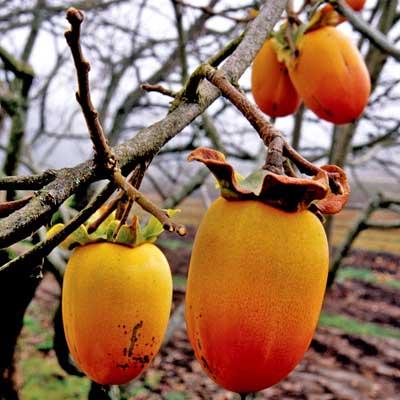
Saijo is widely regarded as one of the finest-tasting astringent persimmons—exceptionally sweet and rich when fully soft, with a long, elegant fruit shape and a devoted following among persimmon enthusiasts.

  • Astringent persimmon—must be eaten fully soft.
  • Mid to late season ripening.
  • Outstanding sweetness and depth of flavor at full ripeness.
  • Elongated, classic Saijo fruit shape.
  • Self-fertile.
Add to Wishlist
Add to Wishlist
SKU: N/A Categories: , , Tag:

Description

Saijo is an astringent Asian persimmon (Diospyros kaki) prized not for convenience, but for flavor. When allowed to ripen fully soft, Saijo develops an exceptionally sweet, rich, almost syrupy character that has earned it a reputation as one of the best-tasting persimmons available.

This is a soft-ripe persimmon. Saijo must be eaten fully soft—jelly-soft to the touch—to enjoy its true quality. Picked or eaten too early, it will be unpleasantly astringent. Given time, however, the transformation is dramatic and rewarding.

Overview

  • Astringent Asian persimmon with elite flavor reputation.
  • Mid to late season ripening.
  • Very sweet and rich when fully soft.
  • Distinct elongated fruit shape.
  • Self-fertile.

Growing Details

Latin Name: Diospyros kaki ‘Saijo’
Site and Soil: 1/2 day to full day of sun; well-drained soil
Rootstock: 1-gallon trees on American persimmon seedling; larger sizes on Diospyros lotus
Hardiness: USDA Zones 7–10
Chill Hours: Approximately 200 hours
Bearing Age: 1–3 years
Size at Maturity: Typically 10–15 ft tall and wide; easily maintained smaller with routine pruning
Bloom Time: Late spring
Ripening Time: Mid to late season (typically October, climate dependent)
Pollination Requirements: Self-fertile
Pests & Diseases: Generally low-pressure; good airflow and drainage reduce issues

Additional Notes

  • Grower’s Insight: Among soft-ripe persimmons, Saijo is often singled out for flavor—it’s the kind of fruit that converts people who think they don’t like persimmons.
  • Regional Insight: Best suited to regions where fall warmth allows fruit to fully soften and finish ripening before hard freezes.
  • This is a soft-ripe persimmon: if the fruit tastes drying or unpleasant, it is not ripe yet—wait for full softness.
  • Explore more Asian persimmons in our collection: Asian Persimmons
Planting & Care

At a Glance – Saijo Asian Persimmon

  • Sun: 1/2 day to full day
  • Soil: Well-drained soil
  • Water: Moderate; consistent moisture during establishment
  • Size: Medium (maintainable with pruning)
  • Pollination: Self-fertile
  • Harvest: Mid to late season
  • Hardiness: USDA Zones 7–10

Planting & Care – Saijo Asian Persimmon

Site Selection

  • Choose a sunny location to support fruit sweetness and full ripening.
  • Good air movement helps reduce disease pressure and supports healthy growth.
  • Avoid low areas where cold air settles or soils remain wet.

Soil Preparation

  • Plant in well-drained soil; persimmons do not tolerate standing water.
  • In heavier soils, planting on a slight mound or raised area improves drainage.
  • Avoid heavily amended or nitrogen-rich planting holes.

Planting Instructions

  1. Dig a hole roughly twice the width of the root system.
  2. Plant so the root flare sits at or slightly above finished soil level.
  3. Backfill with native soil and water thoroughly to settle air pockets.
  4. Mulch 2–3″ deep, keeping mulch a few inches away from the trunk.

Watering & Fertilizing

  • During the first 1–2 years, keep soil consistently moist but not waterlogged.
  • In cooler or mild climates, deep water about 1–2 times per week during dry weather.
  • In hotter or windier climates, plan on 2–3 deep waterings per week during heat spells.
  • Check soil 4–6″ down; if it feels dry at that depth, it’s time to water again.
  • Once established, deep water every 7–14 days in dry weather.
  • Persimmons are light feeders; a modest spring application of balanced organic fertilizer is usually sufficient.

Pollination

  • Self-fertile.
  • If planting multiple persimmons, keep trees within 20–30 ft for best overall set.

Pruning & Training

  • Prune annually to maintain structure and encourage productive fruiting wood.
  • Remove crossing, shaded, or damaged branches.
  • Light thinning improves airflow and fruit quality.

Harvest & Use

  • Harvest when fruit is fully colored.
  • Allow fruit to become completely soft before eating.
  • Excellent for fresh spoon-eating, baking, breads, and purées.

General Tips

  • Full softness is the key to Saijo’s sweetness—do not rush harvest.
  • Fruit can finish softening off the tree if picked fully colored.
  • Consistent early care sets the foundation for long-term productivity.