Description
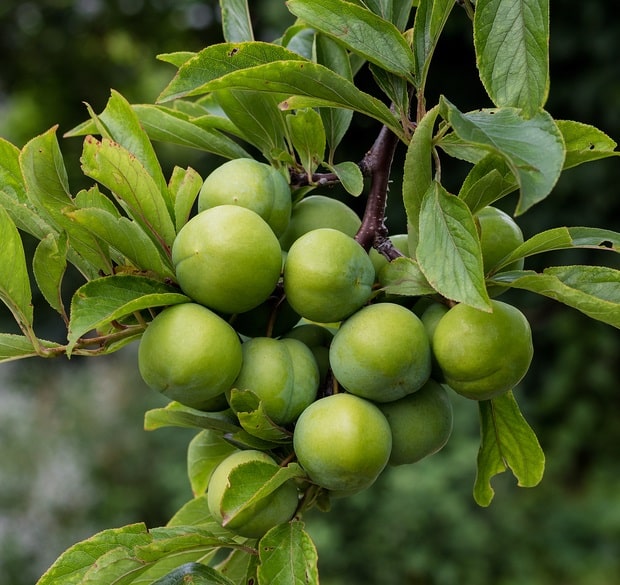
Green Sour Plum—widely known as Gojeh Sabz—is not a dessert plum harvested too early, but a purpose-grown fruit meant to be enjoyed unripe. For generations, it has been prized across Persian and Middle Eastern cultures as one of the first fresh fruits of the season, eaten green, firm, and intensely sour.
The experience is entirely different from sweet plums. Gojeh Sabz is harvested while still bright green, offering a crisp bite and sharp, citrus-like acidity. It’s commonly enjoyed fresh with salt, paired with herbs, or eaten as a seasonal snack that signals the arrival of spring.
This tree fills a unique role in the home orchard: it produces usable fruit weeks before Japanese or European plums and delivers a flavor profile that no ripe plum can replicate.
Overview
- Traditional Persian green plum eaten unripe
- Sharp, sour flavor with crisp texture
- Very early harvest compared to dessert plums
- Culturally important spring fruit
- Not intended for sweet, ripe eating
Growing Details
Latin Name: Prunus cerasifera
Site and Soil: 1/2 day to full day of sun; well-drained soil
Chill Requirement: Approx. 300–500 hours
Hardiness: USDA Zone 5–9
Rootstock: Myro 29C (large semi-dwarf; maintained easily with pruning)
Bearing Age: 1–3 years
Size at Maturity: Typically maintained at 12–14 ft tall and wide with pruning
Flowering Time: Early flowering (within plum types)
Harvest Time: Very early season; picked green in late spring to early summer
Pollination: Generally self-fertile; additional plum varieties may improve yield
Pests & Diseases: Standard plum considerations; early harvest reduces many late-season issues
Yield: Productive once established
Additional Notes
- Grower’s Insight: This tree is grown for timing, not sweetness. Harvest early and often while fruit is firm and green—the sour bite is the entire point.
- Regional Insight: Performs well in temperate regions with cool springs, including the Pacific Northwest, where early bloom and early harvest fit naturally into the growing season.
- Do not wait for fruit to soften or change color—traditional harvest is intentionally unripe.
- Avoid confusion by labeling harvested fruit clearly if sharing with others unfamiliar with sour plums.
- Explore more plums in our collection: Plum Trees