Description
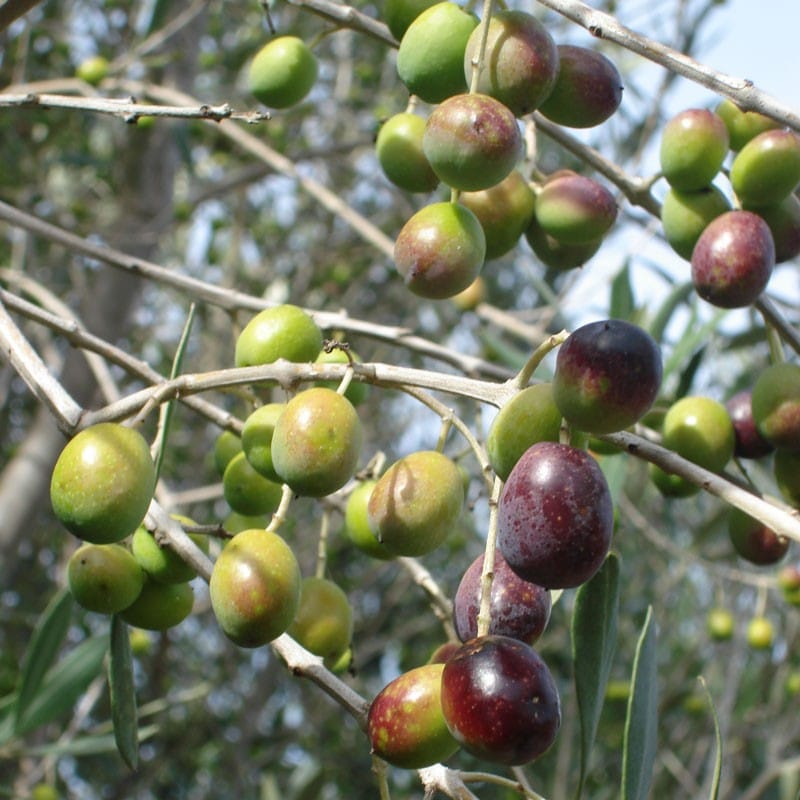
Pendolino is a traditional Italian olive best known for its role as a reliable pollinator. Its naturally pendulous growth habit and strong pollen production have made it a common companion tree in mixed olive plantings, where it helps improve fruit set across the grove. Rather than being grown for large table fruit, Pendolino is valued for what it enables. It produces small to medium olives primarily used for oil, but its real contribution is functional—supporting cultivars like Leccino, Frantoio, Maurino, and Nocellara del Belice by providing abundant, viable pollen during bloom.
The tree itself has an open, weeping structure that promotes airflow and pollen movement, making it both visually distinctive and agriculturally useful. Pendolino performs best with full sun, excellent drainage, and thoughtful placement within a diverse planting.
Overview
- Italian olive cultivar prized for pollination performance
- Strong pollen producer for mixed olive plantings
- Small to medium fruit primarily used for oil
- Distinctive pendulous, weeping growth habit
- Enhances yield and consistency of nearby olive trees
Growing Details
Latin Name: Olea europaea ’Pendolino’
Origin: Central Italy (Tuscany)
Site and Soil: Full sun preferred; well-drained soil is essential
Cold Tolerance: UC Freeze Category:
Hardy ; established trees have reported wood survival around ~10°F
Rootstock: Own-root (propagated from cuttings)
Bearing Age: Often fruits once established; production improves with maturity
Size at Maturity: Typically maintained at 8–12 ft tall and wide with pruningNote: Size reflects managed garden or container-grown trees; growth varies by climate and whether planted in-ground or in containers. Unpruned trees can grow larger over time
Bloom Time: Mid to late spring (varies by region)
Ripening Time: Mid-season olive; harvest timing varies by climate and season length
Pollination: Pollination required; also functions as an effective pollinator for many olive varieties when planted within 20–30 feet
Pests & Diseases: Generally resilient with good airflow and drainage; regional pressure varies
Additional Notes
- Grower’s Insight: Pendolino is planted not for what it produces, but for what it enables. Its value shows up in better fruit set and more reliable harvests across mixed olive plantings.
- Regional Insight: Performs well in warm-summer regions with dry soils. In cooler or wetter climates, drainage and sun exposure are especially important.
- Young trees may defoliate when temperatures dip into the low 20s. Don’t give up on them—many will push new growth again as conditions warm.
- Explore more olives in our collection: Olive Trees
Planting & Care
Pendolino is a traditional Italian olive best known for its role as a reliable pollinator. Its naturally pendulous growth habit and strong pollen production have made it a common companion tree in mixed olive plantings, where it helps improve fruit set across the grove.
Rather than being grown for large table fruit, Pendolino is valued for what it enables. It produces small to medium olives primarily used for oil, but its real contribution is functional—supporting cultivars like Leccino, Frantoio, Maurino, and Nocellara del Belice by providing abundant, viable pollen during bloom.
The tree itself has an open, weeping structure that promotes airflow and pollen movement, making it both visually distinctive and agriculturally useful. Pendolino performs best with full sun, excellent drainage, and thoughtful placement within a diverse planting.
Overview
- Italian olive cultivar prized for pollination performance
- Strong pollen producer for mixed olive plantings
- Small to medium fruit primarily used for oil
- Distinctive pendulous, weeping growth habit
- Enhances yield and consistency of nearby olive trees
Growing Details
Latin Name: Olea europaea ‘Pendolino’
Origin: Central Italy (Tuscany)
Site and Soil: Full sun preferred; well-drained soil is essential
Cold Tolerance: UC Freeze Category: Hardy; established trees have reported wood survival around ~10°F
Rootstock: Own-root (propagated from cuttings)
Bearing Age: Often fruits once established; production improves with maturity
Size at Maturity: Typically maintained at 8–12 ft tall and wide with pruning
Note: Size reflects managed garden or container-grown trees; growth varies by climate and whether planted in-ground or in containers. Unpruned trees can grow larger over time
Bloom Time: Mid to late spring (varies by region)
Ripening Time: Mid-season olive; harvest timing varies by climate and season length
Pollination: Pollination required; also functions as an effective pollinator for many olive varieties when planted within 20–30 feet
Pests & Diseases: Generally resilient with good airflow and drainage; regional pressure varies
Additional Notes
- Grower’s Insight: Pendolino is planted not for what it produces, but for what it enables. Its value shows up in better fruit set and more reliable harvests across mixed olive plantings.
- Regional Insight: Performs well in warm-summer regions with dry soils. In cooler or wetter climates, drainage and sun exposure are especially important.
- Young trees may defoliate when temperatures dip into the low 20s. Don’t give up on them—many will push new growth again as conditions warm.
- Explore more olives in our collection: Olive Trees