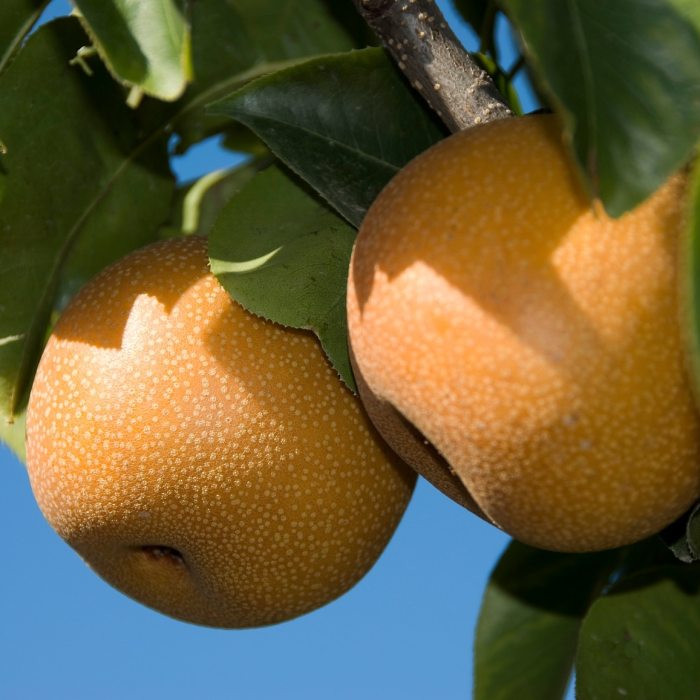
Pear Tree (Seckel)

Price range: $39.99 through $59.99

The “Sugar Pear” — intensely sweet, richly flavored fruit on a compact, easy-care semi-dwarf tree. Excellent for fresh eating, pickling, and whole-fruit baking.

  • Exceptionally sweet, spicy flavor
  • Beloved American heirloom
  • Reliable and easy to grow
  • Partially self-fertile
Add to Wishlist
Add to Wishlist
SKU: Pear Tree (Seckel) Categories: , Tag:

Description

Seckel, often called the “Sugar Pear,” is one of the sweetest pears you can grow. Its small, bite-sized fruit is intensely flavorful—rich, spicy-sweet, and aromatic. Favored for fresh eating, pickling, baking whole, and gourmet cheese pairings, Seckel has earned its place as a beloved heirloom variety in American orchards. Grafted onto a semi-dwarfing rootstock, Seckel grows into a compact, easy-to-manage tree that fits beautifully into home gardens. It is naturally vigorous, productive, and more resistant to fire blight than many European pears, making it an excellent choice for growers seeking low-maintenance reliability. While Seckel is partially self-fertile, it will produce much heavier crops when paired with another European pear such as Bartlett, Anjou, Orcas, or Comice.

Overview

  • Exceptionally sweet “Sugar Pear” flavor.
  • Perfect for fresh eating, pickling, and baking whole.
  • Compact, semi-dwarf tree ideal for home orchards.
  • Partially self-fertile; heavier crops with a pollinator.
  • Good fire blight resistance compared to many pears.

Growing Details

Latin Name: Pyrus communis ‘Seckel’
Site and Soil: 1/2 day to full day of sun; well-drained soil
Rootstock: OHxF 97 (semi-dwarf)
Hardiness: USDA Zone 5–9
Bearing Age: 1–3 years
Size at Maturity: 12–15 ft — compact and manageable
Bloom Time: Mid-season
Ripening Time: September
Pollination: Partially self-fertile; performs best with a pollinator
Pests & Diseases: Better fire blight tolerance than many varieties
Yield: Heavy and consistent when mature

Additional Notes

  • Nerdy fact: Seckel is believed to be the only widely grown American pear that originated as a wild seedling—discovered near Philadelphia in the late 1700s and prized for its unmatched sweetness.
  • Fruit is naturally small but incredibly sweet and aromatic.
  • Excellent for kids, snacking, and gourmet cooking.
  • Explore more pear varieties in our collection: Pear Trees
Planting & Care

At a Glance – Seckel Pear (Semi-Dwarf)

  • Sun: 1/2 day to full day of sun
  • Soil: Prefers well-drained soils
  • Water: Keep evenly moist during establishment
  • Rootstock: Semi-dwarfing
  • Size: 12–15 ft at maturity
  • Pollination: Partially self-fertile
  • Harvest: September
  • Hardiness: USDA Zone 5–9

Planting & Care – Seckel Pear

Site Selection

  • Thrives with 1/2 day to full day of sun.
  • Compact growth habit makes Seckel ideal for smaller yards.
  • Good choice for areas with moderate fire blight pressure.

Soil Preparation

  • Prefers well-drained loam but adaptable to various soils.
  • Avoid heavy nitrogen amendments, which reduce fruit quality.
  • Soil pH of 6.0–7.0 is ideal.

Planting Instructions

  1. Dig a hole twice the width of the root ball.
  2. Plant at the same depth the tree grew in the nursery.
  3. Backfill with native soil and water well.
  4. Mulch 2–3″ deep, keeping mulch away from the trunk.

Watering & Fertilizing

  • Keep soil evenly moist during the first 1–2 years.
  • Deep water 1–2 times weekly in mild conditions; 2–3 times weekly during heat.
  • Once established, water every 7–14 days during dry periods.
  • Light feeder: apply minimal fertilizer; excessive nitrogen reduces sweetness.

Pollination

  • Partially self-fertile, but heavier crops with a pollinator.
  • Compatible partners: Bartlett, Anjou, Orcas, Comice.
  • Plant within 20–30 feet for best fruit set.

Pruning & Training

  • Train to a central leader or modified central leader.
  • Prune lightly to maintain form; avoid over-pruning which can reduce fruiting.
  • Thin fruit if clusters are heavy.

Harvest & Use

  • Pick when fruit is firm and allow to ripen indoors.
  • Small but intensely sweet fruit—excellent fresh or cooked whole.
  • Ideal for pickling due to its size and flavor concentration.

General Tips

  • Mulch annually to retain moisture and discourage weeds.
  • Compact size makes Seckel easy to maintain in any yard.
  • A favorite for children and gourmet cooks alike.