Description
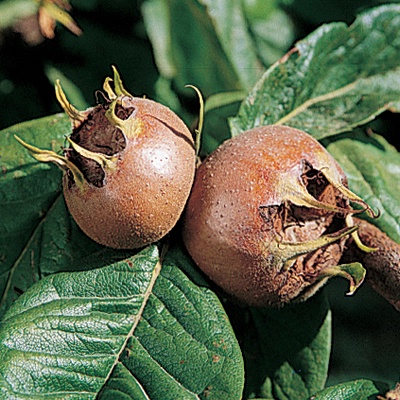
Dzevera Garden is a heritage medlar from the country of Georgia, in the Caucasus, where the species has been grown for centuries. It is a large-fruited selection with dark-brown skin and a fragrant, soft, sweet-tart flesh that develops an almost applesauce-like character once the fruit has bletted — the soft, partly-fermented stage that medlar requires before it becomes truly edible.
The tree carries the genus’s characteristic large white cup-shaped flowers in May, sets fruit through the summer, and ripens in mid to late October. Fruit are harvested hard and brown, then bletted in cool storage (a cool basement or unheated room works well) over several weeks until the flesh softens and sweetens. Bletted fruit can be eaten fresh with a spoon, or cooked into jams, jellies, fruit butters, and traditional medlar preparations. The tree itself is small and spreading, with the white spring bloom and russet-bronze fall foliage that make medlar one of the more ornamental small fruit trees.
Dzevera Garden is self-fertile, very cold-hardy — suitable across roughly USDA Zone 4–8 — and noted for productivity in cool-summer maritime conditions where some later-ripening fruits struggle to finish. It typically begins bearing in the second year after planting on its quince rootstock, prefers full to half-day sun and moist, well-drained soil, and like medlar generally is comparatively low-pressure for pests and diseases in most growing regions.
Overview
- Heritage medlar from the country of Georgia, in the Caucasus.
- Large, fragrant, dark-brown fruit with sweet-tart applesauce-like character after bletting.
- Showy white spring flowers and russet-bronze fall foliage.
- Very cold-hardy — roughly USDA Zone 4–8.
- Self-fertile; productive at maturity.
- Bears as early as the second year on quince rootstock.
Growing Details
Latin Name: Mespilus germanica ‘Dzevera Garden’
Site and Soil: 1/2 day to full day of sun; moist, well-drained soil
Hardiness: Very cold-hardy; roughly USDA Zone 4–8
Rootstock: Grafted onto Provence Quince BA29C rootstock
Bearing Age: Often begins bearing the second year after planting
Size at Maturity: Approximately 8–12 ft tall and wide; small, spreading ornamental form
Bloom Time: May; large, white, cup-shaped flowers
Ripening Time: Mid to late October; fruit then requires bletting before eating
Pollination: Self-fertile
Pests & Diseases: Medlar is comparatively low-pressure for pests and diseases across most growing regions
Additional Notes
- Grower’s Insight: Medlar fruit must be bletted before eating — harvested hard and brown in October, then held in cool storage for several weeks until the flesh softens and sweetens; a buyer expecting to eat the fruit fresh off the tree will conclude it is inedible, while a buyer who learns the bletting routine finds Dzevera Garden one of the more rewarding cool-climate fruits to grow.
- Regional Insight: Medlar performs across a wide swath of temperate North America, from the maritime Pacific Northwest through the upper Midwest and Northeast into the upper South; Dzevera Garden’s cold-hardiness and cool-summer productivity make it especially well suited to northern and short-summer regions where some later-ripening fruits struggle to finish.
- Explore more medlar and other unusual fruit in our collection: Medlar