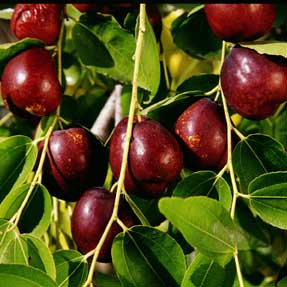
Jujube (Black Sea)

$39.99

Black Sea is an early-ripening jujube valued for dependable fresh-eating quality and consistent performance across a wide range of growing conditions.

  • Fresh-eating jujube with crisp texture
  • Clean, balanced sweetness at the firm stage
  • Early ripening within jujube varieties
  • Often fruits young on grafted trees
  • Suitable for fresh eating or drying
Add to Wishlist
Add to Wishlist
SKU: Jujube (Black Sea) Categories: , Tag:

Description

Black Sea (also known as Russian 2) is an early-ripening jujube selected for reliable fresh-eating performance. Originating from collections associated with the Black Sea region, it has earned a reputation for finishing fruit dependably in a wide range of climates.

Harvested at the crisp stage, Black Sea produces firm, juicy fruit with clean sweetness that works well for fresh eating. When allowed to fully mature and brown, the fruit can also be dried, giving growers flexibility depending on season and preference.

In home orchards, Black Sea is often chosen for its consistency. It tends to ripen earlier than many jujubes and maintains usable fruit quality even in seasons where later cultivars can be unpredictable.

Overview

  • Early-ripening jujube with dependable finish
  • Crisp texture suited to fresh eating
  • Balanced sweetness without heaviness
  • Self-fertile; improved yields with a second variety
  • Adaptable option for temperate and variable climates

Growing Details

Latin Name: Ziziphus jujuba ’Black Sea’
Primary Use: Fresh eating; also suitable for drying
Site and Soil: 1/2 day to full day of sun; well-drained soil
Chill Requirement: Low chill; often reported
Hardiness: USDA Zone 5–10
Rootstock: Grafted onto jujube rootstock
Bearing Age: Often fruits immediately; grafted trees may produce in their first season
Size at Maturity: Typically maintained at 10–15 ft tall and wide with pruning
Bloom Time: Late spring to early summer
Ripening Time: Early within jujube varieties; timing varies by region
Pollination: Self-fertile; improved yield with another jujube planted within 20–30 feet
Pests & Diseases: Generally low pressure; routine orchard hygiene recommended
Yield: Reliable producer once established

Additional Notes

  • Grower’s Insight: Black Sea is often planted specifically for reliability—bringing usable, fresh-eating fruit earlier in the season when later jujubes may still be sizing.
  • Regional Insight: Performs well in many temperate regions, including areas with cooler or variable summers where early-ripening jujubes help ensure a successful harvest.
  • For fresh eating, harvest fruit firm as color begins to develop; allow fruit to fully brown for drying and storage.
  • Explore more jujube varieties in our collection: Jujube Trees
Planting & Care

At a Glance – Black Sea Jujube

  • Sun: 1/2 day to full day of sun
  • Soil: Well-drained soil; avoid prolonged saturation
  • Water: Moderate during establishment; drought tolerant once established
  • Size: Easily maintained with pruning
  • Pollination: Self-fertile; improved yield with a second jujube within 20–30 feet
  • Harvest: Early within jujube varieties
  • Use: Fresh eating at the crisp stage; also suitable for drying

Planting & Care

Site Selection

  • Choose a sunny location for best flowering and fruit ripening.
  • Good airflow supports healthy growth and easier harvest access.

Soil Preparation

  • Plant in well-drained soil; jujubes dislike standing water.
  • If drainage is marginal, plant on a slight mound.
  • Ideal soil pH is roughly 6.0–7.5.

Planting Instructions

  • Dig a hole twice the width of the root system.
  • Set the tree so the root flare is at or just above soil level.
  • Backfill with native soil and water deeply to settle.
  • Mulch 2–3″ deep, keeping mulch away from the trunk.

Watering & Fertilizing

  • Water consistently during the first growing season.
  • Once established, water during extended dry periods.
  • Avoid heavy nitrogen fertilization, which can delay fruiting.

Pollination

  • Black Sea is self-fertile.
  • Planting another jujube variety within 20–30 feet often improves yield and consistency.

Pruning & Training

  • Train to an open structure or central leader.
  • Prune lightly in late winter to remove crossing or crowded branches.
  • Young growth may have thorns; gloves are recommended.

Harvest & Use

  • Harvest when fruit is firm and beginning to color for fresh eating.
  • Allow fruit to fully brown for drying.
  • Pick in multiple passes as fruit ripens unevenly.

General Tips

  • Production improves as trees mature.
  • Protect young trunks from mechanical damage.
  • Prompt harvest in wet falls helps preserve texture.