Description
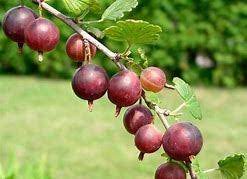
Captivator came out of an Ottawa breeding program in the middle of the last century, from the thornless Canadian selection Spinefree, and it inherited the thing that made its parent worth using. It has no spines, which is unusual enough in this crop to be the main reason people plant it.
The berries are large for a gooseberry, teardrop shaped and pinkish red, sweet and mild rather than sharp, and they ripen early in the season. They do come off the bush readily once fully ripe, so pick promptly rather than leaving them to hang. The canes are vigorous and the foliage stays healthy.
Overview
- Spine-free: the bush can be picked and pruned bare-handed.
- Large teardrop berries, pinkish red, sweet and mild.
- Early ripening, among the first of the season.
- Vigorous and healthy; self-fertile.
Growing Details
Latin Name: Ribes ‘Captivator’
Site and Soil: Full sun to part shade; rich, well drained soil, pH 6.0 to 7.0
Hardiness: Hardy to USDA Zone 3
Rootstock: Grown from cuttings
Bearing Age: Light crop the first year; full crops by year 3 or 4
Size at Maturity: Vigorous, about 4 to 5 ft tall and wide
Ripening Time: Early season for a gooseberry; June into July
Pollination: Self-fertile; a single bush sets a crop
Pests & Diseases: Good tolerance of powdery mildew, short of immunity; currant worm strips leaves from the inside out
Additional Notes
- Grower’s Insight: Ripe berries drop readily on this one, so check the bush every few days once the first fruit colors rather than waiting for one big pick.
- Regional Insight: Gooseberries perform best where summers stay cool to moderate, from the Upper Midwest and New England to the Pacific Northwest and Rocky Mountain states.
- Explore more berries in our collection: Berries