Bigger plants, shipped year round from our Seattle nursery|Every plant guaranteed|Trusted by 20,000+ growers

Blueberry (Pink Icing)

$19.99

Pink Icing carries about four pounds of large sweet berries at three years, on a plant that turns pink in spring and lavender in fall. It ripens from mid July into the first week of August.

  • About 500 chill hours, USDA zones 6 to 8 on the breeding record
  • Self fertile, and better cropping alongside a partner
  • Ripens mid July into the first week of August
  • Thirty inches by two feet, mounded: give it a large container
  • Acid, freely draining ground or an ericaceous mix at pH 4.5 to 5.0. No lime

Shop both locations freely. Picking up? Choose your location at checkout. Shipping? Stock location does not matter, we will handle it. Combined orders may take 3 to 7 days.

Total in stock: -

Add to Wishlist
Add to Wishlist
Arrives healthy, guaranteed. If it does not, we replace it.
Ships in 1 to 4 business days from our nursery near Seattle, in a 36 inch box.
Grows in zones 6 to 8.
SKU: Blueberry (Pink Icing) Categories: , Tag:
From our inbox

The bare roots are by far the most established roots that I have ever seen on a bareroot tree.

Website customer

Thank you so much for these lovely hardy kiwis. They are much bigger than expected. Will be ordering from you again.

Irene

Absolutely beautiful trees, especially compared to some of the other mail order bare roots I have gotten from other companies.

Website customer

Description

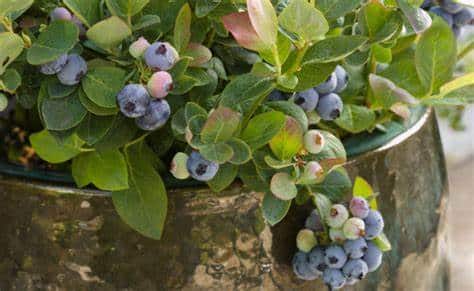
The ornamental patio blueberries are bought for their leaves, and most of them hand back a small handful of berries for the trouble. Pink Icing is the one that does both jobs. It carries the largest berry and the biggest crop in the series, about four pounds from a three year old plant, ripening from the middle of July into the first week of August.

The leaf is the other half of it. New growth runs pink over blue green foliage right through spring and summer rather than colouring once at bud break, and the whole plant turns lavender in fall. The berries stay the ordinary blue of any blueberry.

About five hundred chill hours and zones 6 to 8. Full sun and a peat based acid mix with no lime in it, or the leaf colour flattens and the plant slowly declines.

Overview

  • The patio blueberry to take when you want fruit as well as foliage.
  • Largest berry and biggest crop of the ornamental series: 1.49 g and about four pounds at three years.
  • Thirty inches by two feet, mounded; give it a large container.
  • Ripens mid July into the first week of August.
  • Pink new growth over blue green foliage, lavender in fall, blue berries.
  • Mildly sweet rather than sharp.
  • About five hundred chill hours, zones 6 to 8.
  • Self-fertile, with better cropping alongside a partner.
  • Full sun; the foliage colour fades in shade.

Growing Details

Latin Name: Vaccinium corymbosum ‘Pink Icing’
Site and Soil: Full sun; acidic, freely draining ground or a peat based ericaceous mix at pH 4.5 to 5.0, with no lime and no dolomite in it
Hardiness: USDA zones 6 to 8 on the breeding record; the zones 5 to 10 quoted in brand copy is not supported by it
Size and Habit: About thirty inches tall with a two foot canopy, mounded and round, throwing about six new canes a year
Chill Requirement: About five hundred hours at or below 45 F
Foliage: Pink new growth over blue green leaves through spring and summer, turning lavender in fall; it held its leaves through winter in the breeder’s Oregon plantings, which is a mild climate observation rather than a promise
Fruit: Blue, averaging 1.49 g, firm and mildly sweet; about four pounds from a three year old plant
Ripening Time: Mid July into the first week of August
Pollination: Self-fertile; a second blueberry flowering at the same time increases berry size and crop
Propagation: Grown on its own roots from cuttings; protected by US Plant Patent 23,336, so it may not be propagated
Pests and Diseases: Birds are the main loss on a plant this small and a pot is easy to net; root rot in a wet or heavy medium is what kills container blueberries

Additional Notes

  • Grower’s Insight: It is the only plant in the ornamental series carrying enough fruit to be worth netting, and it throws about six new canes a year on a thirty inch frame, so it outgrows the pot people buy for a patio blueberry a season or two before its siblings do.
  • Regional Insight: About five hundred chill hours and zones 6 to 8 place it in the mild middle of the country, the mid-Atlantic, the upper Southeast, the interior valleys of California and the maritime Northwest; the zones 5 to 10 span quoted for it is brand copy, and a Zone 5 buyer is being sold a range the breeding record does not carry.
  • Pink Icing is protected by US Plant Patent 23,336. Propagation is prohibited while the patent runs.
  • Explore more blueberries in our collection: Blueberries
Planting & Care

At a Glance
• Full sun, in a large container of peat based acid mix with no lime
• Even moisture; a pot this size dries out in a day of heat
• Self-fertile, and a better crop with a second blueberry in flower
• Almost no pruning: dead and crossing wood only, keep the mound
• Pick mid July into early August, by taste rather than colour

Planting & Care: Pink Icing Blueberry

Plant it in a container it will not outgrow in one season. Thirty inches of plant with a two foot canopy wants a pot of at least ten to fifteen gallons, filled with a peat based ericaceous mix and nothing that carries lime or a dolomite charge. Ordinary bagged potting compost is limed to sit near neutral and will slowly starve a blueberry of iron, which shows first as yellowing between the veins on the newest leaves. In the ground, the same rule applies at a larger scale: acidify to pH 4.5 to 5.0 or build a raised bed rather than trying to correct a planting hole.

Water it more often than you think. Blueberry roots are fine, shallow and have no root hairs, so the plant cannot go looking for water, and a container holds a fraction of the reserve open ground does. One missed week in July costs the crop. Where the tap water runs hard, use rainwater when you can, because alkaline water raises the pH of a pot steadily across a season and undoes the mix you planted into.

Prune almost nothing. The mounded, round outline is what you bought, so take out dead and crossing wood in late winter and leave the shape alone. Feed lightly with an ericaceous or acid fertiliser in spring; the pink in the new growth is a pigment response, and a plant pushed hard with nitrogen or stood in shade makes greener leaves rather than better ones.

Overwinter the pot rather than the plant. It is rated zones 6 to 8, but a container freezes through in a way open ground does not, so in the colder half of that range move it against a wall, sink the pot in a bed, or heel it into a pile of bark for the winter. It still needs its cold: roughly five hundred hours below 45 F, so do not bring it indoors to keep it comfortable or it will not flower.

Pick from the middle of July into the first week of August. About four pounds off a three year old plant is the figure the breeder recorded, which is a real bowl from a shrub this size and still a fraction of what a full grown highbush carries. The flavour is mildly sweet rather than sharp, and blueberries do not sweeten after picking, so leave the berries a few days after they first turn blue and taste one before you strip a bush.