Description
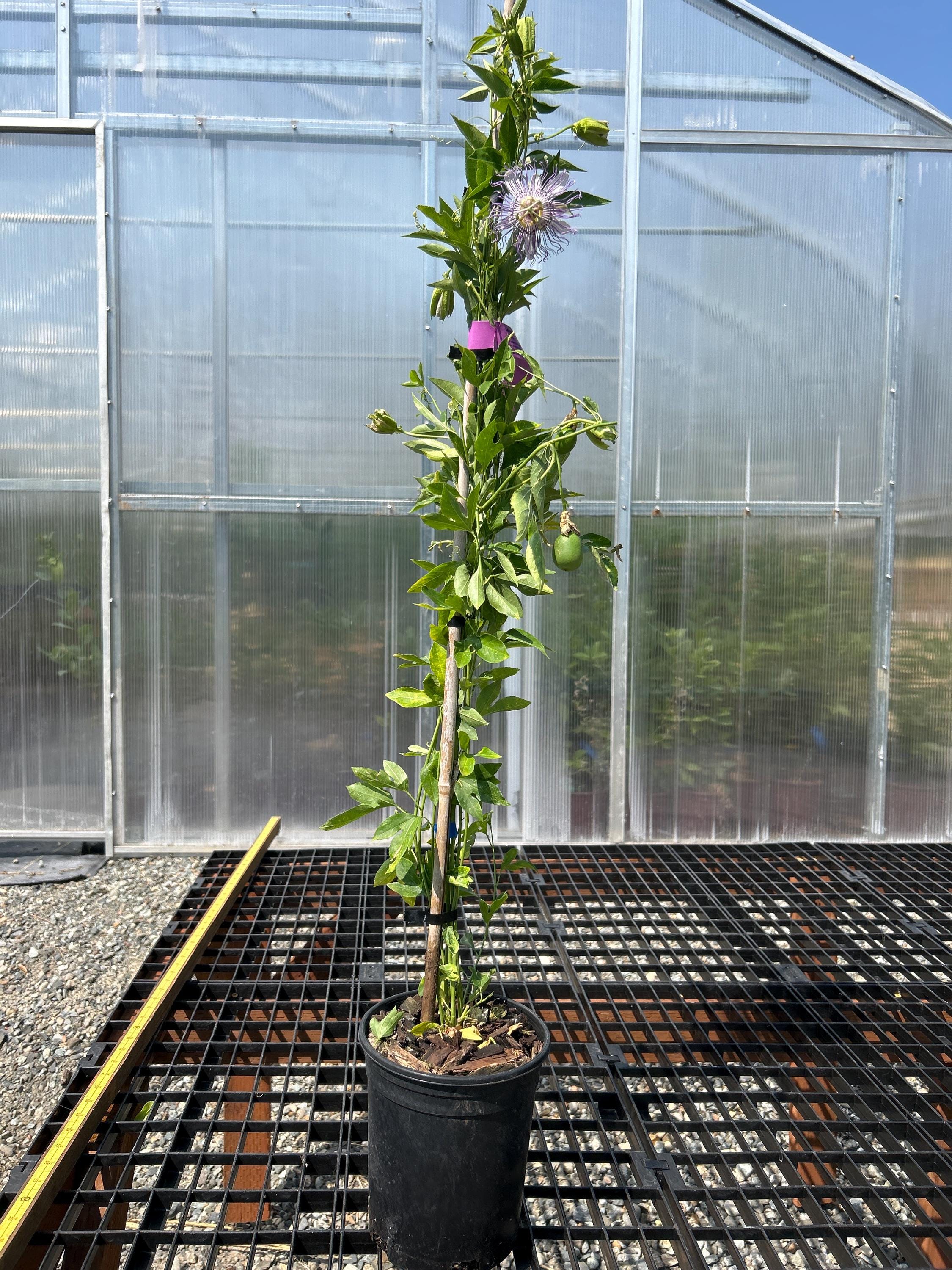
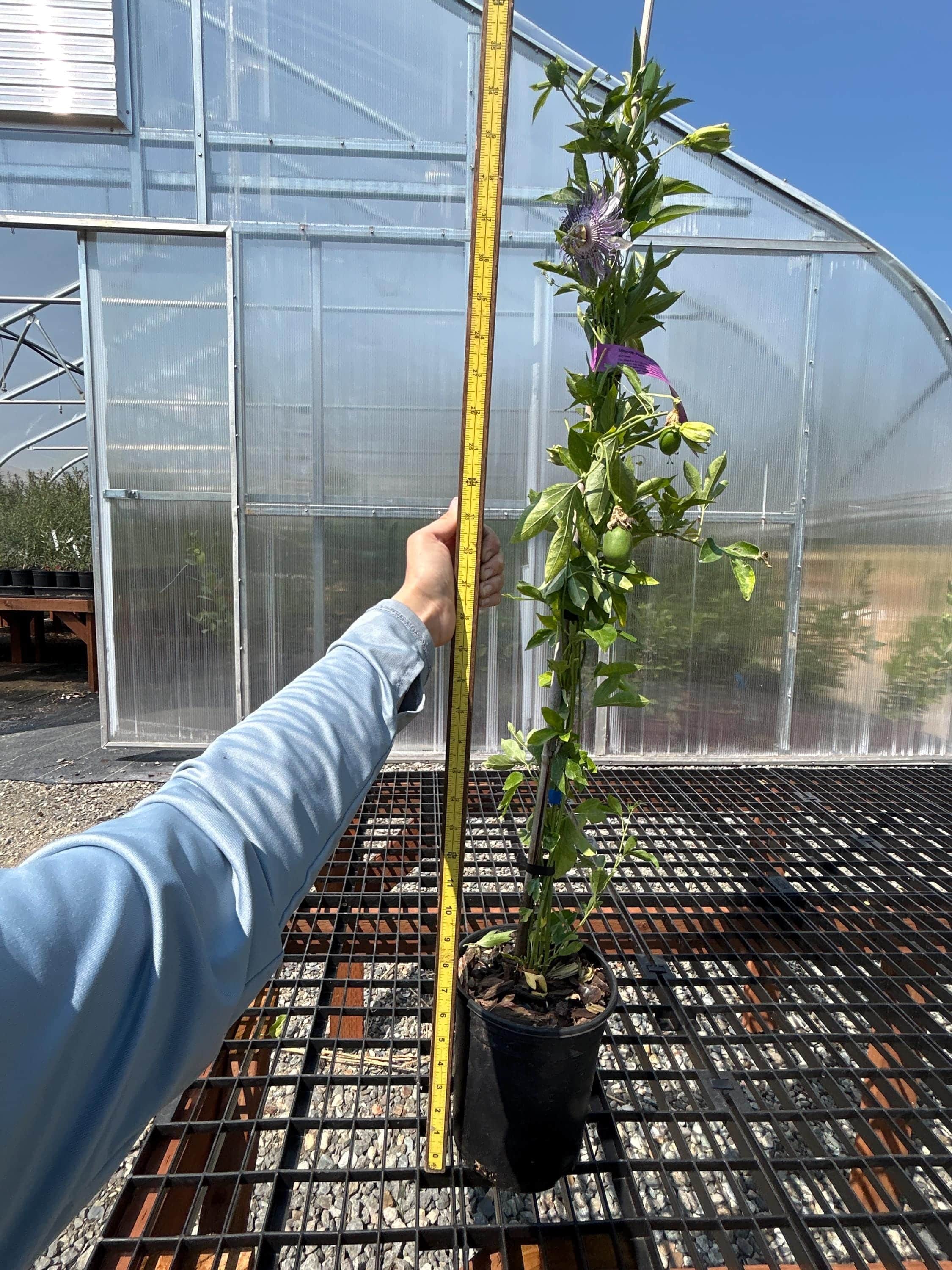
Maypop (Passiflora incarnata) is the passionflower built for real North American winters. Rooted plants survive freezing temperatures that would kill a tropical passionflower outright, then return from the crown to climb and bloom again the following summer.
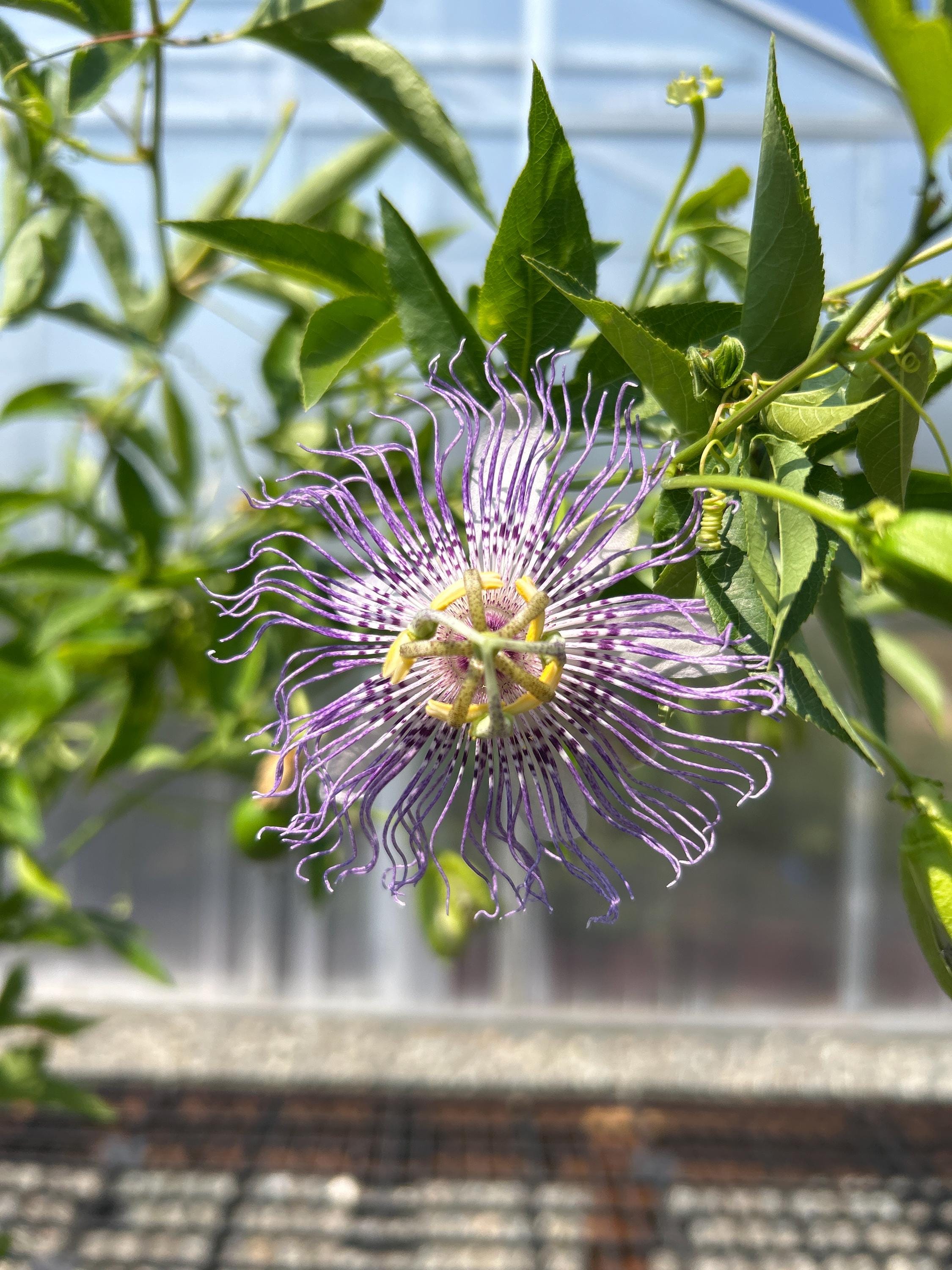
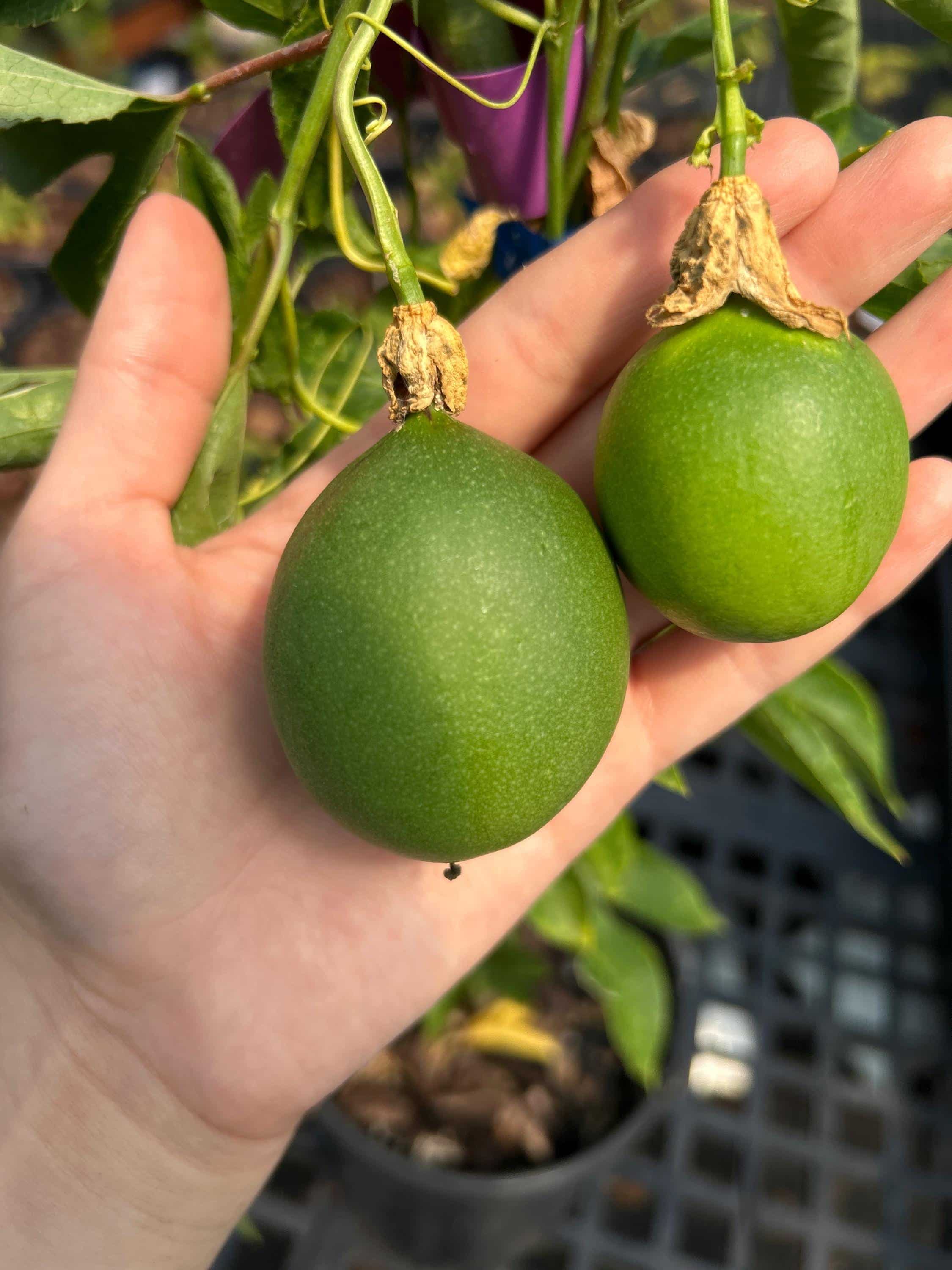
From July until frost, the vines carry an abundance of showy, fringed purple and white flowers, followed by aromatic greenish-yellow fruit with the sprightly taste of tropical passionfruit.
Give it a fence, trellis, or arbor to climb, and expect the planting to spread gently by root over time, filling out a sunny bed or a butterfly garden with the same fragrance and flavor every season.
Overview
- True native passionflower, root hardy to about minus 5 F.
- Showy purple and white flowers bloom from July until frost.
- Aromatic greenish-yellow fruit carries a sprightly, tropical passionfruit flavor.
- New growth often waits until June, later than most perennials, before a full season.
- Spreads gently from the root to fill a sunny bed over time.
- Host plant for Gulf fritillary and other heliconian butterflies.
Growing Details
Latin Name: Passiflora incarnata
Site and Soil: Full sun to half day sun; light, well drained soil of moderate fertility
Hardiness: Root hardy to about minus 5 F, roughly USDA Zone 5b
Bearing Age: Flowers and fruits on the current season’s new growth
Size at Maturity: Spreading vine, climbing 6 to 8 ft with support
Ripening Time: Late season; August into October
Pollination: Self-incompatible; needs a second, genetically distinct maypop nearby to set fruit
Pests & Diseases: Few problems; foliage hosts Gulf fritillary and other heliconian caterpillars
Additional Notes
- Grower’s Insight: Site it somewhere with room to climb and spread, since established plants send up new shoots several feet from the crown over the years.
- Regional Insight: From the Mid-Atlantic through the Southeast and into warmer inland regions, maypop is hardy enough to return outdoors year after year with no winter protection.
- Explore more rare and unique plants in our collection: Rare & Unique