Description
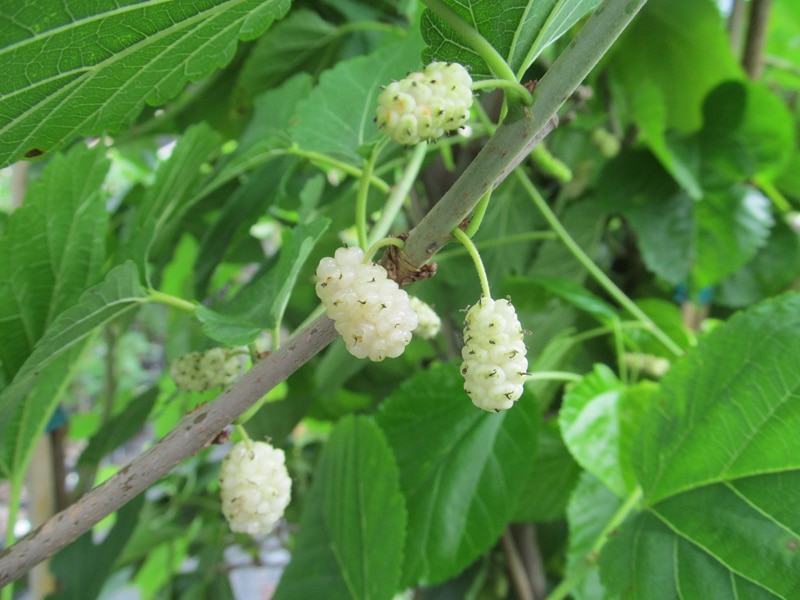
This variety produces white fruit, but fruiting is lighter and less consistent compared to dedicated fruiting selections like White Fruiting Mulberry. Where it truly stands out is vigor—rapid vertical growth, dense branching, and strong adaptability make it an excellent choice for hedging, windbreaks, and privacy screens. If your goal is fast coverage, living shade, or a tall green barrier in a short amount of time, White Persian Mulberry is a strong candidate. If fruit production is your priority, other mulberry varieties will serve you better.
Overview
- Fast-growing white mulberry selection
- Best suited for privacy, hedging, and screening
- Produces white fruit, but not a heavy bearer
- Extremely vigorous and adaptable
- Self-fertile
Growing Details
Latin Name: Morus alba ’White Persian’
Site and Soil: 1/2 day to full day of sun; well-drained soil
Hardiness: USDA Zone 5–9
Rootstock: Russian mulberry (Morus alba tatarica)
Bearing Age: 1–3 years
Size at Maturity: Typically 20–30 ft tall if left unpruned; easily managed with pruning
Flowering: Spring; inconspicuous catkins (not showy)
Ripening Time: Early to mid-summer; timing varies by climate
Pollination: Self-fertile
Pests & Diseases: Generally low-maintenance and resilient
Yield: Light to moderate
Additional Notes
- Grower’s Insight: We grow this more as a living wall than a fruit tree. It fills space fast and creates privacy quickly, but fruiting is secondary.
- Regional Insight: Performs well across a wide range of climates, including areas where rapid establishment is important.
- Responds very well to aggressive pruning and shaping.
- An excellent option where speed and coverage matter more than harvest.
- Explore more mulberries in our collection: Mulberry Trees