Seaberry (Sea Buckthorn) – Leikora

$29.99

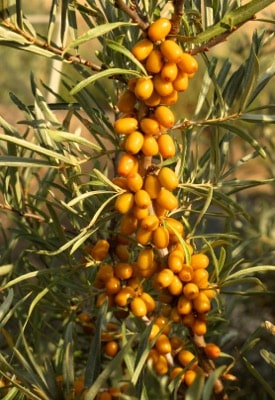
Leikora is a classic German seaberry (sea buckthorn) known for its heavy crops of vivid orange berries, intense tart flavor, and excellent cold hardiness. A tough, productive shrub that shines in juice, syrups, and preserves.

  • Abundant bright-orange berries
  • Intense, tart, citrus-like flavor
  • Vigorous upright shrub, about 6‚Äì8 ft
  • Very cold hardy (Zone 3‚Äì8)
  • Excellent for juice, preserves, and ferments
Add to Wishlist
Add to Wishlist
SKU: Seaberry (Sea Buckthorn) – Leikora Category: Tag:

Description

Leikora is a classic German seaberry (sea buckthorn, also called sea berry) prized for its heavy crops of vivid orange fruit and striking ornamental value. Dense clusters of large, bright-orange berries line the branches from late summer into fall, and often hang on well after frost, making Leikora as beautiful as it is productive. This variety has earned a reputation as a reliable workhorse in Europe and North America.

Leikora’s berries are juicy, powerfully flavored, and very high in vitamin C, A, and E. The intense, tart, citrusy flavor—often compared to orange with hints of tropical fruit—makes it ideal for juice, syrups, preserves, and fermentation rather than casual fresh eating. On a mature shrub, fruit production can be impressive, and the thorny, upright habit makes Leikora a great choice for hedgerows, windbreaks, and wildlife plantings as well as nutrient-dense home harvests.

Overview

  • German female seaberry with abundant, bright-orange berries.
  • High in vitamin C and antioxidants; excellent for juice and preserves.
  • Very cold-hardy and tough — thrives in poor, sandy, or rocky soils.
  • Strong, upright shrub that doubles as an attractive hedge or screen.
  • Requires a male seaberry pollinator (sea buckthorn) for fruit set.

Growing Details

Latin Name: Hippophae rhamnoides ‘Leikora’
Site and Soil: 1/2 day to full day of sun; prefers well-drained soil, tolerates sandy or low-fertility ground
Hardiness (Temp): To about -40°F
Bearing Age: 2–3 years after planting
Rootstock: Own roots (propagated from cuttings)
Size at Maturity: Typically 6–8 ft tall and wide with an upright habit
Bloom Time: Early to mid-spring (often April)
Ripening Time: Late August to early September (varies by climate and season)
Yield: Heavy bearing once established; mature shrubs can produce 20–25+ lbs of fruit
Pests and Diseases: Excellent natural resistance; generally pest- and disease-free
USDA Zone: 3–8

Additional Notes

  • Origin: German selection widely planted in Eastern Europe, Russia, and China for both fruit and ornamental value.
  • Thorns: Leikora is a traditional, more thorny variety — great for hedges and wildlife plantings, but gloves are recommended at harvest.
  • Best uses: Juice, syrups, preserves, sauces, and fermentation; the intense tartness shines when sweetened or blended.
  • Harvest style: Often harvested by cutting small fruit-laden branches and freezing them before stripping off the berries.
  • Plant with a compatible male seaberry (sea buckthorn) for pollination; one male can pollinate several female plants.
  • Explore more seaberries (sea buckthorn) in our collection: Seaberry Varieties
Planting & Care

At a Glance – Leikora Seaberry

  • Sun: Full sun (minimum 1/2 day)
  • Soil: Well-drained; tolerates sandy, rocky, and low-fertility soils
  • Water: Low once established
  • Growth: Vigorous, upright shrub, ~6–8 ft
  • Hardiness: USDA Zone 3–8
  • Pollination: Female — requires a male seaberry
  • Harvest: Late August to early September; fruit often hangs after frost
  • Best Use: Juice, syrups, preserves, and fermentation

Variety Notes – Leikora

  • German selection grown for both ornamental value and reliable fruit production.
  • Large, bright-orange berries with strong, tart, citrusy flavor and very high vitamin C.
  • More thorny than some newer cultivars, making it excellent for hedgerows and wildlife plantings.
  • Berries frequently hold on the branches well into fall, even after heavy frost, adding late-season color.
  • Often harvested using the branch-freeze–shake method for easier processing of larger crops.

Planting & Care – Seaberry (Sea Buckthorn)

Site Selection

  • Full sun is ideal for best flowering and fruiting (minimum 1/2 day of direct sun).
  • Plant in well-drained soil; seaberries tolerate sandy, rocky, and low-fertility soils but do not like standing water or heavy, soggy clay.
  • Very cold-hardy and wind-tolerant, seaberries are well suited to exposed sites, hedgerows, and shelterbelts.

Soil Preparation

  • Loosen the soil 18–24″ wide and 12–18″ deep where you will plant to encourage root establishment.
  • Mix in a moderate amount of compost if your soil is very poor or compacted, but avoid heavy water-holding amendments that can cause waterlogging.
  • Seaberries are nitrogen-fixing shrubs and generally do not require rich soil or frequent fertilizing.

Planting Instructions

  1. Dig a hole 2–3× wider than the root ball.
  2. Set the plant at the same depth it grew in the pot (do not bury the stem deeper).
  3. Backfill with native soil, pressing gently to remove large air pockets.
  4. Water deeply after planting to settle the soil around the roots.
  5. Apply a 2–3″ layer of mulch around the base, keeping mulch a couple inches away from the stem.

Watering & Fertility

  • Keep the soil evenly moist during the first growing season while plants establish.
  • Once established, seaberries are very drought-tolerant and usually need water only during extended dry periods.
  • Avoid high-nitrogen fertilizers; excessive fertility can lead to lush vegetative growth without improving fruiting.

Pollination Basics

  • Seaberries are dioecious—male and female flowers are on separate plants.
  • Female plants produce fruit; male plants provide pollen.
  • Plant roughly one male for every 6–8 female plants, within about 50–75 feet, to ensure good wind pollination.
  • Any compatible male seaberry (often sold as “Pollmix” or labeled as a male pollinator) can pollinate multiple female varieties.

Pruning & Training

  • Seaberries naturally form multi-stemmed shrubs. Focus on establishing a sturdy framework of 4–6 main branches.
  • Prune in late winter or early spring, removing dead, damaged, crossing, or very low branches.
  • As plants mature, periodically thin out the oldest, woodiest stems to encourage vigorous new shoots and maintain good light penetration.
  • Seaberries can be maintained as a hedge, informal screen, or individual specimen with regular light pruning.

Harvesting & Use

  • Fruit typically ripens from late summer into early fall, depending on variety and climate; Leikora is generally late August to early September.
  • Ripe berries color up to vivid orange and develop full flavor and aroma.
  • For small plantings, berries can be hand-picked directly from the branches, though thorns make gloves a good idea.
  • For heavier crops, many growers use the branch-freeze–shake method: cut small fruit-laden branches, freeze them, then shake or strip off the frozen berries.
  • Berries are naturally tart and are most often used in juices, smoothies, syrups, sauces, ferments, teas, and preserves.

General Tips

  • If your soil is heavy clay, consider planting on a low mound or raised bed to improve drainage.
  • Mulch helps conserve moisture, suppress weeds, and protect shallow roots.
  • Because seaberries are so cold-hardy, winter protection is usually unnecessary once plants are established.