Quince (Crimea)

$34.99

Crimea Quince is a traditional Black Sea–region quince valued for its large fruit, classic quince aroma, and dependable performance as a culinary and preserving variety.

  • Large, traditional quince with classic fragrance
  • Firm flesh suited to cooking, baking, and preserves
  • Reliable fall ripening in temperate climates
  • Self-fertile with consistent production
  • Compact, manageable tree for home orchards
Add to Wishlist
Add to Wishlist
SKU: N/A Categories: , Tag:

Description

Crimea Quince is a heritage quince associated with the Black Sea region, where quince has long been grown as a staple fruit for cooking and preserving. This cultivar is recognized for its large fruit size, classic quince fragrance, and straightforward culinary performance.

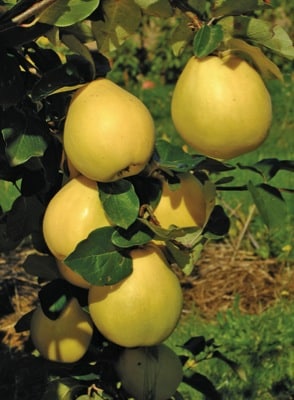
The fruit ripens in mid to late fall, turning yellow and releasing a traditional quince aroma. Flesh is firm and astringent when raw, as expected for true culinary quince, and is best used cooked. When heated, Crimea Quince softens while retaining body, making it well suited to applications where structure matters, such as baking, poaching, and quince paste.

The tree is naturally compact and productive, fitting well into mixed home orchards and traditional plantings. Crimea Quince is not selected for novelty traits, but for reliability, size, and classic quince character—qualities that have kept it in cultivation across generations.

Overview

  • Heritage quince with Black Sea regional origin
  • Large fruit with classic quince aroma
  • Firm flesh ideal for cooking and preserving
  • Mid to late fall harvest window
  • Self-fertile and dependable once established

Growing Details

Latin Name: Cydonia oblonga ‘Crimea’
Site and Soil: 1/2 day to full day of sun; well-drained soil
Chill Requirement: Approx. 300–400 hours
Hardiness: USDA Zone 5–9
Rootstock: Quince
Bearing Age: 1–3 years
Size at Maturity: Typically maintained at 10–15 ft tall and wide with pruning
Bloom Time: Mid-spring
Ripening Time: Mid to late fall; typically October (varies by region)
Pollination: Self-fertile; additional quince may improve yield
Pests & Diseases: Standard quince considerations; monitor for fire blight in susceptible regions
Yield: Productive and consistent once established

Additional Notes

  • Grower’s Insight: Crimea Quince is selected for size and classic culinary performance rather than specialty traits, making it a dependable choice for traditional quince uses.
  • Regional Insight: Performs reliably in cooler-summer regions, including the Pacific Northwest, where fall conditions allow full ripening and aroma development.
  • Best harvested once fruit is fully yellow and aromatic.
  • Primarily intended for cooking, baking, and preserves.
Planting & Care

At a Glance – Crimea Quince

  • Sun: 1/2 day to full day of sun
  • Soil: Well-drained soil; avoid prolonged saturation
  • Water: Moderate; consistent during establishment
  • Size: Compact; easily maintained with pruning
  • Pollination: Self-fertile
  • Harvest: Mid to late fall (October)
  • Hardiness: USDA Zone 5–9

Planting & Care – Crimea Quince

Site Selection

  • Select a sunny site to support flowering and fruit ripening.
  • Full sun is ideal; at least 1/2 day is sufficient.
  • Good airflow helps limit disease pressure.

Soil Preparation

  • Plant in well-drained soil with moderate fertility.
  • Avoid heavy or poorly drained sites.
  • Ideal soil pH ranges from 6.0 to 7.0.

Planting Instructions

  • Dig a hole twice the width of the root system.
  • Set the root flare at or just above soil level.
  • Backfill with native soil and water thoroughly.
  • Mulch 2–3 inches deep, keeping mulch away from the trunk.

Watering & Fertilizing

  • Water regularly during the first 1–2 growing seasons.
  • Deep water during extended dry periods.
  • Once established, quince is moderately drought tolerant.
  • Fertilize lightly in early spring only if growth is weak.

Pruning & Training

  • Train to an open center or modified central leader.
  • Annual pruning improves light penetration and airflow.
  • Remove crowded or crossing branches as needed.

Harvest & Use

  • Harvest when fruit is fully yellow and aromatic.
  • Allow fruit to finish ripening indoors if needed.
  • Excellent for baking, poaching, quince paste, and preserves.

General Tips

  • Thin fruit lightly in heavy-set years to improve size.
  • Late spring bloom helps avoid frost damage.
  • Consistent pruning supports long-term productivity.