Description
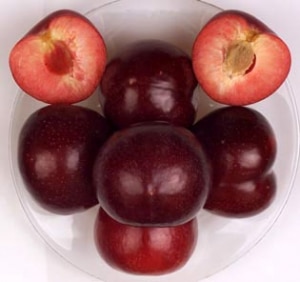
The fruit ripens late in the season and is best enjoyed firm-ripe, when sugars are high and the flesh remains dense and juicy. Flavor is often described as deep and complex, with a balance that feels fuller and more substantial than early-season pluots. Because pluots are at their best fresh and do not store for long, Flavor King shines when allowed to ripen fully on the tree. With proper pollination and harvest timing, it rewards growers with fruit that consistently earns its reputation.

Overview
- Late-season pluot prized for rich, complex flavor
- Firm texture with dense, juicy flesh
- High sugar content at full maturity
- Large semi-dwarf habit, manageable with pruning
- Requires a pollination partner for consistent crops
Growing Details
Latin Name: Prunus salicina √ó Prunus armeniaca ’Flavor King’
Site and Soil: 1/2 day to full day of sun; well-drained soil
Chill Requirement: Approx. 400 hours
Hardiness: USDA Zone 5–9
Rootstock: Myro 29C (large semi-dwarf; maintained easily with summer pruning)
Bearing Age: 1–3 years
Size at Maturity: Typically maintained at 12–14 ft tall and wide with pruning
Flowering Time: Late midseason flowering (within plum / pluot types)
Ripening Time: Late season; typically August to early September depending on region
Pollination: Pollination required; plant a compatible pluot or Japanese plum within 20–30 feet
Pests & Diseases: Standard plum and pluot considerations; good airflow and routine care are important
Yield: Productive once established; thinning improves size and quality
Additional Notes
- Grower’s Insight: Flavor King is often used as a reference point for pluot flavor—dense, sweet, and deeply satisfying when harvested at peak maturity.
- Regional Insight: In the Puget Sound and other cool, wet-spring regions, early bloom weather can limit pollinator activity. Planting multiple compatible pluot or Japanese plum varieties nearby and supporting early-season pollinators greatly improves fruit set.
- Cool-Spring Pollination Tip: In climates with rainy or chilly bloom periods, success improves with companion plants that bloom early, pollinator habitat, and avoiding insecticide sprays during bloom.
- Thin fruit early to prevent limb strain and improve overall fruit quality.
- Explore more pluots in our collection: Pluot Trees