Description
Dapple Dandy was developed by Zaiger Genetics to emphasize texture and visual appeal without sacrificing sweetness. While many pluots lean toward soft, melting flesh, this variety was bred to deliver a crisp, satisfying bite that holds its structure when harvested firm-ripe.
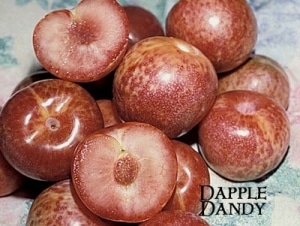
The fruit is immediately recognizable by its mottled green, cream, and red skin, with light pink to red flesh near the skin. Flavor is sweet-forward with moderate acidity, making it refreshing and approachable rather than dense or heavy. Dapple Dandy is especially enjoyable straight from the tree, where its texture and sweetness are at their peak.
In the pluot lineup, Dapple Dandy often serves as a bridge between earlier and later varieties, extending the fresh-eating season while offering a distinctly different experience from softer, more aromatic selections.
Overview
- Crisp-textured pluot bred for fresh eating
- High sugar with clean, balanced flavor
- Distinctive mottled skin and attractive presentation
- Mid-season ripening window
- Requires a pollination partner for reliable fruit set
Growing Details
Latin Name: Prunus salicina √ó Prunus armeniaca ’Dapple Dandy’
Site and Soil: 1/2 day to full day of sun; well-drained soil
Chill Requirement: Approx. 500–600 hours
Hardiness: USDA Zone 5–9
Rootstock: Citation (semi-dwarf)
Bearing Age: 1–3 years
Size at Maturity: Typically maintained at 10–14 ft tall and wide with pruning
Flowering Time: Mid flowering
Ripening Time: Mid-season; typically July to early August depending on region
Pollination: Pollination required; plant a compatible pluot or Japanese plum within 20–30 feet
Pests & Diseases: Standard plum and pluot considerations; good airflow and routine care are important
Yield: Productive once established; thinning improves fruit size and quality
Additional Notes
- Grower’s Insight: Dapple Dandy is a texture-first pluot. It’s best harvested firm-ripe, when the fruit delivers a crisp bite and concentrated sweetness rather than a soft, melting texture.
- Regional Insight: Performs well in temperate regions with warm summers and cool nights, including the Pacific Northwest, where firmness and sugar balance develop reliably.
- Harvest in multiple passes to catch fruit at peak firmness.
- Thin fruit early to maintain size and prevent limb stress.
- Explore more pluots in our collection: Pluot Trees