Description
Seneca is a European plum valued for unusually large fruit, freestone yellow flesh, and dependable late-summer dessert quality. It ripens toward the end of the European plum season, delivering plums that feel substantial in the hand while still eating clean and sweet.
Developed through the New York State Agricultural Experiment Station breeding program and introduced in the early 1970s, Seneca was selected to combine impressive fruit size with reliable performance. Unlike many large European plums bred primarily for drying, Seneca maintains a fresh-eating character that sets it apart.
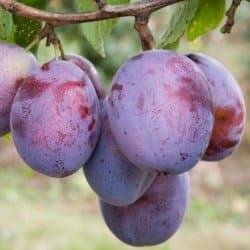
The fruit matures to deep purple with amber-yellow flesh and separates cleanly from the pit when fully ripe. Flavor is rich and balanced rather than sharp, making Seneca well suited to fresh eating, while still handling light kitchen use when surplus fruit is available.
Overview
- European plum with exceptionally large fruit
- Freestone yellow flesh at maturity
- Sweet, rich flavor suited to fresh eating
- Late-summer ripening within European plums
- Best production with a compatible European pollination partner
Growing Details
Latin Name: Prunus domestica ’Seneca’
Site and Soil: 1/2 day to full day of sun; well-drained soil
Chill Requirement: Approx. 750–850 hours
Hardiness: USDA Zone 5–9
Rootstock: Marianna 2624
Bearing Age: 1–3 years
Size at Maturity: Typically maintained at 10–14 ft tall and wide with pruning
Flowering Time: Mid to late flowering (within European plums)
Ripening Time: Late summer to early fall; often about one week before ’Stanley’
Pollination: Pollination recommended; plant a compatible European plum within 20–30 feet
Pests & Diseases: Standard European plum considerations; good airflow supports fruit quality
Yield: Productive once established
Additional Notes
- Grower’s Insight: Seneca stands out among European plums for size without sacrificing eating quality. It fills the gap between classic dessert plums and prune-type varieties.
- Regional Insight: Seneca has shown strong performance in Pacific Northwest trials, including consistent results in western Washington test plantings.
- Fruit size benefits from thinning in heavy years.
- European plums require European pollination partners; Japanese plums will not pollinate Seneca.
- Explore more plums in our collection: Plum Trees