Description
Methley is one of the earliest plums to ripen, delivering sweet, juicy fruit at a moment when European plums are only beginning to flower. Its value lies in timing as much as flavor, offering a true fresh plum experience weeks ahead of most other varieties.
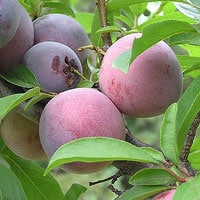
Introduced to the United States in the early 20th century, Methley became widely planted for its dependable crops, early bearing, and exceptionally sweet fruit. The plums are small to medium in size with dark red skin and richly colored red flesh.
Flavor is notably sweet with very low acidity, best enjoyed when the fruit is fully soft-ripe. Methley is not a storage plum—its strength is immediacy, making it a favorite for eating straight from the tree at the very start of plum season.

Overview
- Very early-ripening Japanese-type plum
- Sweet, low-acid flavor profile
- Red skin with soft, juicy red flesh
- Reliably self-fertile
- One of the first plums of the season
Growing Details
Latin Name: Prunus salicina ‘Methley’
Site and Soil: 1/2 day to full day of sun; well-drained soil
Chill Requirement: Approx. 250–300 hours
Hardiness: USDA Zone 5–9
Rootstock: Marianna 2624
Bearing Age: 1–3 years
Size at Maturity: Typically maintained at 8–12 ft tall and wide with pruning
Flowering Time: Early flowering (within plum / pluot types)
Ripening Time: Very early; typically late June to early July depending on region
Pollination: Self-fertile; additional plums within 20–30 feet can increase yield
Pests & Diseases: Standard plum considerations; early bloom benefits from good airflow
Yield: Reliable and consistent once established
Additional Notes
- Grower’s Insight: Methley shines when allowed to fully soften on the tree. Picking early sacrifices the sweetness that defines this variety.
- Regional Insight: In cool or wet spring climates, early flowering means pollinator activity is critical—support early-season pollinators and avoid spraying during bloom.
- Fruit does not store well; plan to enjoy or process shortly after harvest.
- Explore more plums in our collection: Plum Trees