Description
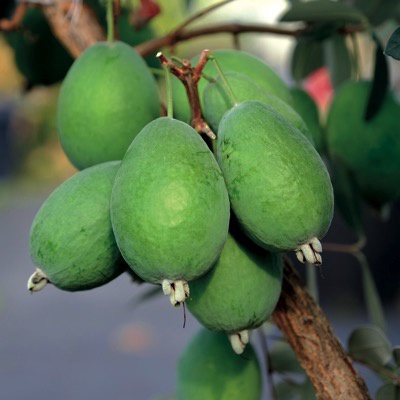
Kakapo is one of the modern New Zealand-bred pineapple guavas selected for a more open, naturally smaller-growing habit than older Coolidge- and Choiceana-line cultivars. The shrub tends to mature around eight to twelve feet and rarely needs the heavier pruning that larger feijoas often demand, which makes it well suited to home gardens with limited room.
The fruit is sweet, with the pineapple-and-mint character the species is known for and clear, juicy flesh when ripe. In our Pacific Northwest climate, Kakapo ripens mid- to late-season — generally mid October into November — and fruit are best picked once they begin to drop, with the skins still green. The shrub also flowers showily in late spring and early summer with red-and-white blossoms whose petals are edible; many growers harvest a portion of the bloom for salads or garnish and let the rest set fruit.
Like most pineapple guavas, Kakapo is partially self-fertile — it will set some fruit on its own, but cropping is noticeably better with a second pineapple guava cultivar planted nearby. It is hardy to roughly USDA Zone 7 with good siting, and the species’ preference for cool winters and moderate summers matches maritime Pacific Northwest conditions well, where flavor tends to develop more fully than in hotter regions.
Overview
- Modern New Zealand-bred pineapple guava selection.
- Naturally compact, open-growing habit, well suited to smaller home gardens.
- Sweet fruit with pineapple-and-mint character.
- Showy red-and-white summer flowers with edible petals.
- Partially self-fertile; produces more reliably with a cross-pollinator.
- Performs well in maritime Pacific Northwest conditions.
Growing Details
Latin Name: Acca sellowiana ‘Kakapo’
Site and Soil: 1/2 day to full day of sun; well-drained soil
Hardiness: Roughly USDA Zone 7–10 with good siting
Rootstock: Grafted
Bearing Age: 2–3 years after planting
Size at Maturity: Approximately 8–12 ft tall in PNW conditions; reported as 2–3 m in New Zealand-grown context, with a naturally narrower, more open habit than older feijoa cultivars
Bloom Time: Late spring into early summer; flowers are showy and edible
Ripening Time: Mid- to late-season; typically mid October into November in the Pacific Northwest
Pollination: Partially self-fertile; heavier and more reliable cropping with a second pineapple guava cultivar planted within approximately 20 ft
Pests & Diseases: Pineapple guava is generally low-pressure in most climates.
Additional Notes
- Grower’s Insight: Kakapo’s appeal is partly the fruit and partly the plant itself. The shrub is evergreen with silver undersides to the leaves, the early-summer flowers are striking and edible, and the slower, more open growth habit makes it one of the easier pineapple guavas to keep at a workable size in a home garden.
- Regional Insight: Pineapple guava performs especially well in cool-summer maritime climates where flavor develops more fully than in hot interior regions. In our Pacific Northwest conditions Kakapo ripens reliably most years.
- Explore more pineapple guava in our collection: Pineapple Guava