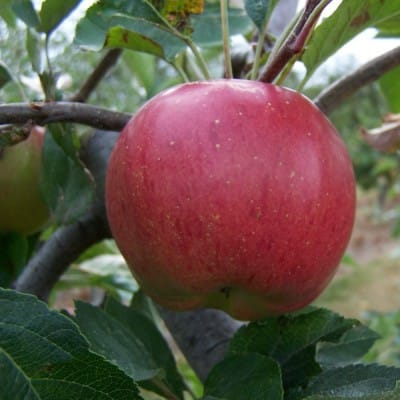
Pear Tree (Orcas)

Price range: $29.99 through $59.99

Exceptionally large, sweet pears on a compact, easy-care semi-dwarf tree. Thrives in cool-summer climates and bears heavily.

  • Massive, sweet fruit
  • Outstanding for canning
  • PNW favorite; cool-climate friendly
  • Requires a pollinator
Add to Wishlist
Add to Wishlist
SKU: N/A Categories: , Tag:

Description

Orcas is one of the Pacific Northwest’s finest home-orchard pears, famous for its enormous fruit, exceptional juiciness, and naturally sweet, low-acid flavor. Originally discovered on Orcas Island in Washington, this variety thrives in cool-summer regions and consistently produces heavy crops even in variable spring weather.

Grafted onto a semi-dwarfing rootstock, this tree matures at a manageable 12–15 ft—ideal for smaller orchards and easy annual maintenance. Orcas is especially valued for its reliability in coastal and maritime climates, where some pear varieties struggle to size and ripen.

Orcas is not self-fertile and requires another European pear such as Bartlett, Anjou, Bosc, or Comice planted within 20–30 feet for strong pollination.

Overview

  • Huge pears with very sweet, juicy, refreshing flavor.
  • Outstanding for fresh eating, drying, and canning.
  • Performs extremely well in the Pacific Northwest.
  • Semi-dwarf size for easy care and harvesting.
  • Requires another European pear for pollination.

Growing Details

Latin Name: Pyrus communis ‘Orcas’
Site and Soil: 1/2 day to full day of sun; prefers well-drained soil
Rootstock: OHxF 97 (semi-dwarf)
Hardiness: USDA Zone 5–9
Bearing Age: 1–3 years
Size at Maturity: 12–15 ft — compact and manageable
Bloom Time: Mid-season
Ripening Time: Late August to September
Pollination: Requires another European pear
Pests & Diseases: Good vigor; benefits from airflow in humid regions
Yield: Heavy crops; fruit often requires thinning

Additional Notes

  • Nerdy fact: Orcas originated as a chance seedling on Orcas Island in Washington and quickly became a regional favorite due to its unusually large fruit—often exceeding 1 lb each.
  • An excellent choice for canning thanks to its sweetness and firm texture when cooked.
  • Semi-dwarfing rootstock helps maintain long-term tree size and productivity.
  • Explore more pear varieties in our collection: Pear Trees
Planting & Care

At a Glance – Orcas Pear (Semi-Dwarf)

  • Sun: 1/2 day to full day of sun
  • Soil: Prefers well-drained soils
  • Water: Keep evenly moist during establishment
  • Rootstock: Semi-dwarfing
  • Size: 12–15 ft at maturity
  • Pollination: Requires another European pear
  • Harvest: Late August–September
  • Hardiness: USDA Zone 5–9

Planting & Care – Orcas Pear

Site Selection

  • Well-suited to 1/2 day to full day of sun, especially in cooler, coastal regions.
  • Excellent performance in the Pacific Northwest due to strong spring bloom resilience.
  • Choose a site with moderate airflow to manage potential humidity-related issues.

Soil Preparation

  • Prefers well-drained loam but tolerates a variety of soils.
  • Lightly amend poor soils with compost; avoid heavy nitrogen at planting time.
  • Ideal soil pH: 6.0–7.0.

Planting Instructions

  1. Dig a planting hole twice the width of the root ball.
  2. Set the tree at the same depth it grew in the nursery.
  3. Backfill with native soil and water well.
  4. Mulch 2–3″ deep, keeping mulch away from the trunk.

Watering & Fertilizing

  • Keep soil consistently moist during the first 1–2 years.
  • Water deeply 1–2 times per week in mild weather; 2–3 times per week in heat or wind.
  • Check soil 4–6″ deep and water when that layer is dry.
  • Once established (year 3+), water deeply every 7–14 days during dry periods.
  • Medium feeder: apply a light, balanced organic fertilizer in early spring if growth is weak.

Pollination

  • Requires another European pear for pollination.
  • Compatible partners include Bartlett, Anjou, Bosc, and Comice.
  • Plant within 20–30 feet for reliable fruit set.

Pruning & Training

  • Train to a central leader or modified central leader form.
  • Thin heavily—Orcas often oversets due to its natural vigor.
  • Annual pruning helps maintain structure and manage fruit size.

Harvest & Use

  • Large, juicy pears excellent for canning and fresh eating.
  • Harvest slightly firm and finish ripening indoors.
  • Fruit often exceeds 1 lb each—one of the largest backyard pear varieties.

General Tips

  • Semi-dwarf size makes maintenance simple for most yard sizes.
  • Mulch annually to conserve moisture and control weeds.
  • A top choice for PNW growers and cool-summer orchards.