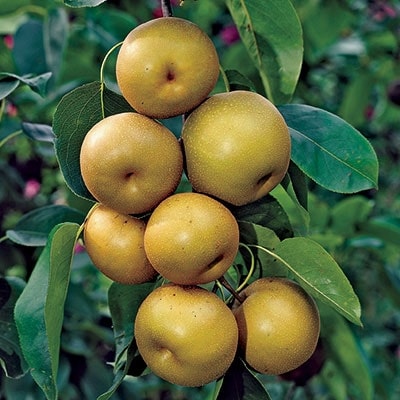
Pear Tree (Conference)

Price range: $39.99 through $59.99

Europe’s most popular pear, known for its sweet, aromatic flavor and reliable cropping. Compact, easy-care semi-dwarf tree ideal for home orchards.

  • Sweet, aromatic, elongated fruit
  • Very reliable producer
  • Excellent storage quality
  • Partially self-fertile
Add to Wishlist
Add to Wishlist
SKU: Pear Tree (Conference) Categories: , Tag:

Description

Conference is one of Europe’s most widely grown pears—and for good reason. Sweet, aromatic, and slightly firm even when fully ripe, Conference offers reliable fruit set, exceptional storage life, and consistent productivity. Its elongated shape, smooth green skin, and lightly russeted finish make it visually distinctive and easily recognizable.

Grafted onto a semi-dwarfing rootstock, this tree remains in the manageable 12–15 ft range, ideal for home orchards. The compact size improves accessibility for pruning, training, and harvesting while maintaining strong vigor and outstanding fruit quality.

Conference is partially self-fertile, capable of producing fruit on its own—but yields and fruit size improve significantly with a pollination partner such as Bartlett, Anjou, Bosc, or Comice planted within 20–30 feet.

Overview

  • Europe’s most popular pear—sweet, aromatic, and flavorful.
  • Semi-dwarf size makes it easy to manage and harvest.
  • Partially self-fertile, but heavier crops with a pollinator.
  • Excellent storage life—keeps flavor and texture for months.
  • Dependable producer even in cooler summer climates.

Growing Details

Latin Name: Pyrus communis ‘Conference’
Site and Soil: 1/2 day to full day of sun; well-drained soil
Rootstock: OHxF 97 (semi-dwarf)
Hardiness: USDA Zone 5–9
Bearing Age: 1–3 years
Size at Maturity: 12–15 ft — compact and manageable
Bloom Time: Mid-season
Ripening Time: Late September to October
Pollination: Partially self-fertile; better yields with a pollination partner
Pests & Diseases: Good vigor and reliability; moderate fire blight tolerance
Yield: Heavy, consistent crops when mature

Additional Notes

  • Nerdy fact: Conference was introduced in England in 1885 and became famous for reliably fruiting in cool, unpredictable climates—one of the few pears that sets well even in short-summer regions.
  • One of the best storage pears—keeps firm and flavorful for months.
  • Semi-dwarfing rootstock keeps the tree small enough for easy pruning and harvesting.
  • Explore more pear varieties in our collection: Pear Trees
Planting & Care

At a Glance – Conference Pear (Semi-Dwarf)

  • Sun: 1/2 day to full day of sun
  • Soil: Prefers well-drained soils
  • Water: Keep evenly moist during establishment
  • Rootstock: Semi-dwarfing
  • Size: 12–15 ft at maturity
  • Pollination: Partially self-fertile
  • Harvest: Late September–October
  • Hardiness: USDA Zone 5–9

Planting & Care – Conference Pear

Site Selection

  • Thrives with 1/2 day to full day of sun; tolerant of cooler climates.
  • Choose a site with airflow to reduce disease risk.
  • Avoid planting in soggy or compacted soils.

Soil Preparation

  • Prefers well-drained loamy soil but adapts to many soil types.
  • Lightly amend poor soils; avoid heavy nitrogen at planting.
  • Ideal soil pH: 6.0–7.0.

Planting Instructions

  1. Dig a hole twice the width of the root ball.
  2. Plant at the same depth as grown in the nursery.
  3. Backfill with native soil and water thoroughly.
  4. Apply 2–3″ mulch, keeping it away from the trunk.

Watering & Fertilizing

  • Keep soil evenly moist during the first 1–2 years, without oversaturation.
  • Deep water 1–2 times weekly in mild climates; 2–3 times weekly in hot or windy areas.
  • Check soil 4–6″ down; water when this layer becomes dry.
  • Once established (year 3+), deep water every 7–14 days during dry weather.
  • Medium feeder: apply a light, balanced organic fertilizer in early spring if growth is weak.

Pollination

  • Conference is partially self-fertile but produces larger crops with a pollination partner.
  • Compatible partners: Bartlett, Anjou, Bosc, Comice, Harrow Sweet.
  • Plant the pollinator within 20–30 feet for reliable fruit set.

Pruning & Training

  • Train to a central leader or modified central leader form.
  • Prune in late winter to improve airflow and maintain structure.
  • Thin fruit clusters for improved size and quality.

Harvest & Use

  • Harvest when firm; allow to ripen indoors for best flavor.
  • Excellent fresh, in salads, or baked.
  • One of the best pears for long-term storage.

General Tips

  • Mulch yearly to conserve moisture and suppress weeds.
  • Semi-dwarf size keeps this tree manageable for any yard.
  • Monitor for fire blight and prune affected wood during dormancy.