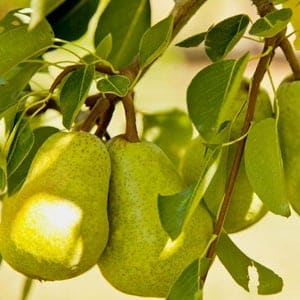
Pear Tree (Bartlett)

Price range: $39.99 through $59.99

Classic sweet, aromatic pears on a compact, easy-care semi-dwarf tree. Reliable and productive; perfect for fresh eating and canning.

  • Sweet, aromatic flavor
  • Heavy, dependable crops
  • Great for fresh eating and canning
  • Partially self-fertile
Add to Wishlist
Add to Wishlist
SKU: N/A Categories: , Tag:

Description

Bartlett is the classic European pear—sweet, aromatic, and richly flavored with a buttery, melting texture. Its smooth yellow skin and fragrant flesh make it the most widely grown pear for fresh eating, canning, dehydrating, and preserves. Few pears offer Bartlett’s perfect balance of sweetness and juiciness.

This Bartlett pear is grown on a semi-dwarfing rootstock, keeping the tree at a comfortable, easy-to-manage size while still offering excellent vigor and productivity. The semi-dwarf habit makes pruning, thinning, spraying, and harvesting far simpler than full-size pear trees, and it performs well in a wide range of soils.

Bartlett is partially self-fertile, meaning it can set some fruit on its own. However, yields improve significantly when paired with another European pear such as Anjou, Comice, Bosc, or Seckel.

Overview

  • Classic sweet, aromatic flavor with buttery flesh.
  • Semi-dwarf size makes it ideal for home orchards and smaller yards.
  • Excellent for fresh eating, canning, drying, and preserves.
  • Partially self-fertile; heavier yields with a pollinator.
  • Dependable producer with good disease tolerance.

Growing Details

Latin Name: Pyrus communis ‘Bartlett’
Site and Soil: 1/2 day to full day of sun; well-drained soil
Rootstock: OHxF 97 (semi-dwarf)
Hardiness: USDA Zone 5–9
Bearing Age: 1–3 years
Size at Maturity: 12–15 ft — compact and manageable
Bloom Time: Mid-season
Ripening Time: Late August to September
Pollination: Partially self-fertile; higher yields with a partner pear
Pests & Diseases: Good fire blight tolerance
Yield: Heavy and reliable once established

Additional Notes

  • Pick pears slightly firm and finish ripening indoors for best texture.
  • The semi-dwarfing rootstock keeps this tree manageable and productive.
  • A top choice for canning and dehydrating due to its flavor and texture.
  • Explore more pear varieties in our collection: Pear Trees
Planting & Care

At a Glance – Bartlett Pear

  • Sun: 1/2 day to full day of sun
  • Soil: Prefers well-drained soil; tolerates a range of textures
  • Water: Moderate; consistent moisture during establishment
  • Rootstock: OHxF 97 (semi-dwarf, easy to manage)
  • Size: 12–15 ft at maturity
  • Pollination: Partially self-fertile; better yields with a partner pear
  • Harvest: Late August to September
  • Hardiness: USDA Zone 5–9

Planting & Care – Bartlett Pear

Site Selection

  • Choose a location with at least 1/2 day of sun; Bartlett performs well even without full-day exposure in cooler climates.
  • Good air movement helps minimize disease pressure.
  • Avoid low areas where cold air settles.

Soil Preparation

  • Ensure soil drains well—Bartlett dislikes standing water.
  • Lightly amend poor soils with compost, but avoid heavy nitrogen.
  • Ideal pH is between 6.0 and 7.0.

Planting Instructions

  1. Dig a hole twice the width of the root ball.
  2. Plant at the same depth the tree grew in the nursery.
  3. Backfill with native soil and water thoroughly.
  4. Mulch 2–3″ deep, keeping mulch away from the trunk.

Watering & Fertilizing

  • In the first 1–2 years, keep soil consistently moist but not waterlogged.
  • In cooler or mild climates, deep water about 1–2 times per week during dry weather.
  • In hotter or windier climates, plan on 2–3 deep waterings per week during heat spells.
  • Check soil 4–6″ down; if it feels dry at that depth, it’s time to water again.
  • Once established (year 3+), deep water every 7–14 days in dry weather, more often on very sandy soils.
  • Bartlett on OHxF 97 is a medium feeder: in most soils, a light application of balanced organic fertilizer in early spring is sufficient. Avoid heavy nitrogen, which can push soft, overly vigorous growth.

Pollination

  • Bartlett is partially self-fertile.
  • For heavier yields, pair with another European pear such as Anjou, Comice, Bosc, or Seckel.
  • Plant within 20–30 ft for best results.

Pruning & Training

  • Train to a central leader or modified central leader.
  • Remove crossing or shaded branches during late winter pruning.
  • Semi-dwarf size makes pruning and harvesting easy for most homeowners.

Harvest & Use

  • Pick pears when they turn light green and detach easily.
  • Allow fruit to ripen indoors to develop the classic Bartlett flavor.
  • Excellent for canning, fresh eating, drying, and preserves.

General Tips

  • Mulch yearly to conserve moisture and suppress weeds.
  • Monitor for fire blight and prune out any affected shoots promptly.
  • OHxF 97 provides both resilience and a compact growth habit ideal for smaller spaces.

Reviews

There are no reviews yet.

Be the first to review “Pear Tree (Bartlett)”

Your email address will not be published. Required fields are marked *