Description
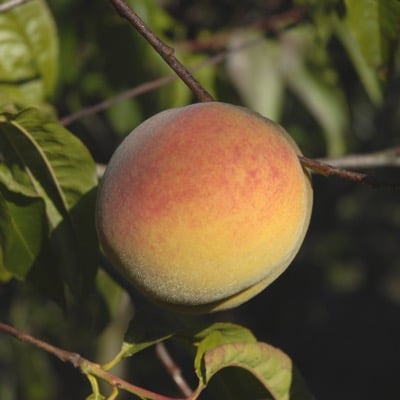
Landt Peach is a dependable, time-tested variety valued for its consistent production and classic peach flavor. It produces attractive yellow peaches with juicy flesh and a well-balanced sweetness that feels familiar in the best way—comforting, reliable, and unmistakably homegrown.
Ripening mid-season, Landt fits naturally into a staggered harvest plan and performs steadily year after year. This is a peach grown for eating fresh, sharing with friends, and enjoying without fuss—a variety that earns trust through consistency rather than novelty.
Overview
- Yellow peach with sweet, classic flavor.
- Juicy freestone flesh—easy to slice and enjoy.
- Reliable producer with steady performance.
- Productive semi-dwarf tree for home orchards.
- Self-fertile—no pollination partner required.
Growing Details
Latin Name: Prunus persica ‘Landt’
Site and Soil: 1/2 day to full day of sun; well-drained soil
Rootstock: Lovell
Hardiness: USDA Zone 6–9
Bearing Age: 1–3 years
Size at Maturity: 12–15 ft (semi-dwarf habit)
Bloom Time: Mid-spring
Ripening Time: Mid-season
Pollination: Self-fertile
Fruit Type: Freestone yellow peach
Pests & Diseases: Peaches can be prone to Peach Leaf Curl in cool, wet-spring climates; benefits from good airflow and appropriate dormant care
Additional Notes
- Grower’s Insight: Landt is appreciated by growers who value consistency—good crops, good flavor, and a tree that performs without drama.
- Regional Insight: This variety has shown steady, reliable performance in Pacific Northwest orchards, making it a solid choice for maritime climates.
- Excellent for fresh eating, baking, freezing, and preserves.
- A dependable mid-season anchor for any peach lineup.
- Explore more peaches and nectarines in our collection: Peach & Nectarine Trees
Planting & Care
<div class=”re-care-summary”>
<h3>At a Glance – Landt Peach</h3>
<ul>
<li><strong>Sun:</strong> 1/2 day to full day of sun</li>
<li><strong>Soil:</strong> Well-drained soil</li>
<li><strong>Water:</strong> Deep, regular watering during establishment</li>
<li><strong>Tree Size:</strong> Semi-dwarf (12–15 ft)</li>
<li><strong>Pollination:</strong> Self-fertile</li>
<li><strong>Harvest:</strong> Mid-season</li>
<li><strong>Hardiness:</strong> USDA Zone 6–9</li>
</ul>
</div>
<h2>Planting & Care – Landt Peach</h2>
<h3>Site Selection</h3>
<ul>
<li>Choose a sunny location where the tree receives consistent light throughout the day to support strong growth and fruit quality.</li>
<li>Good airflow helps maintain healthy foliage, especially in regions with cool or damp spring weather.</li>
</ul>
<h3>Soil Preparation</h3>
<ul>
<li>Plant in well-drained soil to prevent excess moisture around the roots.</li>
<li>If soil tends to stay wet, planting on a slight mound or raised area improves drainage.</li>
</ul>
<h3>Planting Instructions</h3>
<ol>
<li>Plant slightly deeper than the nursery soil line to account for settling (about 1 inch for container-grown trees); for bare-root trees, plant so the root flare sits at or just above finished soil level.</li>
<li>Water thoroughly after planting to settle the soil and remove air pockets.</li>
<li>Apply a light layer of mulch to conserve moisture, keeping mulch away from the trunk.</li>
</ol>
<h3>Watering & Fertilizing</h3>
<ul>
<li>Water deeply after planting to fully soak the root zone and encourage downward root growth.</li>
<li>During the first growing season, water regularly and deeply, allowing the soil surface to dry slightly between waterings.</li>
<li>Once established, deeper, less frequent watering supports healthy growth and fruit quality.</li>
<li>Apply a balanced fertilizer in early spring to support growth and fruit development.</li>
<li>Avoid excessive nitrogen late in the season, which can reduce fruit quality.</li>
</ul>
<h3>Pruning</h3>
<ul>
<li>Train to an open-center form to allow sunlight to reach the interior of the tree.</li>
<li>Annual pruning supports productivity, airflow, and manageable tree size.</li>
<li>Thin fruit early to improve size and reduce branch stress.</li>
</ul>
<h3>Harvest & Use</h3>
<ul>
<li>Harvest when fruit is fully colored and slightly soft for best flavor.</li>
<li>Excellent for fresh eating, baking, freezing, and preserving.</li>
</ul>
<h3>General Tips</h3>
<ul>
<li>Allow fruit to fully ripen on the tree to develop maximum sweetness.</li>
<li>Consistent care supports dependable harvests.</li>
</ul>