Description
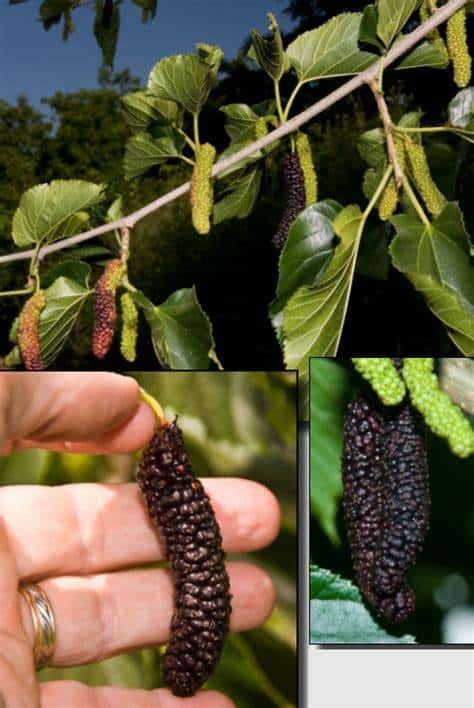
The fruit is the clear highlight. Berries are notably long, soft, and very sweet when fully ripe, offering a rich, low-acid eating experience that’s best enjoyed fresh from the tree. At peak ripeness, the fruit delivers the kind of sweetness that makes Pakistan-type mulberries so memorable.
The tree itself is vigorous and productive, capable of handling summer heat and rewarding growers with generous harvests once established. For those looking to grow an outstanding long-fruited mulberry with proven appeal, Cooke’s Pakistan fits comfortably into that role.
Overview
- Selected strain of Pakistan mulberry
- Produces very long, sweet mulberries
- Heavy producer once established
- Low-acid fruit with rich flavor
- Best enjoyed fresh at full ripeness
Growing Details
Latin Name: Morus macroura ’Cooke’s Pakistan’
Site and Soil: 1/2 day to full day of sun; adaptable to most well-drained soils
Hardiness: USDA Zone 7–10
Rootstock: Russian mulberry (Morus alba tatarica)
Bearing Age: 1–3 years
Size at Maturity: Typically 15–25 ft tall and wide without pruning
Flowering: Spring; inconspicuous catkins (not showy)
Ripening Time: Early to mid-summer, varying by region
Pollination: Self-fertile
Pests & Diseases: Generally low-maintenance with few serious issues
Yield: Heavy producer once mature
Additional Notes
- Grower’s Insight: Named mulberry selections like Cooke’s Pakistan are typically retained for a reason—often improved fruit size, heavier bearing, or more consistent performance compared to unnamed seedlings.
- Regional Insight: Performs best in warm-summer regions, where heat supports strong growth and full fruit sweetness; suitable for protected or container culture in cooler areas.
- Harvest fruit fully ripe for maximum sweetness and best texture.
- Fruit is delicate and best eaten fresh or processed soon after harvest.
- Explore more mulberries in our collection: Mulberry Trees