Description
Spice Zee Nectaplum® is an interspecific for growers who enjoy discovering nuance. Rather than chasing sweetness alone, it offers an aromatic, spice-driven profile with brightness and depth—fruit that rewards attention and curiosity. The smooth-skinned fruit feels familiar at first, like a nectarine, but the flavor quickly sets it apart. Notes of spice and acidity give it a layered character that many growers describe as more engaging with each bite. It’s a variety that tends to become a personal favorite for those who enjoy complexity in their fruit. Spice Zee ripens early—generally ahead of most pluots—making it a welcome start to the interspecific season. While it can set some fruit on its own, pairing it with a compatible pollination partner improves consistency and yield.
Overview
- Nectarine √ó plum interspecific hybrid (Nectaplum®)
- Aromatic, spice-forward flavor with balanced sweetness and acidity
- Smooth-skinned fruit with nectarine-like texture
- Early ripening; earlier than most pluots
- Fresh-eating focused
- Pollination recommended for reliable production
Growing Details
Latin Name: Prunus persica √ó Prunus salicina ’Spice Zee’
Site and Soil: 1/2 day to full day of sun; well-drained soil
Chill Requirement: Approx. 300–400 hours
Hardiness: USDA Zone 6–9
Rootstock: Citation
Bearing Age: 1–3 years
Size at Maturity: Semi-dwarf; typically maintained around 10–14 ft with pruning
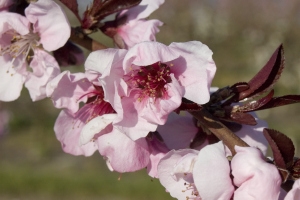
Flowering Time: Early to mid flowering (within interspecific stone fruits)
Ripening Time: Early season; typically ripens before most pluots (timing varies by region)
Pollination: Partially self-fertile; pollination recommended with a compatible plum, pluot, or nectarine planted within 20–30 feet
Pests & Diseases: Standard stone fruit considerations; good airflow supports healthy growth
Yield: Moderate to good with proper pollination
Additional Notes
- Grower’s Insight: Spice Zee is often chosen by growers who enjoy fruit with character—aromatic, expressive, and a little unexpected rather than straightforward.
- Regional Insight: In cool or wet spring climates such as the Pacific Northwest, coastal regions, or higher elevations, bloom weather can limit pollinator activity. Planting a nearby compatible partner and supporting early-season pollinators improves fruit set.
- Ripening Context: Spice Zee typically ripens ahead of most pluots, making it a strong early-season complement to mid- and late-season interspecifics.
- Harvest when fruit is fully colored and aromatic; flavor continues to develop with short hang time.
- Explore more interspecific hybrids in our collection: All Interspecific Hybrids