Description
Wellington Mulberry is valued for consistency. It’s the kind of tree growers keep because it performs year after year without fuss—producing dependable crops of sweet, dark fruit on a vigorous, adaptable tree.
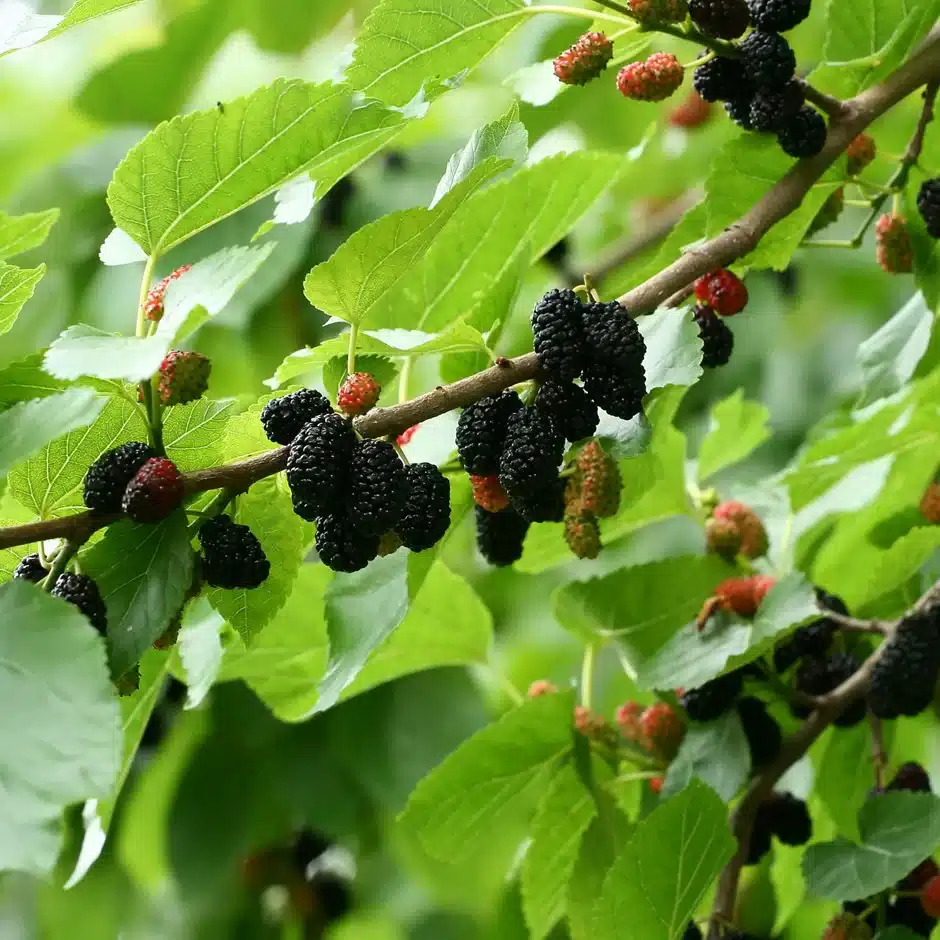
The berries are small to medium in size, dark purple to nearly black when ripe, and pleasantly sweet. Wellington isn’t marketed as a novelty or extreme-flavor mulberry; instead, it earns its reputation by delivering reliable eating quality and steady production across a range of growing conditions.
The tree itself is vigorous and upright to spreading, making it easy to manage with routine pruning. It fits well into home orchards where predictability matters just as much as flavor.
Overview
- Dark-fruited mulberry with good sweetness
- Reliable, mid-season production
- Vigorous growth; manageable with pruning
- Adaptable to diverse climates
- Self-fertile
Growing Details
Latin Name: Morus alba ’Wellington’
Site and Soil: 1/2 day to full day of sun; well-drained soil
Hardiness: USDA Zone 5–9
Rootstock: Russian mulberry (Morus alba tatarica)
Bearing Age: 1–3 years
Size at Maturity: Typically 15–25 ft tall and wide with pruning
Flowering: Spring; inconspicuous catkins (not showy)
Ripening Time: Mid-summer; timing varies by climate
Pollination: Self-fertile
Pests & Diseases: Generally low-maintenance with few serious issues
Yield: Reliable producer once established
Additional Notes
- Grower’s Insight: Wellington is often described as a “keep it because it works” mulberry—better than unnamed seedlings, without the quirks of more finicky collector varieties.
- Regional Insight: Noted for performing well in the Eastern U. S., including humid summer regions, while also adapting successfully to temperate and drier climates.
- Fruit is best harvested fully ripe for maximum sweetness.
- As with most mulberries, fallen fruit can stain—plan placement accordingly.
- Explore more mulberries in our collection: Mulberry Trees