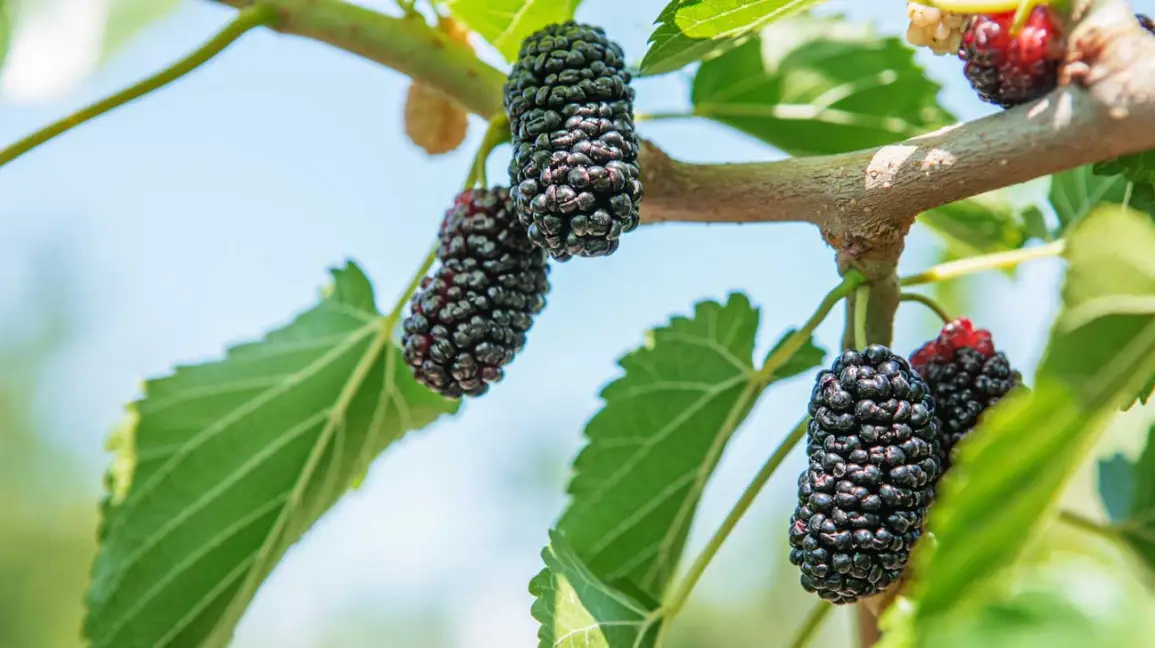
Description
The fruit ripens over several weeks rather than all at once, allowing for repeated harvests as berries reach peak quality. While Lakeland is not a true everbearing mulberry, its extended ripening window makes it easier to enjoy fresh fruit without the pressure of a short harvest spike.
The tree is vigorous but responsive to pruning. With regular size management, Lakeland can be maintained at a manageable height suitable for home orchards, while still delivering dependable yields year after year.
Overview
- Dark-fruited mulberry with sweet, juicy berries
- Ripens over several weeks rather than all at once
- Reliable producer once established
- Adapted to warm, humid growing conditions
- Responds well to pruning for size control
Growing Details
Latin Name: Morus alba ’Lakeland’
Site and Soil: 1/2 day to full day of sun; well-drained soil
Hardiness: USDA Zone 5–9
Rootstock: Russian mulberry (Morus alba tatarica)
Bearing Age: 1–3 years
Size at Maturity: Typically 15–20 ft tall and wide with pruning and training
Flowering: Spring; inconspicuous catkins (not showy)
Ripening Time: Early to mid-summer; timing varies by climate
Pollination: Self-fertile
Pests & Diseases: Generally low-maintenance with few serious issues
Yield: Productive once established
Additional Notes
- Grower’s Insight: Lakeland is often chosen for reliability rather than novelty. Its strength is consistent performance in conditions where heat and humidity can limit other mulberries.
- Regional Insight: Performs best in warm to temperate climates with adequate summer heat; cold-climate performance varies by site, winter severity, and summer conditions.
- Harvest fruit when fully dark and soft for best sweetness.
- Fruit is delicate and best enjoyed fresh or processed promptly.
- Explore more mulberries in our collection: Mulberry Trees