Description
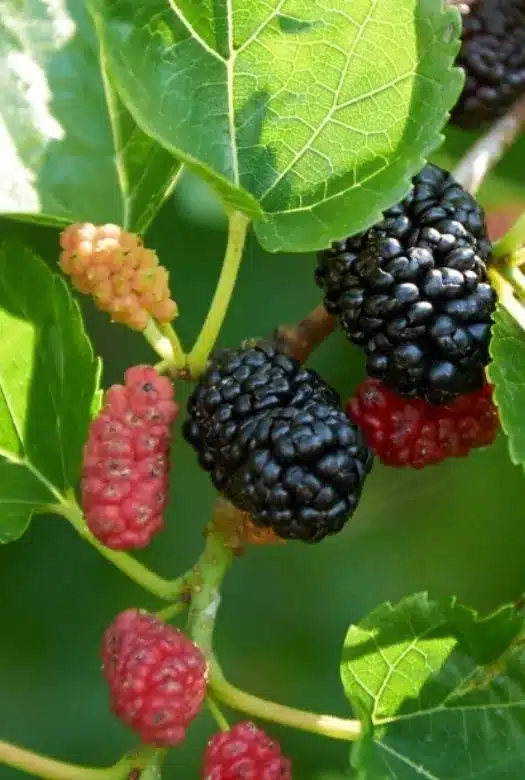
Kokuso is a distinctive mulberry variety known for producing large, dark purple to black berries with a rich, robust flavor. When fully ripe, the fruit is sweet, juicy, and deeply satisfying—one of those mulberries that quickly earns a following among growers who value flavor as much as productivity.
This variety is prized for its strong yields and a harvest that unfolds over several weeks rather than all at once. While Kokuso is not a true “everbearing” mulberry, its ripening period is longer than many single-flush varieties, allowing for repeated pickings as fruit reaches peak ripeness.
Kokuso has been repeatedly recommended by experienced growers as being on par with—or in some cases preferred over—Illinois Everbearing for overall eating quality. In grower comparisons, it’s often described as similarly sweet with a juicy texture, paired with a slightly more concentrated, robust flavor.
Historically, “Kokuso” selections are most often associated with mulberries developed or preserved for their exceptional leaf production, a trait valued in regions connected to silk cultivation. While exact provenance details are difficult to document, this background helps explain Kokuso’s famously large leaves and vigorous growth habit—traits that set it apart visually as well as horticulturally.
The tree itself is vigorous yet responsive to pruning, making it well suited for home orchards where size control matters. With annual pruning, Kokuso can be maintained at a manageable height while still delivering heavy crops of high-quality fruit.
Overview
- Large dark purple to black mulberries with rich, robust flavor
- High yields once established
- Ripens over several weeks rather than all at once
- Often compared favorably to Illinois Everbearing
- Historically linked to mulberry lines selected for silk production
- Responds well to pruning for size management
Growing Details
Latin Name: Morus alba ’Kokuso’
Site and Soil: 1/2 day to full day of sun; well-drained soil
Hardiness: USDA Zone 5–9
Rootstock: Russian mulberry (Morus alba tatarica)
Bearing Age: 1–3 years
Size at Maturity: Typically 15–20 ft tall and wide with pruning and training
Flowering: Spring; inconspicuous catkins (not showy)
Ripening Time: Early to mid-summer; timing varies by climate
Pollination: Self-fertile
Pests & Diseases: Generally low-maintenance with few serious issues
Yield: Heavy producer once established
Additional Notes
- Grower’s Insight: Kokuso’s oversized leaves aren’t incidental. The name is commonly associated with mulberry lines historically valued for leaf production in silk-producing regions, which helps explain both the dramatic foliage and the tree’s strong vigor.
- Regional Insight: Performs well across a wide range of temperate climates; in cooler-summer regions, full sun helps push sweetness and fruit quality.
- Harvest fruit when fully dark and soft for best flavor.
- Fruit is delicate and best enjoyed fresh or processed promptly.
- Explore more mulberries in our collection: Mulberry Trees