Mulberry (Beautiful Day)

$34.99

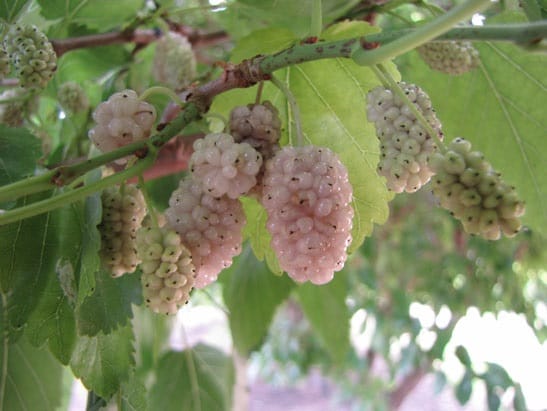
Beautiful Day is a clean-harvest mulberry—pale fruit with gentle sweetness and a light pink blush at ripeness, offering classic mulberry flavor without the heavy staining of dark varieties.

  • White to pale fruit with a light pink blush at ripeness
  • Sweet flavor for fresh eating or drying
  • Low staining compared to dark mulberries
  • Fast-growing tree that responds well to pruning
  • Productive once established
Add to Wishlist
Add to Wishlist
SKU: N/A Categories: , Tag:

Description

Beautiful Day was selected for a very practical reason: it delivers the enjoyment of mulberries without the heavy staining associated with dark-fruited types. The fruit ripens to a pale white or cream tone and may develop a light pink blush as it matures.

The berries are sweet when fully ripe, with a soft texture and gentle flavor that’s well suited to fresh eating. Because the fruit remains light in color, it’s also a natural fit for drying—yielding a clean, honeyed result without deep purple staining.

Like many mulberries, Beautiful Day is vigorous and adaptable. Left unpruned, it can develop into a substantial tree, but it also tolerates hard annual pruning well, making it surprisingly manageable in home landscapes where size control matters.

Overview

  • White to pale mulberry with a light pink blush at ripeness
  • Low-staining fruit compared to dark mulberries
  • Sweet flavor for fresh eating and drying
  • Fast-growing and productive once established
  • Responds well to pruning for size management

Growing Details

Latin Name: Morus alba ‘Beautiful Day’
Site and Soil: 1/2 day to full day of sun; well-drained soil (adaptable once established)
Hardiness: USDA Zone 5–9
Rootstock: Russian mulberry (Morus alba tatarica)
Bearing Age: 1–3 years
Size at Maturity: Typically 15–25 ft tall and wide without pruning
Flowering: Spring; inconspicuous catkins (not showy)
Ripening Time: Early to mid-summer; timing varies by climate
Pollination: Self-fertile
Pests & Diseases: Generally low-maintenance with few serious issues
Yield: Productive once established; yields increase as the tree matures

Additional Notes

  • Grower’s Insight: Beautiful Day is often chosen for where it’s planted as much as how it tastes—near patios, paths, and living spaces where low staining matters.
  • Regional Insight: Performs well in temperate regions including the Pacific Northwest; warmer summers tend to enhance sweetness and overall fruit quality.
  • Harvest fruit fully ripe for best sweetness and texture.
  • Fruit is delicate and best enjoyed fresh or processed soon after harvest.
  • Explore more mulberries in our collection: Mulberry Trees
Planting & Care

At a Glance – Beautiful Day Mulberry

  • Sun: 1/2 day to full day of sun
  • Soil: Well-drained soil; adaptable once established
  • Water: Moderate; drought tolerant once established
  • Size: Large tree unless managed with pruning
  • Pollination: Self-fertile
  • Harvest: Early to mid-summer; timing varies by climate
  • Hardiness: USDA Zone 5–9

Planting & Care – Beautiful Day Mulberry

Site Selection

  • Choose a sunny site for best growth and fruit quality.
  • Full sun is ideal; 1/2 day of sun is workable in many locations.
  • This variety works well near patios and walkways due to its low-staining fruit.

Soil Preparation

  • Mulberries tolerate a wide range of soils, but good drainage improves vigor.
  • If soil holds water, plant on a slight mound.
  • Aim for a soil pH of roughly 6.0–7.5 when possible.

Planting Instructions

  • Dig a hole twice as wide as the root system.
  • Set the root flare at or just above soil level.
  • Backfill with native soil and water deeply.
  • Mulch lightly, keeping mulch away from the trunk.

Watering & Fertilizing

  • Water consistently during the first growing season.
  • Once established, deep, less frequent watering is sufficient.
  • Fertilize lightly only if growth is weak.

Pruning & Size Management

  • Prune during dormancy to manage size and structure.
  • Mulberries tolerate hard pruning and respond well to size control.
  • Remove crossing or damaged branches as needed.

Harvest & Use

  • Harvest when fruit is fully ripe and soft.
  • Fruit is delicate; enjoy fresh or process promptly.
  • Excellent for fresh eating and drying.

General Tips

  • Birds are attracted to ripe mulberries; netting may help.
  • Expect increasing yields as the tree matures.
  • Pruning keeps harvest manageable and accessible.