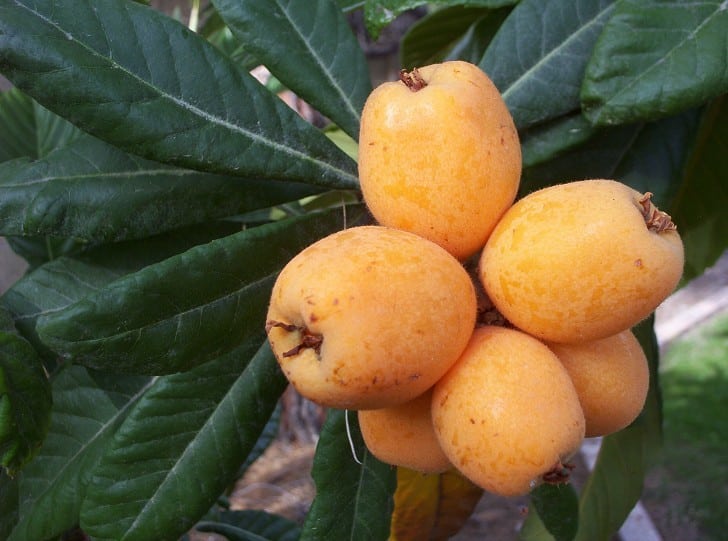
Description
In warm, mild-winter areas it often ripens in early to mid spring, while cooler coastal climates may see harvest extend later into spring. Fruit quality is at its best when allowed to fully color and soften, at which point the flesh becomes exceptionally juicy and aromatic. Champagne is grown primarily for fresh eating but also performs well in preserves, where its juiciness and balanced acidity translate into bright, fragrant flavor. Because it is pollination-dependent, planting another loquat nearby is key to consistent crops.
Overview
- White-fleshed loquat with very juicy, melting texture
- Sweet flavor with refreshing, lightly subacid character
- Mid-season within loquats (earlier in warm areas, later in cooler coastal climates)
- Well suited to fresh eating and preserving
- Pollination required for reliable fruit set
Growing Details
Latin Name: Eriobotrya japonica ’Champagne’
Site and Soil: 1/2 day to full day of sun; well-drained soil
Chill Requirement: Not applicable; loquat is a subtropical evergreen
Hardiness: USDA Zone 8–11 (flowers and fruit are more cold-sensitive than the tree)
Rootstock: Loquat seedling (grafted)
Bearing Age: 1–3 years
Size at Maturity: Typically maintained at 8–15 ft tall and wide with pruning
Bloom Time: Fall to winter (timing varies by climate)
Ripening Time: Mid-season for loquats; early to mid spring in warm areas, later spring in cooler coastal climates
Pollination: Pollination required; plant another loquat variety within 20–30 feet
Pests & Diseases: Standard loquat considerations; good airflow and sanitation are important
Yield: Prolific when well pollinated and grown in suitable climates
Additional Notes
- Grower’s Insight: Champagne is often favored by loquat enthusiasts for its distinctive “sparkle”—a juicy, lightly subacid character that keeps the flavor lively rather than heavy.
- Regional Insight: Performs best in warm, mild-winter regions. In freeze-edge climates, fruiting success depends heavily on microclimate, bloom protection, and favorable winter weather.
- Cold-climate experiment: A peer-reviewed study found that removing (cutting off) the main flower cluster can induce reflowering and shift bloom later—an intriguing tool for growers experimenting with loquats in freeze-prone climates. Read the study.
- Seed count varies by fruit; Champagne should not be expected to produce consistently low-seed fruit.
- Explore more loquats in our collection: Loquat Trees