Description
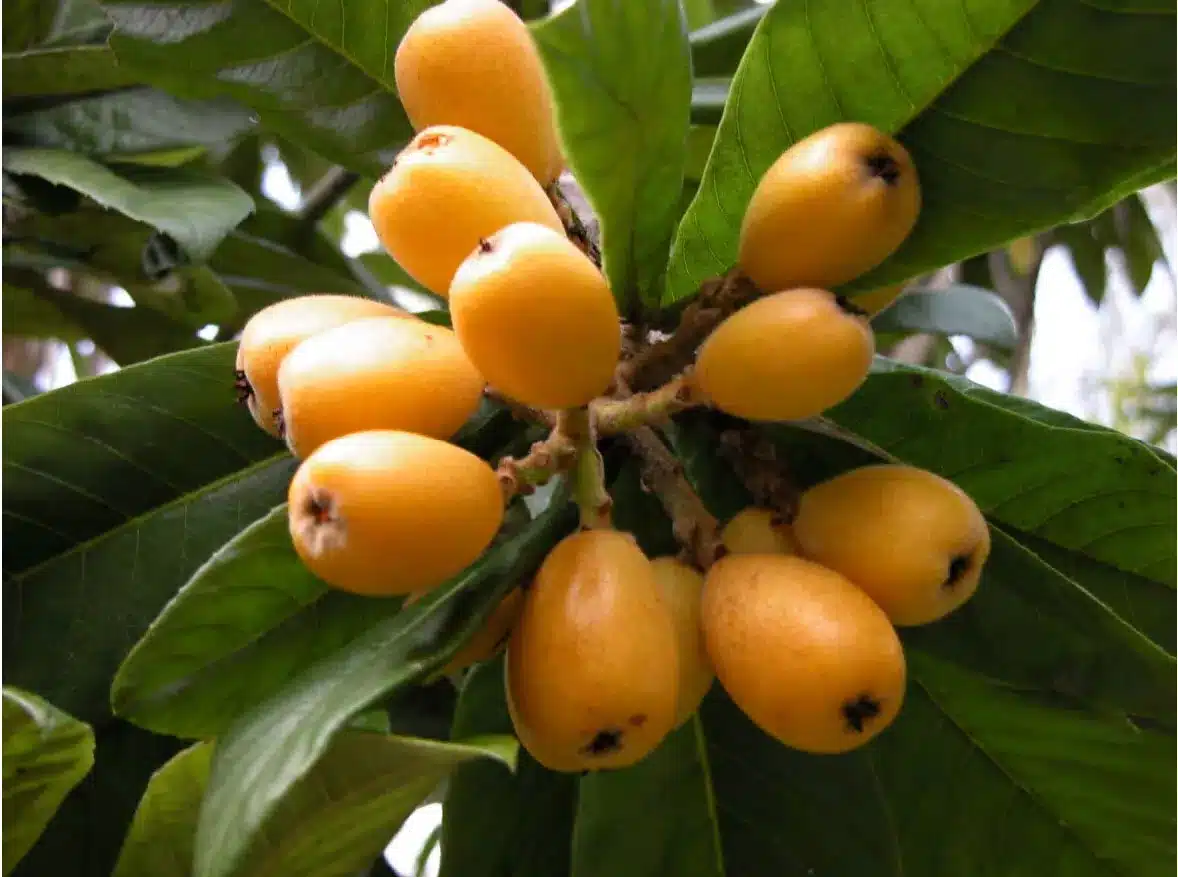
The fruit is golden-orange with smooth, juicy flesh and a rich, sweet-floral character, ripening in late spring to early summer. Angelino is excellent fresh, and it also shines in preserves or drying when you have more fruit than you can eat at once. Like all loquats, the main challenge in colder regions is not keeping the tree alive—it’s protecting blooms and developing fruit through winter and early spring weather. That’s why Angelino’s bloom timing (and smart management techniques) can make a real difference for growers who want to experiment beyond “ideal” loquat zones.
Overview
- Sweet, juicy loquat with golden-orange fruit
- Ripens late spring to early summer
- Later-blooming tendency for improved odds in marginal climates
- Evergreen tree with fragrant blooms
- Self-fertile; additional varieties can improve yield
Growing Details
Latin Name: Eriobotrya japonica ’Angelino’
Site and Soil: 1/2 day to full day of sun; well-drained soil
Chill Requirement: Not applicable in the typical sense; loquat is a subtropical evergreen
Hardiness: USDA Zone 8–11 (flowers/fruit are more cold-sensitive than the tree)
Rootstock: Loquat seedling (grafted)
Bearing Age: 1–3 years
Size at Maturity: Typically maintained at 8–15 ft tall and wide with pruning
Bloom Time: Fall to winter (timing varies by climate)
Ripening Time: Late spring to early summer (varies by region)
Pollination: Self-fertile; a second loquat variety nearby can improve fruit set
Pests & Diseases: Standard loquat considerations; good airflow and sanitation are important
Yield: Reliable producer in suitable climates; variable in freeze-prone bloom seasons
Additional Notes
- Grower’s Insight: Angelino’s later-blooming tendency is one reason growers reach for it in “edge” climates—because with loquats, bloom timing can be the difference between a great crop and a lost season.
- Regional Insight: Best reliability comes in mild-winter regions (Zones 9–11). In Zone 8 and other freeze-edge areas (including parts of the Pacific Northwest), fruiting often depends on microclimate—south-facing walls, wind shelter, and protecting blooms from hard freezes.
- Cold-climate experiment: A peer-reviewed study found that removing (cutting off) the main flower cluster can induce reflowering, shifting bloom and fruiting later by roughly 2–4 months—an intriguing tool for growers trying to dodge cold events. Read the study.
- Loquats are often damaged by freezes at the flower/fruit stage even when the tree itself survives—plan protection accordingly.
- Explore more loquats in our collection: Loquat Trees