Description
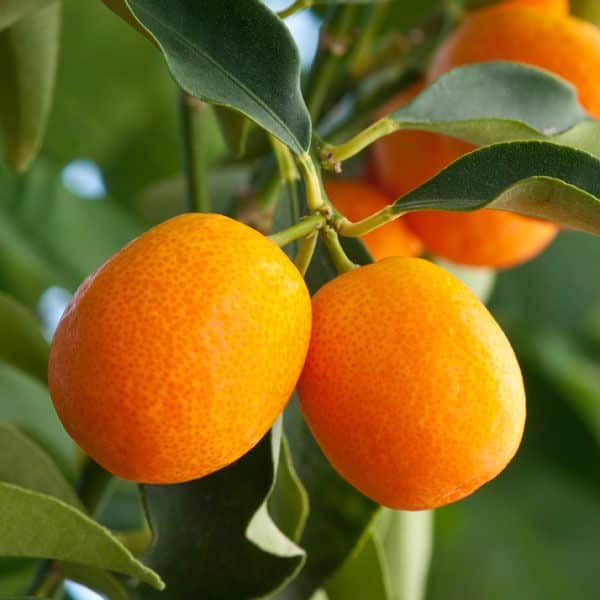
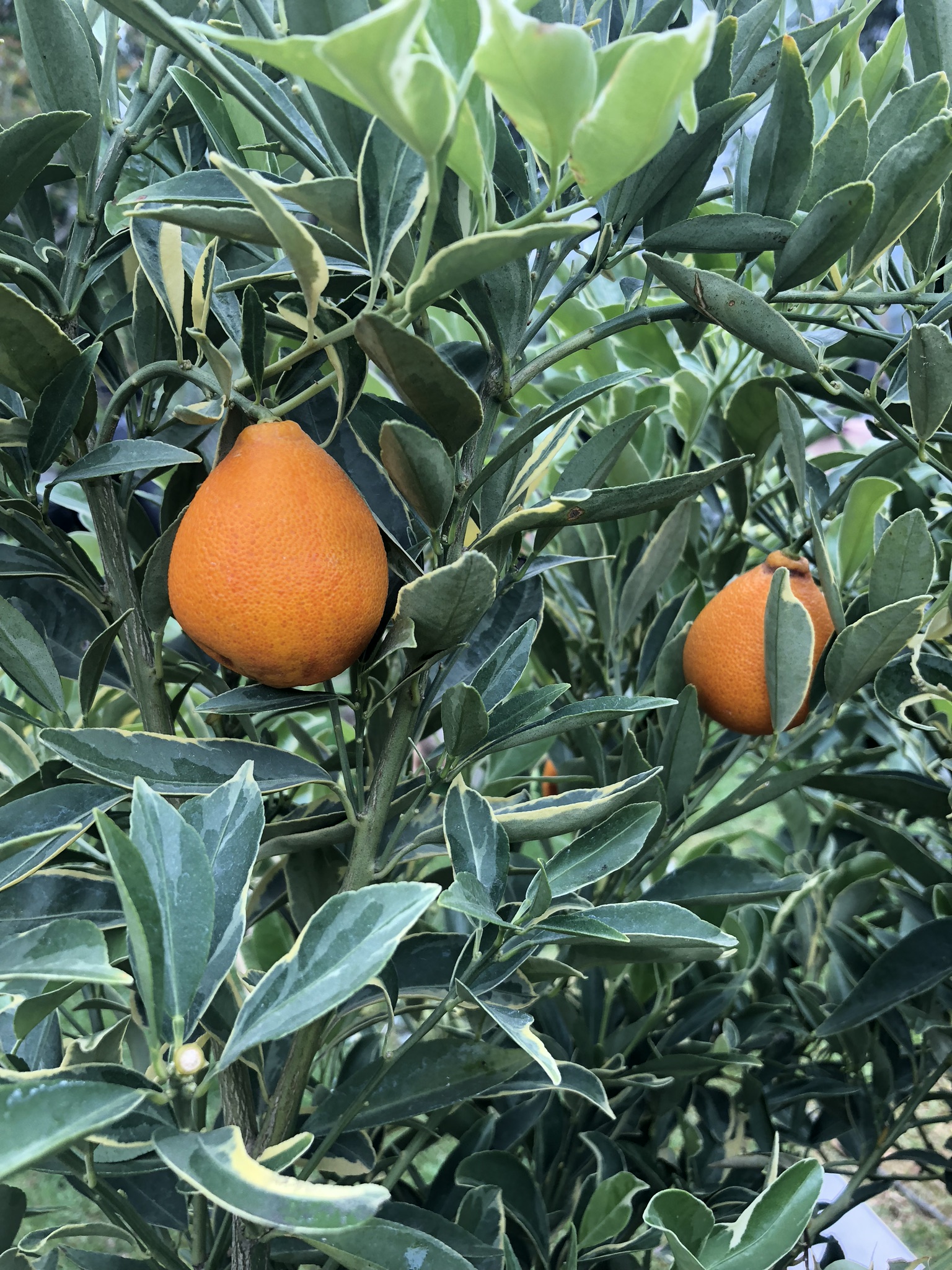
Centennial Variegated kumquat is one of those citrus trees that stops people in their tracks. The foliage is boldly variegated, the fruit develops dramatic striping as it matures, and the kumquats themselves are noticeably larger than most people expect—especially for a kumquat. It’s a tree that manages to feel both ornamental and substantial at the same time.
This cultivar has a real pedigree. Centennial Variegated was released by the USDA in 1993, originating as a spontaneous variegated twig mutation observed in 1986 on a breeding selection known as US 1515 at the Whitmore Foundation Farm in Florida. That selection itself came from open-pollinated Nagami kumquat seed planted in the 1970s. The name “Centennial” was chosen to mark the 100th anniversary of the U. S. Horticultural Research Laboratory—making this one of the few kumquats with a clearly documented research history.
Beyond its looks, this is simply a fun tree to grow. The canopy fills in naturally, the fruit clusters beautifully, and the size of the kumquats—often approaching a couple inches long—makes harvesting feel surprisingly generous. It’s one of our favorite citrus varieties to grow!
Overview
- USDA-released variegated kumquat cultivar.
- Fruit is large for a kumquat, often reaching impressive size.
- Striped immature fruit with variegated foliage.
- Late fall through winter ripening.
- Self-fertile.
Growing Details
Latin Name: Citrus japonica ’Centennial Variegated’
Breeding Background: Variegated twig mutation observed in 1986 on USDA selection US 1515; released in 1993
Site and Soil: Full sun; well-drained soil
Rootstock: 1-gallon trees on Flying Dragon; larger sizes on C-35
Hardiness: Best suited to USDA Zones 8–11; hardy to around 20–22°F for brief periods with protection once established
Bearing Age: Often fruits immediately; grafted trees may produce in their first season
Size at Maturity:
• Flying Dragon: Typically 4–6 ft tall and wide
• C-35: Typically 8–12 ft tall and wide
Note: Trees grown in containers remain smaller and are easily maintained with pruning.
Bloom Time: Spring to early summer (timing varies by climate)
Ripening Time: Late fall through winter
Pollination Requirements: Self-fertile
Pests & Diseases: Similar to other citrus; good airflow and drainage reduce issues
Additional Notes
- Grower’s Insight: Centennial Variegated is one of our personal favorites—between the dense canopy, dramatic striping, and fruit size that consistently surprises people, it’s a kumquat that feels genuinely special in the orchard.
- Regional Insight: Performs best in warm citrus regions and excels as a container-grown citrus in cooler climates where winter protection is provided.
- Fruit Size Note: While still a kumquat, fruit on Centennial Variegated can grow notably larger than standard types, something we regularly observe on mature trees.
- Explore more kumquat varieties in our collection: Kumquats